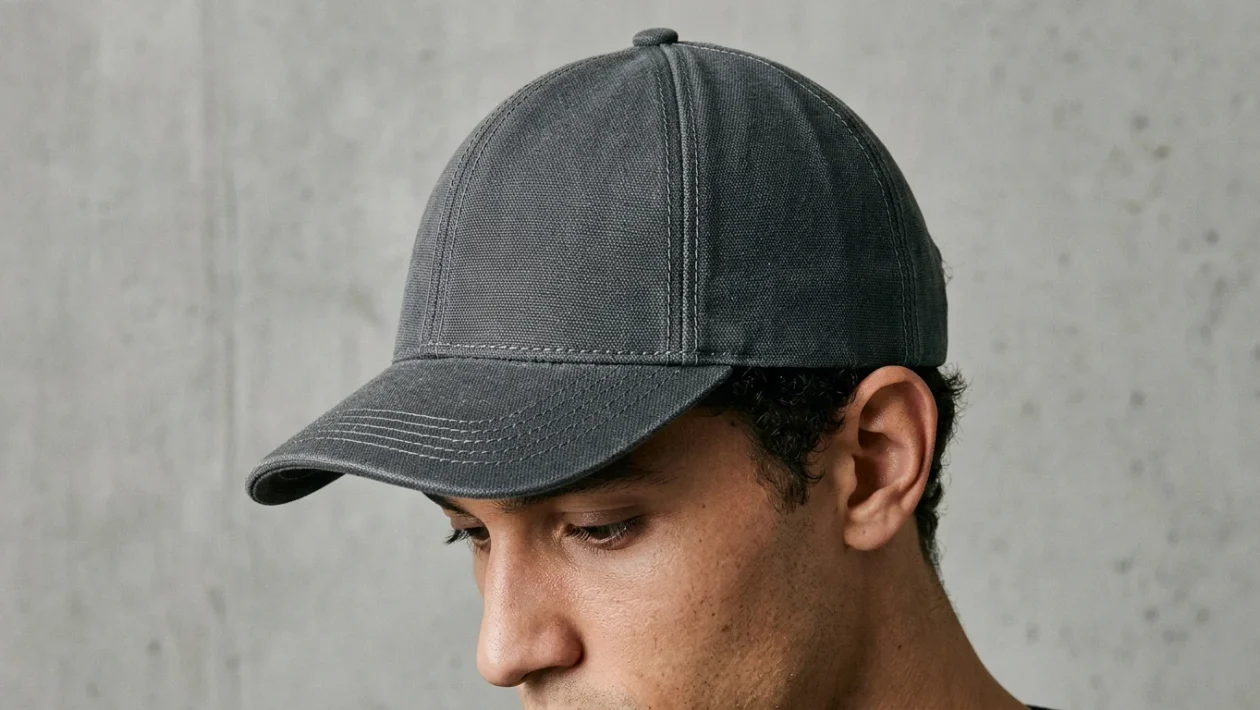
Close-up view of the small fabric button, or squatchee, on the top of a standard baseball cap.
Millions of people wear baseball caps every day without giving a second thought to the small fabric button resting at the apex of the hat. It largely goes unnoticed and is often assumed to be a random design quirk.
However, this tiny detail actually has a specific industry name and a highly practical origin story.
The Structural Role of the ‘Squatchee’
Hat makers refer to this small, fabric-covered circle as a “squatchee.”
When the first baseball caps were manufactured, the squatchee was far more than a decorative accessory. It served a necessary structural function, engineered to cap the exact point where the triangular fabric panels of the crown intersected.
By anchoring this junction, the button protected the vulnerable core seams from unraveling. It also smoothed out the top of the hat, providing a neat, tailored finish that exposed stitching simply could not deliver.
Why the Button Survived
Textile manufacturing has evolved dramatically since those early models. Modern industrial stitching techniques make the functional need for a squatchee entirely obsolete.
Yet, the button remains a standard feature on almost all commercial caps sold today.
Brands continue to use the squatchee purely out of aesthetic tradition. It effectively conceals the central seam joint and maintains the classic, balanced silhouette that consumers have come to expect from traditional headwear.
A Painful Flaw for Modern Users
Despite its visual appeal and deep-rooted tradition, the squatchee is being quietly phased out of certain specialized hat designs.
Many wearers find the top button physically uncomfortable when pairing a cap with other gear. When construction hardhats, military helmets, hearing protection, or heavy over-ear headphones press down on the cap, the firm squatchee is driven sharply into the top of the skull.
To eliminate this painful pressure point, tactical and workwear manufacturers now frequently design “buttonless” caps specifically engineered for extended, heavy-duty use.