You think you’re getting a revolutionary, “reinvented” vehicle when you walk into a dealership today, but the truth is you’re often buying a 1990s business model wrapped in a shiny touchscreen. The entire old-school car industry is hitting a massive wall right now. They promise us the future of driving, but behind the scenes, massive corporate constraints are keeping the parking brake pulled tight. If you’ve been wondering why modern cars feel less like true innovation and more like a heavy compromise, the answer is hiding right on the factory floor.
Look, I’ve spent enough time under the hood and walking dealership lots to know when we’re just getting a fresh coat of paint over a rusted-out frame. As we roll through May 2026, the cracks in the old system are turning into canyons. Let’s pop the hood and look at exactly why the giants of the industry are struggling to deliver the revolution they keep promising.
Legacy Automakers Paralyzed By Their Own History
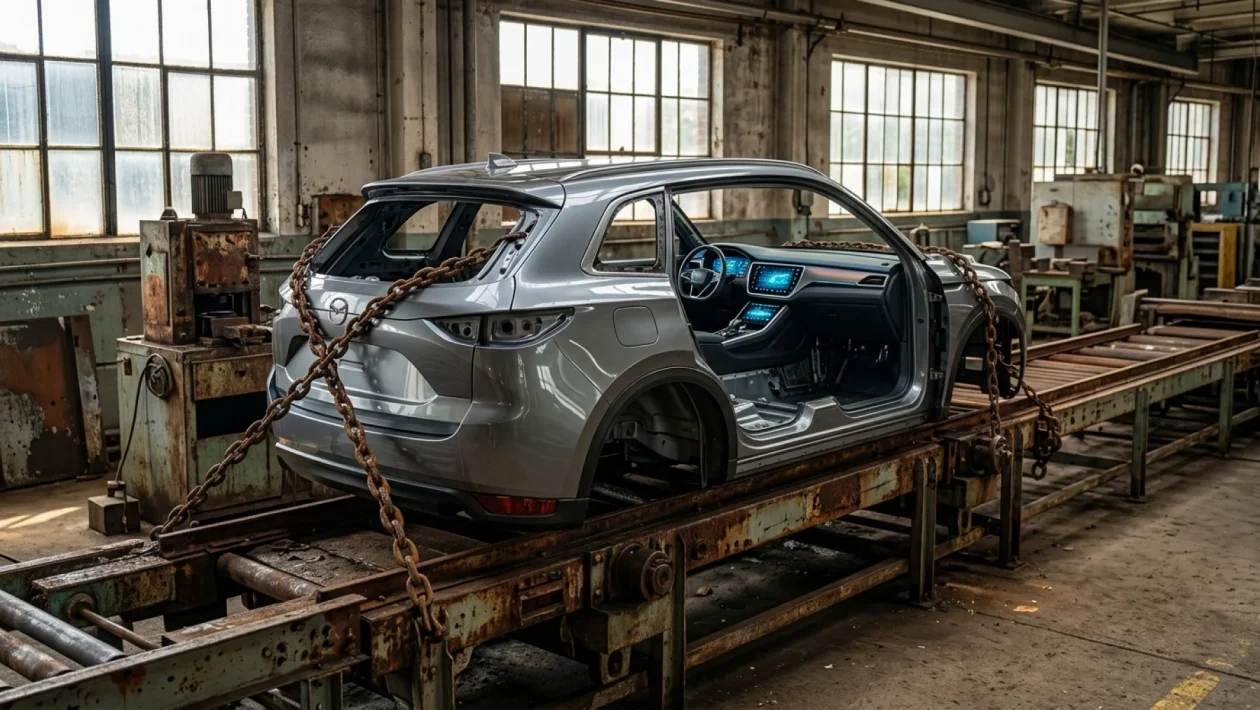
True car reinvention requires rethinking absolutely everything. But legacy automakers simply do not have the luxury of a blank slate. They are chained to billions of dollars in existing factory tooling, massive pension obligations, and aging product lineups.
When an upstart company decides to build an EV, they just build a software-driven chassis. When an old-school brand tries it, they have to figure out how to slowly convert decades-old manufacturing lines without completely stopping their cash cow—gas-powered SUVs.
It’s like trying to remodel your entire kitchen while cooking Thanksgiving dinner for twenty people. The constraints are suffocating. In fact, industry data shows that legacy automotive brands carry up to 40% more overhead costs in their manufacturing processes compared to modern, ground-up EV startups.
“You cannot build the car of tomorrow when your entire supply chain and corporate structure is optimized to build the car of 2010. The legacy guys are fighting gravity.”
Why Ford And The Big Brands Are Bleeding Talent And Dealers
The turmoil isn’t just on the assembly line; it’s happening right in the boardroom and the showroom. Ford recently saw its Chief Marketing Officer, Lisa Materazzo, walk out the door. That kind of executive shakeup is a glaring red flag that the big players are struggling to align their vision with reality.
And it gets worse when you look at the dealerships. Brands like Mitsubishi are watching their retailers get fed up and walk away. Why? Because the dealers are frustrated by a heavy reliance on fleet sales and zero incentive support for aging cars.
When you pass down rising tariff costs and fail to deliver exciting, fresh vehicles, the guys selling the cars on the front lines simply give up. You can’t revolutionize the road if your own sales team is jumping ship.
Why They Simply Can’t Reinvent Your Next Car
So, how does a legacy giant actually try to build your next car? It’s a compromised process from day one. Here is exactly why the “reinvention” usually falls flat before the car even hits Canadian roads.
- The Compromised Chassis: Instead of building a new platform, they try to cram heavy battery packs into chassis designs originally meant for gas engines, ruining the handling.
- The Supply Chain Trap: They are locked into massive contracts with old-school part suppliers, rather than tapping into modern software-first developers.
- The Dealer Bottleneck: They can’t sell directly to you. They have to pass the vehicle through a franchise dealership network that inherently marks up the price to survive.
Take a look at Canadian manufacturing giants like Magna International. They are building incredible, cutting-edge components, but they often have to dumb down the tech to fit the restrictive, outdated platforms the big Detroit automakers force them to use. It’s a tragic waste of potential.
The Cost Of The Old Guard vs. The Blank Slate
To really see why your next car isn’t as innovative as it should be, just look at the raw differences in how these companies operate. It’s night and day.
| Legacy Automakers | Modern Startups |
|---|---|
| Saddled with 100 years of outdated factory tooling | Agile, purpose-built micro-factories |
| Rely on bloated, expensive dealership franchise networks | Direct-to-consumer sales, saving you thousands |
| Software is an afterthought added to mechanical parts | Vehicles are built entirely around the software ecosystem |
Sure, you’ll see wild outliers—like Mercedes-AMG roaring into the EV market with an audacious 1,153 horsepower GT 4-Door Coupe. But that’s a multi-hundred-thousand-dollar toy for the 1%. That isn’t reinventing the daily commuter car; that’s just flexing old muscles in a new suit.
Frequently Asked Questions
Will legacy brands ever catch up to the startups?
Only if they are willing to take a massive financial hit. They have to completely cannibalize their current gas-powered profits to fund a ground-up rebuild of their manufacturing process. Few CEOs have the stomach for that.
Why should I care about dealership problems?
Because dealership overhead directly impacts your wallet. When legacy brands lose high-performing dealers and push tariff costs down the chain, you end up paying higher markups for older technology.
🤝 Good luck navigating the dealership lots this year, because separating the truly innovative cars from the compromised ones is harder than ever.
💡 Keep an eye on how these big brands pivot. If you see them investing in brand-new, dedicated EV platforms rather than converting old gas-guzzlers, that’s your green light.
📱 👇 I want to hear from you—have you felt the sting of buying a “new” car that just feels like old tech? Drop into the comments below and share your thoughts on who you think will survive the great automotive shakeup of the 2020s!