Let’s talk about that grocery bill you just paid. It is May 2026, and a standard run for tomatoes and eggs shouldn’t feel like you are financing a used car. You want to stop bleeding cash at the checkout line, but you have zero desire to pack up and move to an off-grid cabin in the woods.
The ultimate solution is sitting right outside your back door. Urban homesteading Canada is no longer just a fringe hobby for hippies; it is a practical, hard-hitting strategy for everyday folks to take control of their food supply.
Urban Homesteading Canada: A Legitimate Economic Strategy
We used to think of homesteaders as people with massive tractors and unlimited acreage. Today, the modern Canadian homesteader is probably your accountant neighbor who lives on a standard 40-by-100-foot city lot.
The shift is entirely driven by necessity and common sense. Why pay premium prices for organic greens when you can grow them better, faster, and cheaper next to your patio furniture? A recent 2026 national agricultural survey dropped a massive statistic: a staggering 28% of urban Canadian households are now producing at least a quarter of their own summer produce.
How City Dwellers Are Rewriting the Rules of Property
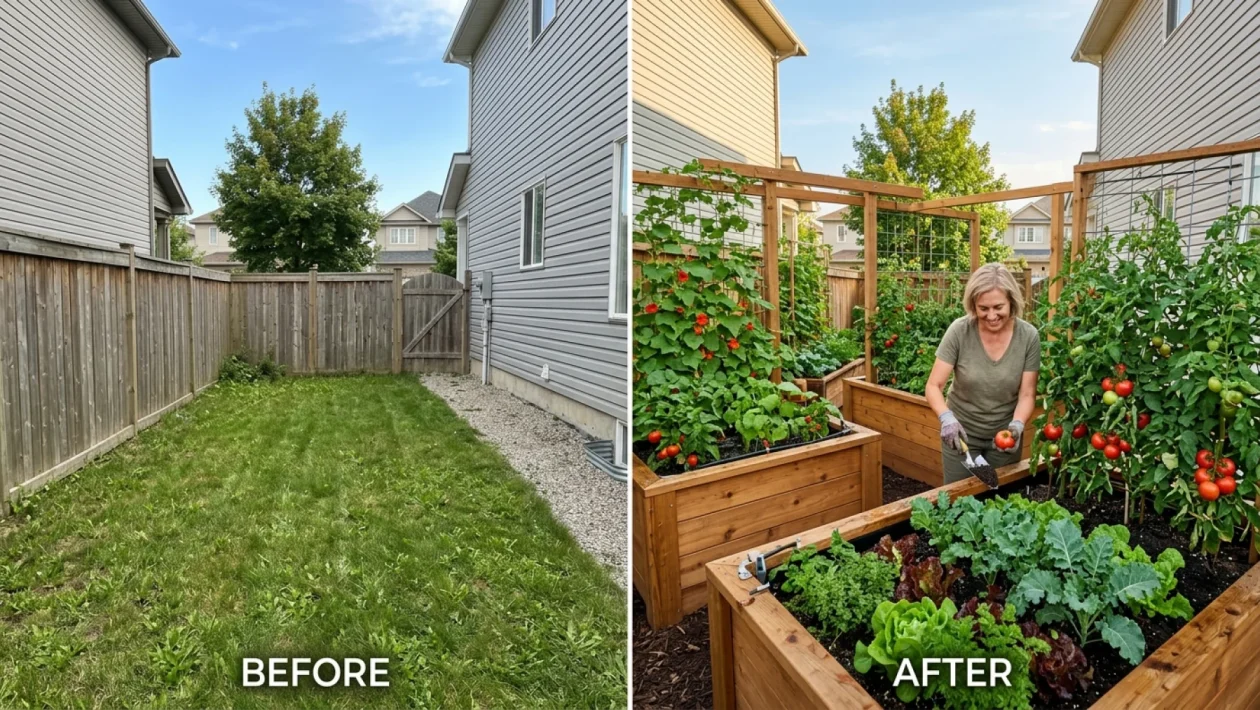
City dwellers are finally waking up to the fact that maintaining a perfectly manicured grass lawn is a massive waste of resources. You pour water, gas, and endless hours into a patch of green that gives you absolutely nothing in return.
That useless turf is being ripped out and replaced with high-yield garden beds, rain barrels, and composting stations. It is a fundamental shift in how we view our property. Your yard isn’t just a place to park the barbecue anymore; it is a working asset.
“We are seeing a massive shift from decorative landscaping to calorie-producing property,” says Mark Jenkins, a leading Canadian urban agriculture consultant. “People are finally realizing their lawn is just a very expensive, high-maintenance outdoor rug.”
Turning Backyards Into High-Yield Zones
You do not need a massive footprint to get massive results. The secret is vertical growing and high-density planting. By trading horizontal sprawl for smart trellises and raised beds, a standard suburban backyard can easily feed a family of four from July through October.
To put things in perspective, let’s look at a quick breakdown of where your yard-care energy is currently going.
| The Traditional Grass Lawn | The Urban Micro-Farm |
|---|---|
| Drains your wallet (water, gas, weed killer) | Slashes your grocery bill weekly |
| Requires endless weekend mowing | Requires daily, rewarding harvesting |
Building Your Own Micro-Farm Without Losing Your Mind
The biggest mistake rookies make is tearing up their entire yard on a Saturday morning and burning out by Sunday afternoon. You need to approach this like any other home improvement project: with a solid plan and the right gear.
Pick up some heavy-duty hand tools from a trusted supplier like Lee Valley Tools—because cheap shovels break when you need them most—and follow a proven rollout strategy.
- Start with a single raised bed: Build one 4×8 foot box. Fill it with premium local topsoil and compost. Master this small space before you ever touch the rest of your yard.
- Plant what costs the most: Don’t waste space on cheap bulk crops like potatoes. Order high-yield, expensive-at-the-store crop seeds from West Coast Seeds, like heirloom tomatoes, bell peppers, and leafy greens.
- Automate your water: Set up a basic drip irrigation hose on a cheap digital timer. Hand-watering gets old fast, and consistency is the secret to massive vegetable yields.
Frequently Asked Questions
Can I legally keep chickens in my city?
It completely depends on your municipality. Many major Canadian cities, including Vancouver, Edmonton, and parts of Toronto, have passed bylaws allowing backyard hens (usually capped at 3 to 6 birds, with no roosters allowed). Always check your local city council website before buying a coop.
How much time does a micro-farm actually take?
Once your beds are built and your irrigation is automated, you are looking at about 15 to 20 minutes a day. You will spend more time drinking coffee and pulling a few weeds than doing any actual back-breaking labor.
🤝 Look, getting started is the hardest part, but there is nothing quite like eating a meal you grew entirely yourself. It is the ultimate flex of self-reliance in a world that relies too heavily on supply chains.
💡 Start small this weekend. Pick a sunny corner of your yard, grab a shovel, and turn a patch of useless grass into a garden bed.
📱 Share your thoughts below! Have you started tearing up your lawn yet, or are you still on the fence about building your first raised bed?
👇 Good luck, get your hands dirty, and welcome to the modern homesteading club.