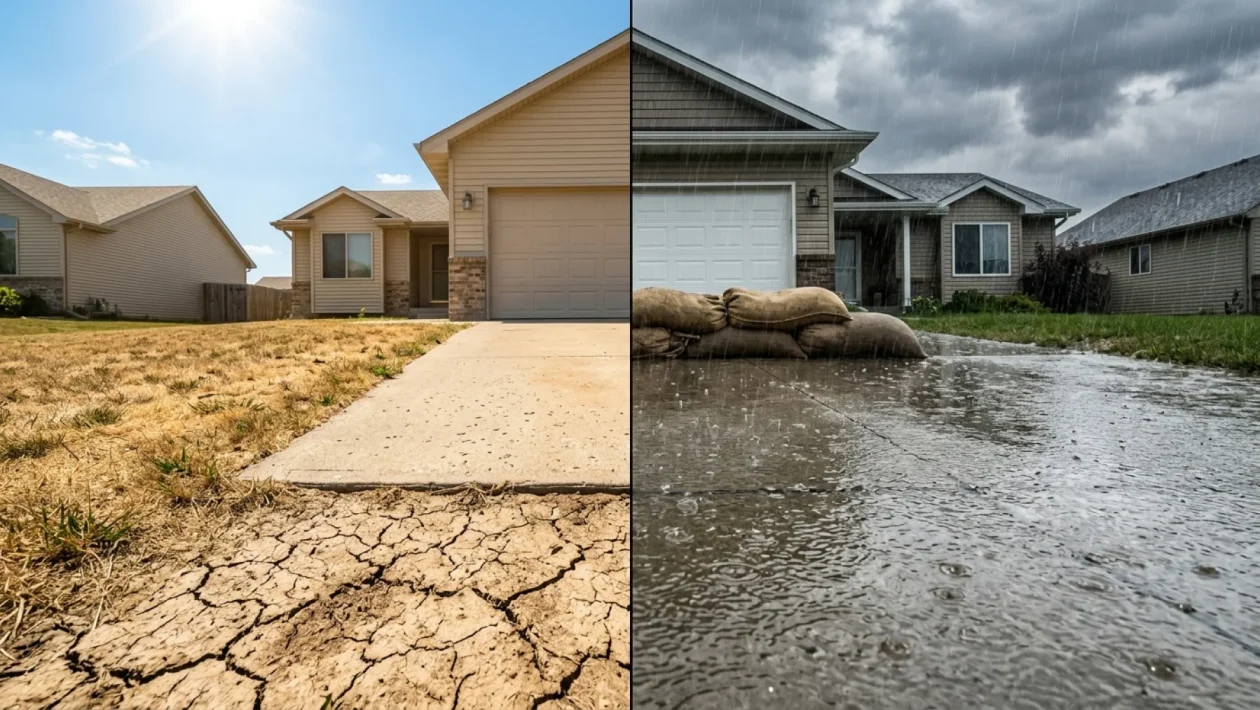
You’re sweating through your shirt on a Tuesday afternoon, and by Thursday morning, you’re sandbagging your driveway against a sudden deluge. Weather whiplash isn’t just an inconvenience anymore; it’s a serious threat to your home and life. May 2026 is proving that Mother Nature has completely torn up the rulebook, giving us record-smashing high temperatures immediately followed by violent thunderstorms. If you aren’t prepared for these aggressive swings, you’re putting yourself and your family at massive risk. Let’s break down exactly how to protect your property and survive when the forecast goes completely off the rails.
Weather Whiplash Is Our New Reality
The transition from spring to summer isn’t a gentle ramp-up anymore. It is an absolute rollercoaster. One day you’re firing up the barbecue, and the next, you’re unplugging your expensive shop tools to save them from lightning strikes.
This abrupt shift from intense heat to severe rain creates a perfect storm for localized disaster. Ground baked rock-solid by the scorching sun simply cannot absorb sudden, heavy rainfall. The water has nowhere to go, leading to instant surface flooding in your neighborhood.
This is exactly why checking your eavestroughs and having a backup power source isn’t just weekend busywork. It is essential, non-negotiable home maintenance.
Surviving Sudden Heatwaves
When the mercury suddenly spikes, our bodies struggle to adapt fast enough. In fact, health websites recently crashed due to a staggering 3,500% surge in desperate parents searching for baby first aid and sun safety tips during an unseasonal heatwave.
Heat-related illnesses can sneak up on you while you’re pulling weeds, hauling patio furniture, or just enjoying a cold beer on the deck. Knowing the difference between needing a glass of water and needing an ambulance is a crucial life skill.
| Heat Exhaustion | Heatstroke (Medical Emergency) |
|---|---|
| Heavy sweating, cold/clammy skin, dizziness, and mild nausea. | No sweating, red/hot skin, confusion, and loss of consciousness. |
| Move to AC, drink water, and apply cool, wet cloths. | Call 911 immediately. Do not force them to drink fluids. |
The Invisible Threat Of Cold Water Shock
When it’s 35°C outside, jumping into the nearest lake feels like the smartest move you could make. In reality, it is one of the deadliest. Despite the scorching air temperatures, open water in early May is still dangerously frigid.
We’ve seen far too many tragedies involving strong swimmers getting pulled under by hidden currents or completely paralyzed by the sudden drop in temperature. You might be wearing a top-tier lifejacket from Canadian Tire or MEC, but if your lungs freeze up, panic sets in instantly.
If you or someone else falls into freezing open water, follow this exact survival sequence:
- Fight the panic: Do not thrash around. Your initial gasp reflex will make you want to hyperventilate. Focus entirely on keeping your mouth above water.
- Float to survive: Roll onto your back, spread your arms and legs like a starfish, and let your lifejacket or natural buoyancy keep you up while your breathing regulates.
- Plan your next move: Once you can control your breath (usually after 60 seconds), locate the nearest exit point or signal loudly for help.
“People don’t realize that cold water violently robs you of your ability to breathe. Your instinct is to swim hard, but your only job in that first minute is to flip on your back, float, and fight the urge to panic,” says Paramedic Chief David Harrison.
Navigating Flash Floods This May
Once the intense heat breaks, the sky often opens up with terrifying force. Sudden thunderstorms following a heatwave pack heavy rain, destructive hail, and enough water to overwhelm municipal drainage systems in mere minutes.
You need to be proactive before the clouds turn black. Clear those storm drains on your street, test your basement sump pump, and park your vehicles on higher ground.
A little elbow grease on a sunny afternoon can save you tens of thousands of dollars in devastating water damage repairs when the storm finally hits.
Frequently Asked Questions
Why does extreme heat cause sudden thunderstorms?
Hot, humid air rises rapidly during a heatwave. When this warm, unstable air collides with a cooler weather front, it creates massive, towering cumulonimbus clouds that unleash severe thunderstorms and heavy rain.
How cold is open water in May?
While the air might feel like mid-July, lakes and rivers across North America often sit between 4°C and 10°C in May. Water this cold drains body heat up to 25 times faster than cold air, making hypothermia a massive risk.
What is the first thing to do during a flash flood warning?
Unplug your major electronics, move valuables to your upper floors, and completely avoid driving. Most flood-related fatalities occur when people try to drive their trucks or cars through fast-moving water.
🤝 Stay safe out there, folks. Mother Nature might be entirely unpredictable right now, but our response certainly doesn’t have to be.
💡 A few simple preparations this weekend can mean the absolute difference between a minor headache and a major property disaster.
📱 Share this guide with your friends, neighbors, and family members before the next severe storm rolls into town.
👇 Good luck, keep your emergency kits stocked, and let me know your own top weather survival tips in the comments below!