The Fundamentals of Primitive Fire Cooking
Cooking outdoors is not just about survival; it is about precision. When you move away from the convenience of a gas grill, you trade convenience for flavor. The key to successful campfire cooking is controlling your heat source and selecting the right equipment.
To master the open flame, you need two distinct heat zones: a bed of white-hot coals for searing and a periphery of lower heat for roasting. Building a fire for cooking takes patience. Start with hardwoods like oak or hickory, which provide consistent, long-lasting heat compared to softwoods that crackle and pop, depositing soot onto your food.
Perfecting Campfire Potatoes
Potatoes are the ultimate campfire side dish because they are forgiving and self-contained. The best method involves a “double wrap” technique. Wash your potatoes thoroughly and slice them into thick coins or cubes to speed up the cooking process.
Toss the potatoes with olive oil, salt, and pepper. Place them onto heavy-duty aluminum foil. Before sealing, add a splash of water or a few sprigs of fresh rosemary to create steam inside the packet. Fold the foil into a tight, airtight pouch and nestle it directly into the embers—not the flames—for 30 to 40 minutes.
The Stone Sear Technique
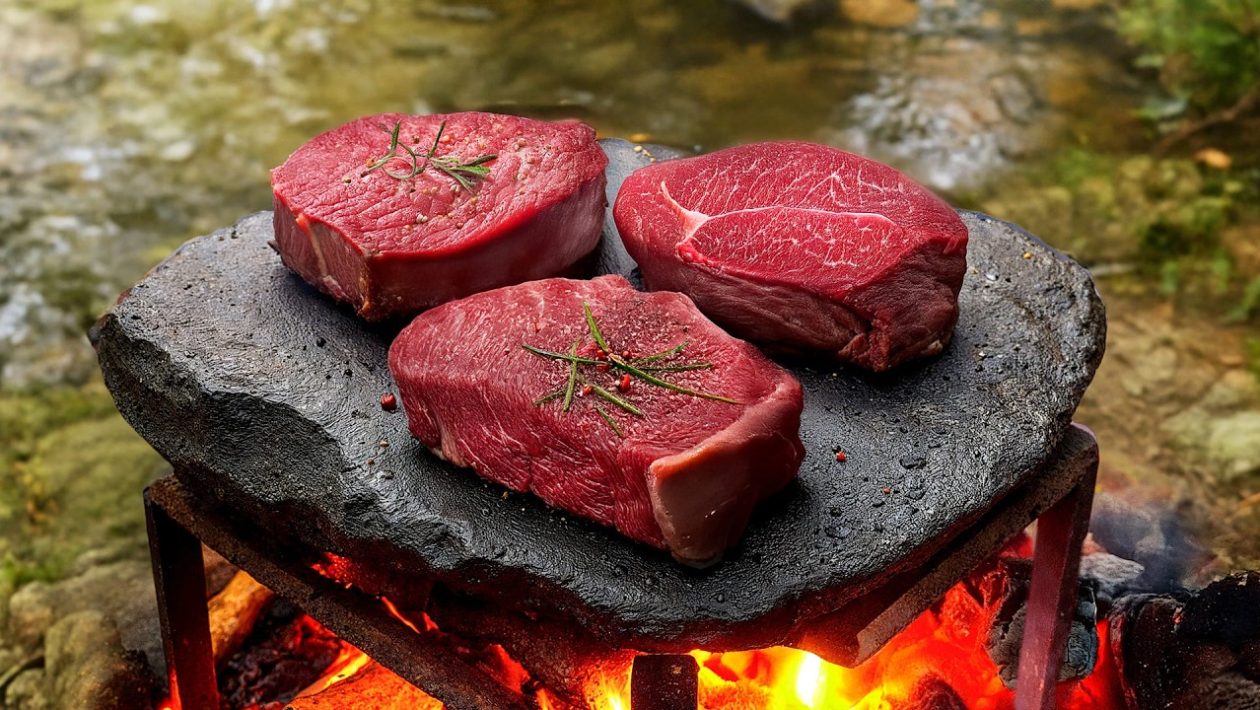
One of the most effective ways to cook steak outdoors is the stone-sear method. By selecting a clean, flat piece of volcanic rock or granite, you create a natural griddle that retains heat exceptionally well.
Place your chosen stone near the edge of the fire, allowing it to gradually absorb the heat. Avoid placing a cold stone directly into a massive flame, as it can fracture. Once the stone is hot enough to sizzle when a drop of water hits it, you are ready to cook. The stone provides an even, radiant heat that produces a superior crust on a ribeye or strip steak compared to a thin metal grate.
The Finishing Touch: Garlic-Onion Butter
The secret to professional-grade flavor at the campsite is a compound butter. Prepare this before you head out, or assemble it quickly on a flat rock or plate once the meat is rested.
- Unsalted Butter: Start with high-quality, room-temperature butter.
- Garlic: Mince it finely to ensure the flavor permeates the meat.
- Onion: Finely diced chives or shallots work best to add a sharp, sweet bite.
- Herbs: Fresh parsley or thyme rounds out the profile.
Once your steak reaches an internal temperature of 125°F to 130°F (for medium-rare), pull it off the stone. Immediately top the hot steak with a generous dollop of your garlic-onion butter. As it melts, the butter creates a rich, pan-sauce effect that combines with the rendered fat and juices of the meat.
Resting and Service
Never skip the rest. Allowing the steak to sit for at least five to seven minutes ensures the juices redistribute throughout the fibers. While the steak rests, check your foil-wrapped potatoes. They should be fork-tender and possess a slightly charred, earthy aroma.
Pairing these heavy, savory components with a strong, black camp coffee provides the perfect balance to the richness of the butter. Keep your preparation simple, trust the heat of your coals, and let the smoke and fire do the heavy lifting.