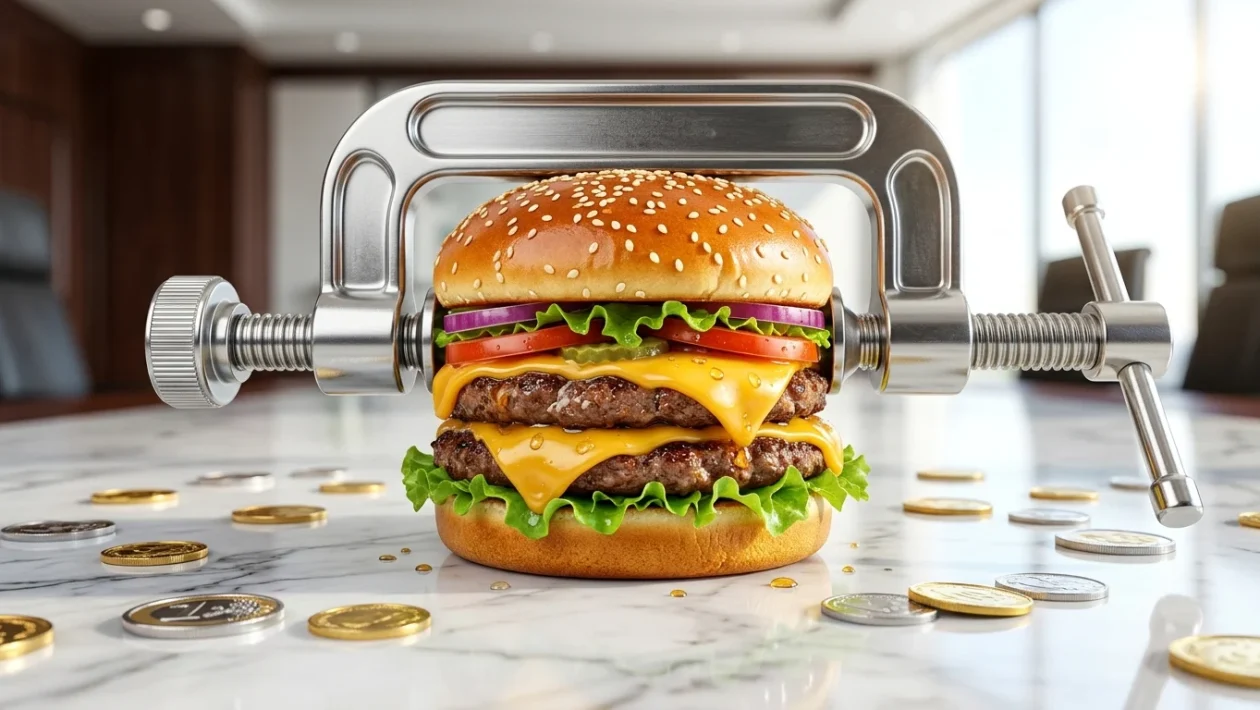
McDonald’s is facing a harsh reality check in its home market. Traffic to the fast-food giant’s U.S. restaurants fell last quarter, prompting a sudden shake-up at the top of its corporate ladder.
Inflation Bites the Bottom Line
U.S. stores open for at least a year saw sales inch up by just 0.8 percent in the three months ending in June. This represents a sharp deceleration compared to the growth recorded during the same period last year.
Consumers are feeling the pinch of stubborn inflation. The financial squeeze has been particularly severe following a spike in gasoline prices tied to the start of the war in Iran.
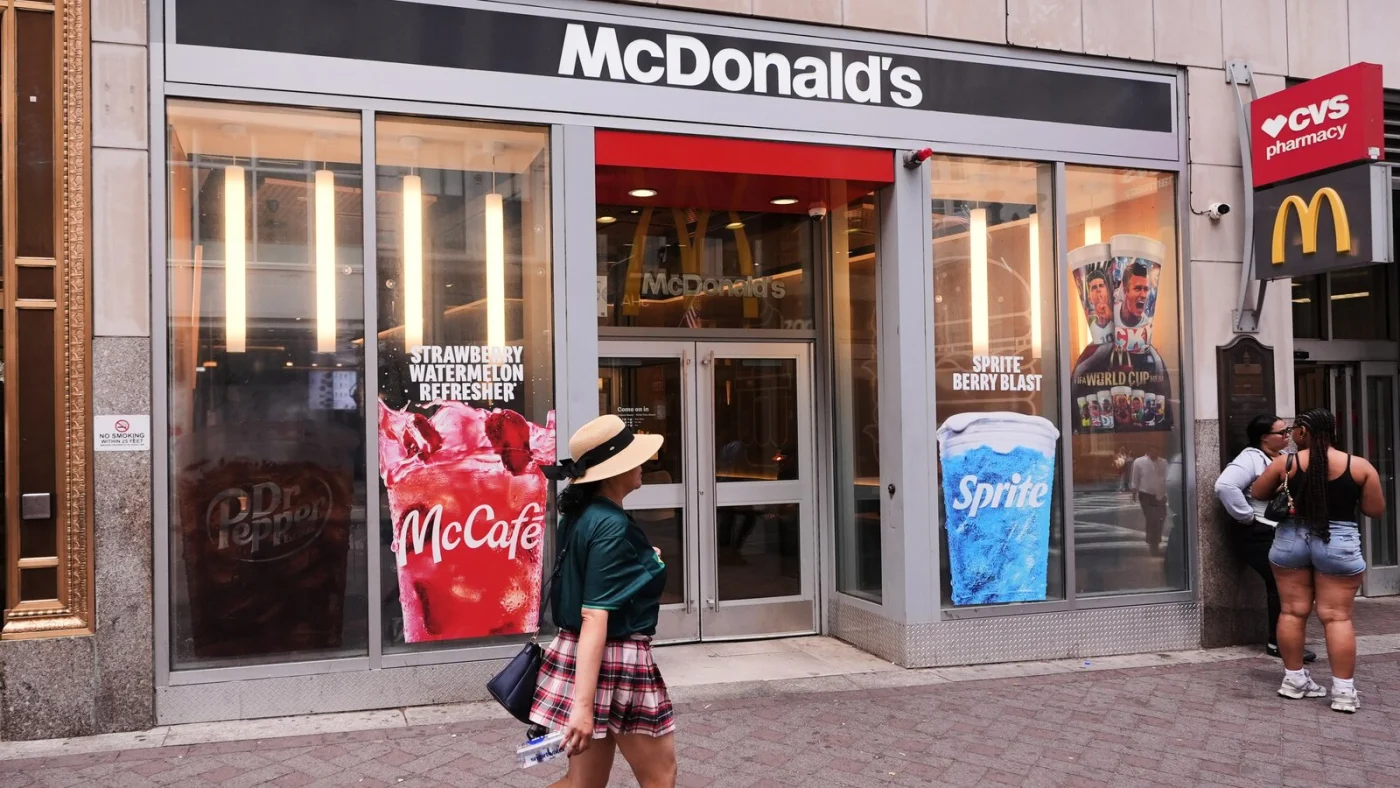
Stubborn inflation has put pressure on lower-income consumers, which make up a big share of McDonald’s customer base.
This economic environment directly targets lower-income households. These budget-conscious diners historically make up a massive portion of McDonald’s core customer base, and their pullback is showing in the data.
A Sudden Leadership Shuffle
Looking for a rapid turnaround, McDonald’s announced immediately that Skye Anderson would take over as president of its U.S. business. Anderson steps in for Joe Erlinger, who spent seven years leading the domestic division.
Erlinger is stepping down from the top job but will transition to an advisory role. He is expected to stay with the company until early 2027.
Stubborn inflation has put pressure on lower-income consumers, which make up a big share of McDonald’s customer base.
Anderson is a seasoned veteran with more than 26 years inside the corporation. She began her career in an entry-level finance position in Australia and was just promoted to the newly created role of U.S. chief operating officer in March.
“We see an opportunity to raise the bar in the U.S. and accelerate performance in our largest market,” McDonald’s CEO Chris Kempczinski said in a news release. He noted that Anderson will bring “focus and urgency” to the division’s efforts.
Franchisee Pressure and Rival Growth
The domestic sales slump arrives at a highly sensitive time for the fast-food chain. McDonald’s recently unveiled sweeping plans to modernize the look of its restaurants.
This strategy demands heavy capital investments in building remodels, new technology, and upgraded equipment. The financial burden will fall largely on franchisees, who own and operate more than 90 percent of global McDonald’s locations.
Meanwhile, industry analysts are closely tracking how rising energy costs impact dining habits. So far, competitors seem to be weathering the storm more effectively than the Golden Arches. Chains including Chipotle, Starbucks, KFC, and Taco Bell all reported fairly strong growth in their most recent quarters.
International Markets Pad the Fall
Despite the domestic stagnation, McDonald’s found financial stability overseas. Total global same-store sales climbed 1.3 percent in the second quarter.
Stronger market performances in Australia, Britain, Germany, and Japan successfully masked the weakness inside the United States.
Overall global revenue, which is heavily bolstered by franchisee fees, jumped 4 percent year-over-year to hit $7 billion. The company’s net profit also saw a healthy 5 percent bump, reaching nearly $2.4 billion for the quarter.