The Battle Against Baked-On Grease
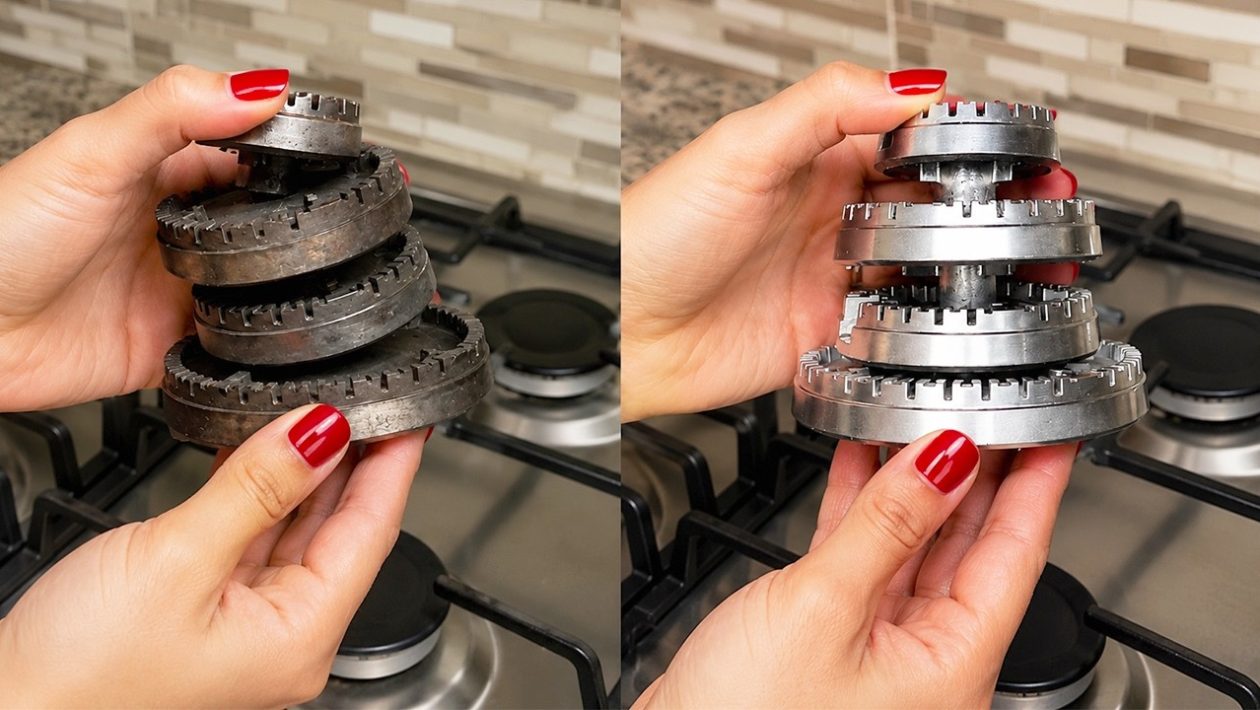
A blackened, grease-stained stove griddle is one of the most stubborn messes in any kitchen. Standard commercial degreasers often overpromise, leaving behind harsh fumes and a sticky residue.
Scrubbing with steel wool damages the finish, turning a routine cleanup into a permanent scratch. You need a solution that dissolves carbonized food without ruining the metal.
Why Commercial Spray Degreasers Fail
Most spray-on commercial cleaners evaporate too quickly to penetrate multiple layers of burnt carbon. By the time you start scrubbing, the active chemicals have already flashed off into the air.
This leaves you doing all the physical work, often resorting to abrasive pads that degrade the stovetop over time. A proper deep clean requires prolonged surface contact.
The Japanese Housekeeping Secret
Japanese housekeeping relies heavily on natural, low-cost ingredients paired with highly efficient techniques. Instead of relying on sheer elbow grease, this approach uses a chemical reaction and a clever sealing method to do the heavy lifting.
The trick involves a homemade paste and a common kitchen staple you already have in your drawer. It targets baked-on fats at a molecular level, breaking them down so they can simply be wiped away.
The Three-Ingredient Paste
You only need three items: baking soda, liquid dish soap, and a splash of warm water. Baking soda is highly alkaline, making it the perfect agent to neutralize and dissolve acidic cooking grease.
Mix half a cup of baking soda with two tablespoons of heavy-duty dish soap. Add just enough warm water to form a thick, spreadable paste.
The dish soap breaks the surface tension of the grease, allowing the baking soda to penetrate the hard, carbonized layers on your stovetop.
The Science of Saponification
When the highly alkaline baking soda meets the acidic, baked-on grease under the right conditions, a process called saponification occurs. The grease is literally converted into a water-soluble soap.
This is why the resting time is critical. You are not just softening the dirt; you are chemically altering it so it releases its physical grip on the metal griddle.
The “Shippu” Wrapping Technique
Applying the paste is only the first step. The real secret is the shippu, or compress method, widely used in Japanese home cleaning routines.
Spread a thick layer of your homemade paste entirely over the dirty griddle. Immediately cover the coated surface tightly with standard plastic wrap.
The plastic wrap traps the moisture, preventing the paste from drying out into a useless chalky powder. Let it sit for at least 30 to 45 minutes, giving the alkaline mixture time to liquefy the burnt carbon.
The Crumpled Wrap Scrubber
Once the resting time is up, peel the plastic wrap off the griddle. Do not throw it away.
Crumple that same piece of plastic wrap into a tight ball. Use it as a makeshift scouring pad to scrub the loosened paste across the griddle.
Unlike abrasive sponges or steel wool, crumpled plastic wrap is firm enough to lift the dissolved grime but gentle enough to leave your stove’s surface completely scratch-free.
The Final Wipe Down
You will immediately see the black grease lifting away, mixed seamlessly into the brown paste. Wipe the entire surface clean with a damp, warm microfiber cloth.
Rinse the cloth and repeat the wipe-down once more to remove any lingering baking soda residue. The griddle will be fully restored to a smooth, factory-fresh finish.