The Pantry Chemistry Experiment
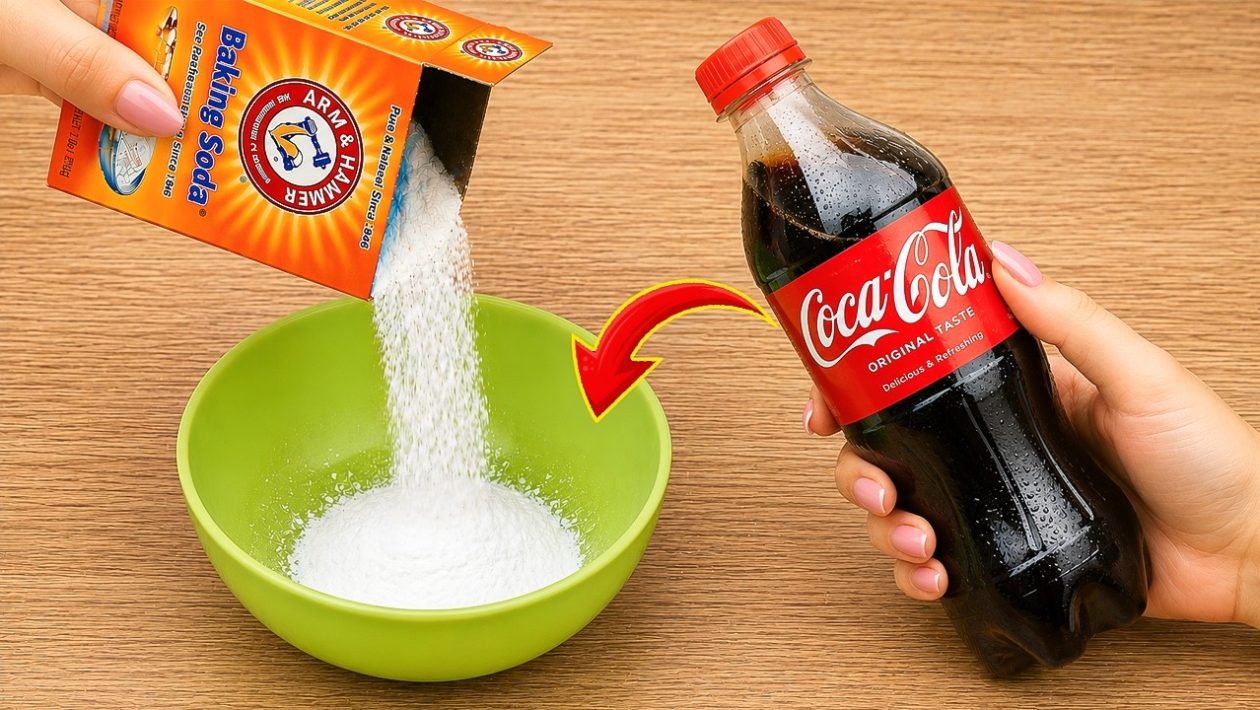
Coca-Cola and baking soda are staples in almost every American kitchen. On their own, one is a popular beverage and the other is a baking essential.
Combine them, and you trigger a volatile chemical reaction. While it looks like a simple science fair volcano, this foaming mixture is actually a highly effective, low-cost household cleaning solution.
You do not need harsh industrial chemicals to tackle tough grime, rust, or clogged drains. The combination of these two everyday items leverages basic chemistry to break down stubborn messes.
The Science Behind the Fizz
The dramatic fizzing reaction comes down to the pH scale. Baking soda, or sodium bicarbonate, is a mild alkaline compound—a base.
Coca-Cola is surprisingly acidic. It contains carbonic acid from carbonation, along with citric and phosphoric acids added for flavor and preservation.
When you mix the base and the acids, they immediately begin to neutralize each other. This rapid chemical exchange releases carbon dioxide gas, creating an aggressive foaming action.
That mechanical fizzing, combined with the mild abrasiveness of the powder and the corrosive nature of the soda’s phosphoric acid, creates a powerful lifting agent for dirt and stains.
Unclogging Stubborn Drains
Commercial drain cleaners often rely on lye or sulfuric acid, which can damage older plumbing and emit toxic fumes. The Coca-Cola and baking soda method offers a safer alternative.
Pour half a cup of dry baking soda directly down a sluggish drain. Follow it immediately with a 12-ounce can of room-temperature Coca-Cola.
The mixture will rapidly expand and foam up the pipe. This expanding pressure, combined with the acidity, helps dissolve hair, grease, and soap scum.
Let it sit for 15 to 30 minutes, then flush the system with a kettle of boiling water to wash away the loosened debris.
Eradicating Toilet Bowl Rings
Hard water stains and mineral buildup in toilets can be notoriously difficult to scrub away. The phosphoric acid in Coca-Cola is highly effective at breaking down limescale.
Start by sprinkling a generous layer of baking soda around the inside of the bowl, focusing heavily on the water line and visible stains.
Slowly pour Coca-Cola over the powder. The resulting fizz will help lift the stains away from the porcelain.
Leave the mixture to work for at least an hour. For the best results on heavy buildup, let it sit overnight before giving it a quick scrub with a toilet brush and flushing.
Removing Rust from Metal Tools
Phosphoric acid is a primary active ingredient in commercial rust removers. It chemically converts iron oxide—rust—into ferric phosphate, a compound that can be easily wiped away.
Because Coca-Cola contains this acid, it acts as a mild rust remover on its own. Adding baking soda provides the necessary friction to scrub the oxidized metal.
Make a thick paste using baking soda and a small splash of Coca-Cola. Apply the paste directly to rusty tools, bicycle chains, or chrome car bumpers.
Scrub the area with a stiff-bristled brush or a balled-up piece of aluminum foil. Wipe the metal clean with a damp cloth and dry it thoroughly to prevent flash rusting.
Cutting Through Baked-On Kitchen Grease
Scorched pots and greasy baking sheets usually require intense elbow grease to get clean. You can bypass the scrubbing by letting this acid-base reaction do the heavy lifting.
Sprinkle a heavy coating of baking soda over the scorched areas of your cookware. Pour just enough Coca-Cola over it to initiate the foaming reaction.
Place the pan on the stove and heat it on low for about 20 minutes. The heat accelerates the chemical reaction, breaking down the polymerized cooking grease.
Once the pan cools, the previously bulletproof carbon buildup will wipe away easily with a standard dish sponge.
Crucial Safety Warnings
While this is a natural cleaning alternative, the reaction requires specific handling. The most critical rule is never to mix these two ingredients inside a sealed container.
The rapid expansion of carbon dioxide gas creates immense pressure instantly. If trapped inside a closed bottle, it will detonate violently, potentially causing injury or property damage.
Always mix the ingredients directly on the open surface you intend to clean. Keep the area well-ventilated, and let the grocery aisle chemistry do the hard work for you.