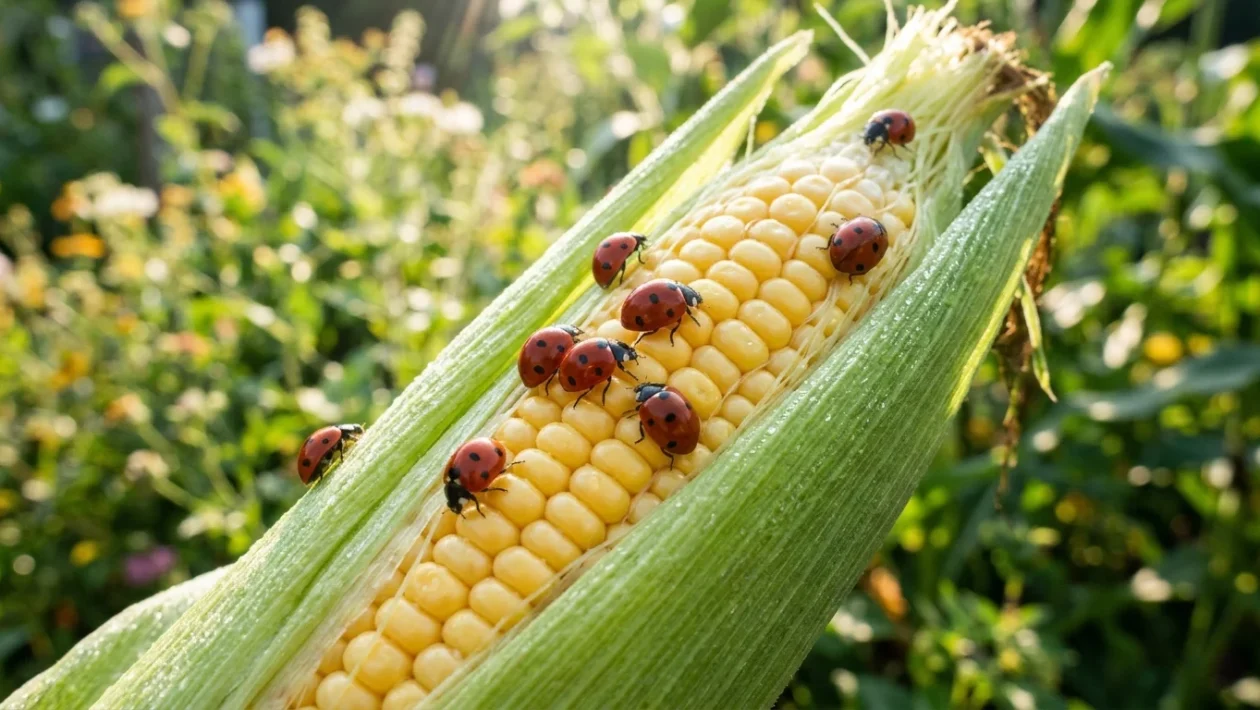
Spotting a cluster of ladybugs on a single ear of corn might look like a crop crisis. In community gardens across the country—including hotbeds for summer crops like Thornton, Colorado—gardeners frequently find these bright red beetles swarming their harvests.
The immediate reaction is often panic, but the reality is that ladybugs have absolutely zero interest in eating your corn. If they are gathering on your stalks, they are hunting.
A Hidden Garden Infestation
Ladybugs are aggressive predators. When they swarm a specific plant and ignore the rest of the crop, it indicates a severe, often unnoticed infestation of smaller pests.
Aphids are their primary target. These tiny, sap-sucking insects drain the life out of corn, multiplying by the hundreds if left unchecked. The ladybugs are simply following the food source.

A close-up of a ladybug actively hunting for aphids and other small pests on a garden leaf.
The Right Action to Take
The best course of action is to step back and do absolutely nothing. Let the ladybugs feast.
Attempting to wash them off or applying pesticides will disrupt a highly effective natural cleanup process. A small team of ladybugs can decimate a colony of hundreds of aphids in a matter of days.
Once they completely exhaust the aphid supply, the ladybugs will naturally move on to the next infested plant in the garden.
The Catch: Indiscriminate Eaters
While they are highly beneficial for clearing out agricultural pests, ladybugs are indiscriminate eaters. They do not distinguish between destructive garden pests and desirable insects.
If a monarch butterfly caterpillar happens to cross their path, it will likely become part of the buffet. They are strictly focused on consuming whatever soft-bodied insects they can find.
Despite this lack of selectivity, ladybugs remain one of the most efficient natural pest controls available. If they show up on your corn, the cleanup crew has officially arrived.