The Problem with Broken Household Plastic
Plastic household items break constantly. A cracked storage bin, a split garbage can, or a fractured refrigerator drawer usually ends up in the trash.
Replacing these items adds up quickly. Most people attempt to fix them with super glue, only to watch the repair snap again the first time the plastic flexes.
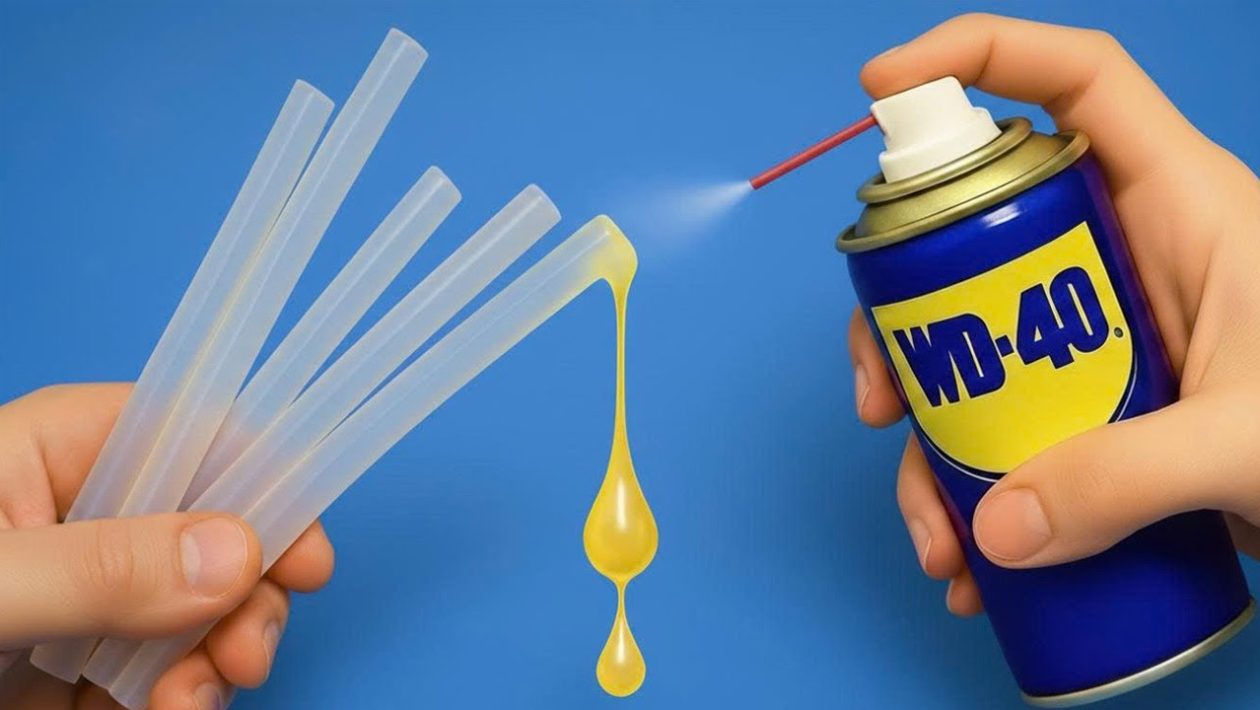
Super glue dries brittle, making it useless for flexible plastics. A permanent, flexible fix requires two common household items: a hot glue gun and a can of WD-40.
Why Hot Glue and WD-40 Work Together
Hot glue is an excellent gap filler and adhesive for plastic. It remains slightly flexible after it cools, allowing the repaired item to bend without breaking.
The primary issue with hot glue is the application. It leaves bulky, ugly ridges and sticks to everything it touches. You cannot shape it with your fingers or tools without making a sticky mess.
That is where WD-40 comes in. By acting as a chemical release agent, WD-40 creates a non-stick barrier. It prevents liquid glue from adhering to whatever presses against it.
Prepping the Plastic Surface
Preparation dictates the strength of the repair. Dirt, grease, and old soap residue will prevent hot glue from bonding properly to the plastic.
Wipe the cracked area thoroughly with rubbing alcohol and let it dry entirely. If the plastic is exceptionally smooth, scuff the edges of the crack with medium-grit sandpaper.
Sanding creates microscopic grooves in the plastic. This gives the hot glue a textured surface to grip, significantly increasing the structural strength of the patch.
Executing the Repair
Plug in your hot glue gun and allow it to reach its maximum temperature. The hotter the glue, the better it will flow into the tiny crevices of the crack.
Run a thick, continuous bead of hot glue directly along the split. Overfill the crack slightly so the glue sits raised above the surface of the plastic.
Immediately grab your can of WD-40 and a metal pressing tool, like a putty knife, a spoon, or a flat screwdriver. Lightly mist the metal tool with the WD-40.
Shaping for a Smooth Finish
Press the lubricated tool directly into the scalding hot glue. Smooth the glue out flat against the plastic surface, dragging it tightly over the crack.
Because of the WD-40 barrier, the glue will not stick to the metal. Instead, the pressure forces the liquid adhesive deep into the split.
You can repeatedly press and mold the glue until it lies completely flush with the surrounding plastic. This transforms a messy blob of glue into a clean, factory-like seam.
The Custom Patch Method
You can also use this chemical reaction to build custom replacement pieces for missing chunks of plastic.
Spray a generous layer of WD-40 onto a flat piece of glass or tile. Pump a large pool of hot glue directly onto the lubricated surface.
Once the glue cools and hardens, it will peel right off the glass without sticking. You can then cut this flat sheet of hardened glue with scissors and bond it over a large hole in a plastic bucket or bin.
Final Cleanup and Curing
Hot glue cures in seconds once it is pressed thin. As soon as the patch feels solid to the touch, the repair is complete.
Wipe away the residual WD-40 from the surrounding plastic using a dry paper towel. The resulting joint is completely waterproof and immediately ready for use.
This technique restores utility to heavy-duty items like lawn furniture, storage totes, and watering cans, saving them from the landfill.