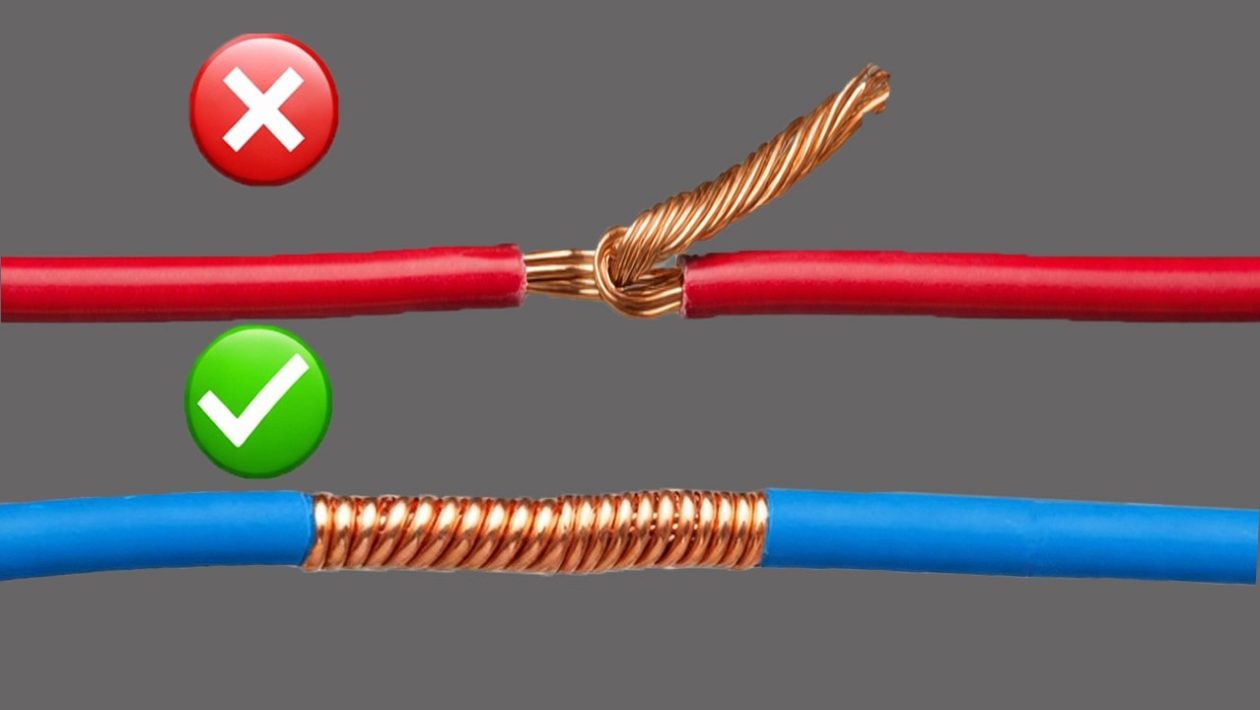
The Hidden Danger in Your Walls
Most people connect electrical wires by simply stripping the ends and twisting them together like a bread tie. This is a massive mistake.
A weak electrical connection creates resistance. That resistance generates heat, which can eventually melt insulation and start a fire.
Professionals do not rely on haphazard twists. They use specific mechanical splices that ensure the wires will not pull apart under tension or degrade over time.
The Essential Tools
You cannot achieve a professional splice with a kitchen knife and masking tape. The right tools dictate the safety and longevity of the connection.
- Professional Wire Strippers: A heavy-duty or automatic wire stripper removes insulation cleanly without scoring or weakening the copper core.
- Heat Shrink Tubing: This replaces standard electrical tape, providing a secure, waterproof, and insulated seal that will not unpeel over time.
- Heat Gun: Essential for activating the heat shrink tubing safely and evenly.
The Standard Inline Splice
When connecting two single-core (solid) wires, the primary goal is tensile strength. A proper inline splice guarantees the wires stay locked together even if pulled.
Start by stripping about one inch of insulation from both wires. Cross the two bare wires in the shape of an “X” about midway down the exposed copper.
Wrap one wire tightly around the straight shaft of the other, making at least four or five tight turns. Repeat the process with the second wire, wrapping it in the opposite direction.
The result is a slim, uniform twist that actually becomes tighter when mechanical tension is applied.
Joining Solid to Stranded Wire
Connecting a solid, single-core wire to a flexible, multi-strand wire requires a completely different approach. The stranded wire is inherently weaker and can easily slip out of a standard twist.
Strip both wires, exposing slightly more length on the stranded wire. Lay the stranded wire parallel to the solid wire.
Wrap the flexible stranded copper tightly around the straight solid core, working your way toward the end.
Once the stranded wire is fully wrapped, use a pair of pliers to bend the tip of the solid wire back over the twisted section. This creates a hard mechanical clamp that locks the delicate strands securely in place.
The Britannia Joint for Heavy Gauge Wire
When dealing with large-diameter single-core wires, twisting them around each other becomes nearly impossible due to their rigidity. This is where the Britannia joint comes into play.
Instead of twisting the main wires, bend a small right angle at the bare tip of each heavy wire. Lay the two heavy wires parallel to each other, with the bent tips facing outward.
Take a separate, thinner piece of bare copper wire and wrap it tightly around the entire overlapping section of the two heavy wires. The bent tips catch the wrapping wire, preventing it from sliding off under tension.
Sealing the Connection
A perfect mechanical twist is useless if left exposed to ambient moisture or accidental contact. Standard electrical tape is unreliable because its adhesive degrades and unwinds as temperatures fluctuate.
Always slide an appropriately sized piece of heat shrink tubing over one wire before you begin twisting.
Once your splice is fully secure, slide the tubing directly over the exposed copper. Apply heat evenly with a heat gun until the tubing shrinks to fit the exact contours of the joint, creating a permanent, waterproof jacket.