The Power of Low-Tech Engineering
Water bills are rising, and practical off-grid solutions are gaining serious traction among homeowners. A veteran 60-year-old plumber recently proved that you do not need expensive hardware to build a reliable water collection setup.
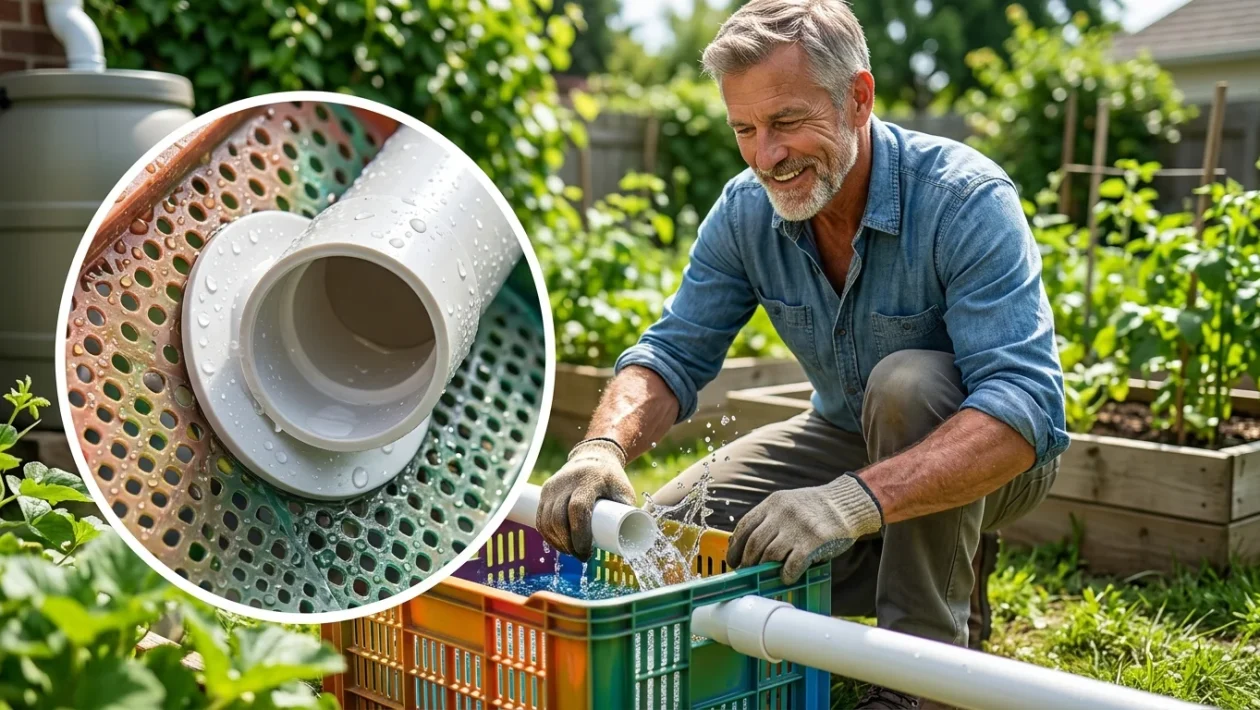
The materials for this highly efficient system are surprisingly basic. By combining a discarded plastic fruit crate with standard PVC pipe, you can engineer a continuous, gravity-fed water source for everyday household yard needs.
Repurposing the Fruit Crate
Agricultural plastic fruit crates are structurally robust, designed to withstand heavy loads and harsh weather. Their naturally perforated plastic walls make them the perfect housing for a rudimentary water filtration basin.
Instead of throwing these crates into a landfill, DIY builders can use them as the primary intake point for rainwater or greywater collection. When lined with a simple mesh screen or a layer of gravel, the crate acts as a heavy-duty pre-filter that blocks leaves, twigs, and large debris from entering the plumbing.
Harnessing Gravity for Natural Flow
The brilliance of this plumbing hack lies in its complete lack of mechanical parts. The system operates entirely without electricity or motorized water pumps.
By elevating the plastic crate intake above your target destination, water flows naturally downward through the attached PVC piping. This gravity-based approach eliminates moving parts, reducing system maintenance to almost zero.
Constructing the PVC Conduit
Connecting the components requires only basic hand tools and materials found at any local hardware store. A hole is carefully cut into the base of the plastic crate to accommodate a standard PVC drain flange.
Schedule 40 PVC pipe is then routed from the crate directly to a collection barrel or a garden irrigation line. PVC cement ensures the joints remain completely watertight under the low pressure of the gravity flow.
Practical Yard and Garden Applications
This upcycled conduit system is strictly for non-potable water use. It excels at harvesting roof runoff or diverting safe yard water away from a home’s foundation.
Homeowners can channel the captured water to irrigate raised garden beds, wash muddy outdoor tools, or fill outdoor utility sinks. It provides a reliable secondary water source without adding a single cent to the monthly utility bill.
High-tech, commercial rainwater harvesting systems often cost thousands of dollars to install. Reusing discarded plastic crates and leftover plumbing scrap achieves the exact same result through clever, practical design.