The Appeal of Industrial DIY
Discarded wooden pallets and bagged concrete are cheap, abundant materials that most people overlook. When combined, they create high-end, industrial-style furniture and garden fixtures that rival expensive retail pieces.
Pouring concrete directly into or over modified pallets allows you to utilize the wood as either a permanent structural frame or a temporary mold. The resulting projects are heavy, weather-resistant, and built to last for decades.
Choosing Safe and Sturdy Materials
Not all wooden pallets are safe for home projects. Always look for the “HT” stamp on the wood, which indicates the pallet was heat-treated to kill pests rather than bathed in toxic chemical fumigants like methyl bromide.
For the pour, standard high-strength concrete mix from any local hardware store works perfectly. If you are creating a thinner surface, opt for a sand-topping mix or add fiberglass reinforcement fibers to prevent cracking.
Non-Negotiable Safety Precautions
Working with dry cement powder exposes your lungs to harmful silica dust. Always wear an N95 respirator mask and safety goggles during the measuring and mixing phases.
Wet concrete is highly alkaline and can cause severe chemical burns if left on the skin. Heavy-duty rubber gloves and long sleeves are mandatory from the moment water hits the dry mix.
Preparing the Wood for the Pour
If you intend to use the pallet as a permanent frame that holds the cured concrete, you must secure all loose boards. Drive outdoor-rated wood screws into any wobbly planks to ensure the frame remains rigid under the massive weight of the wet mix.
Reinforce the underside of the pallet with a sheet of thick plywood. Seal all internal seams and corners with silicone caulk.
This critical step prevents wet concrete from leaking through the gaps and ruining your floor or driveway.
The Mixing Process
Consistency is everything when working with bagged concrete. Follow the manufacturer’s exact water-to-mix ratio, adding the water gradually as you turn the mix with a shovel or a drill-mounted paddle mixer.
You want a mixture that resembles thick oatmeal or peanut butter. It must be wet enough to pour and settle easily, but stiff enough to hold together without excessive water bleeding to the surface.
Pouring and Leveling
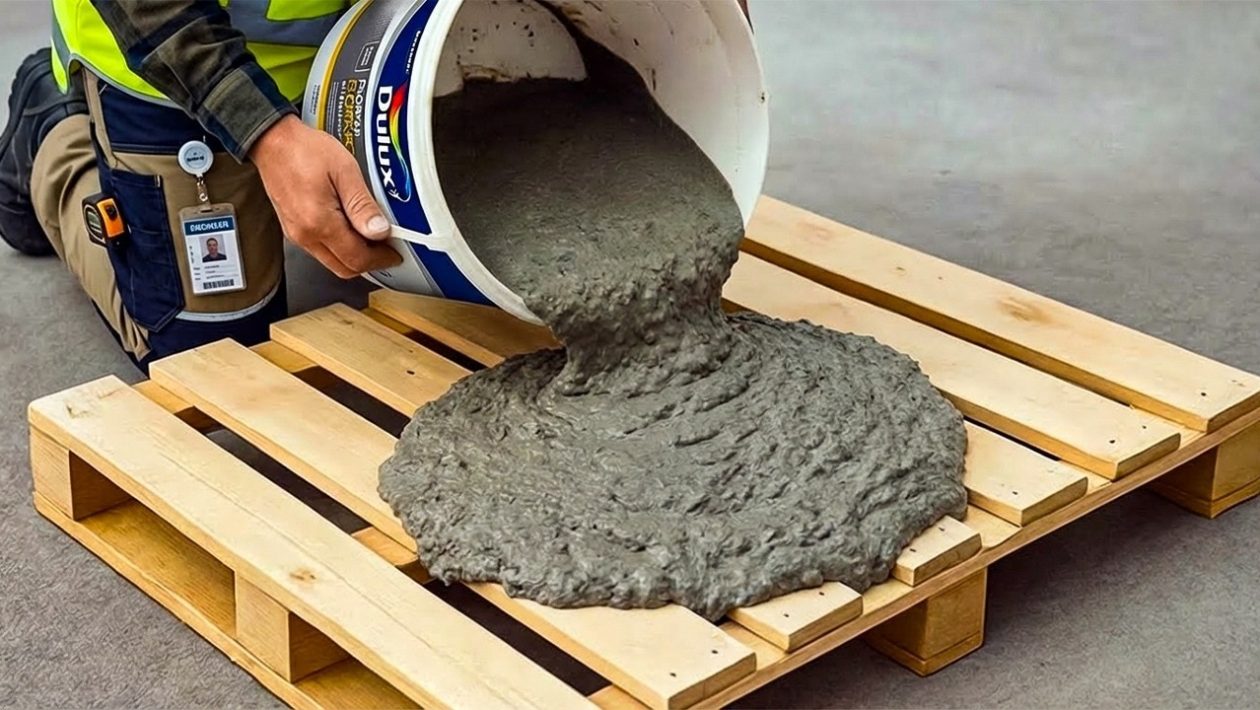
Begin transferring the wet concrete into the prepared pallet frame. Use a margin trowel to aggressively push the material deep into the corners and edges, ensuring no hollow voids are left behind.
Trapped air bubbles cause structural weakness and ugly surface craters. To remove them, repeatedly tap the outside edges of the pallet with a rubber mallet until you see tiny bubbles rising to the top.
Once filled, use a straight piece of scrap wood to screed the top. Pull it back and forth across the concrete surface in a sawing motion to level the mixture flush with the pallet’s wooden edges.
Curing for Maximum Strength
Concrete does not dry; it cures through a chemical reaction that requires trapped moisture. Cover the poured project tightly with a plastic tarp to lock in the humidity.
Let the concrete sit entirely undisturbed for at least 48 to 72 hours. Attempting to move the pallet or apply weight too early will cause microscopic fractures that eventually split the slab.
Practical Applications for Concrete-Filled Pallets
Transforming a pallet into a solid patio table base is the most common application. The concrete fills the internal voids, creating a heavily weighted, wind-proof centerpiece that withstands severe weather.
Alternatively, dismantled pallet boards make excellent temporary formwork for casting custom garden pavers. The rough texture of the wood transfers directly to the wet concrete, leaving a highly realistic wood-grain imprint on the finished stepping stones.
For a heavy-duty workshop bench, embedding a reinforced wooden pallet into a thick concrete slab provides a massive, vibration-dampening surface. This creates an unmovable workstation perfectly suited for metalworking or heavy mechanical assembly.
The Final Polish
Once fully cured, the contrast between the rough-sawn pallet wood and the smooth, gray concrete creates a striking, modern aesthetic. Use an orbital sander to smooth down any rough wooden edges or exposed splinters.
Finally, apply a penetrating concrete sealer to the slab. This invisible barrier protects the highly porous concrete surface from water damage, freezing temperatures, and oil stains.