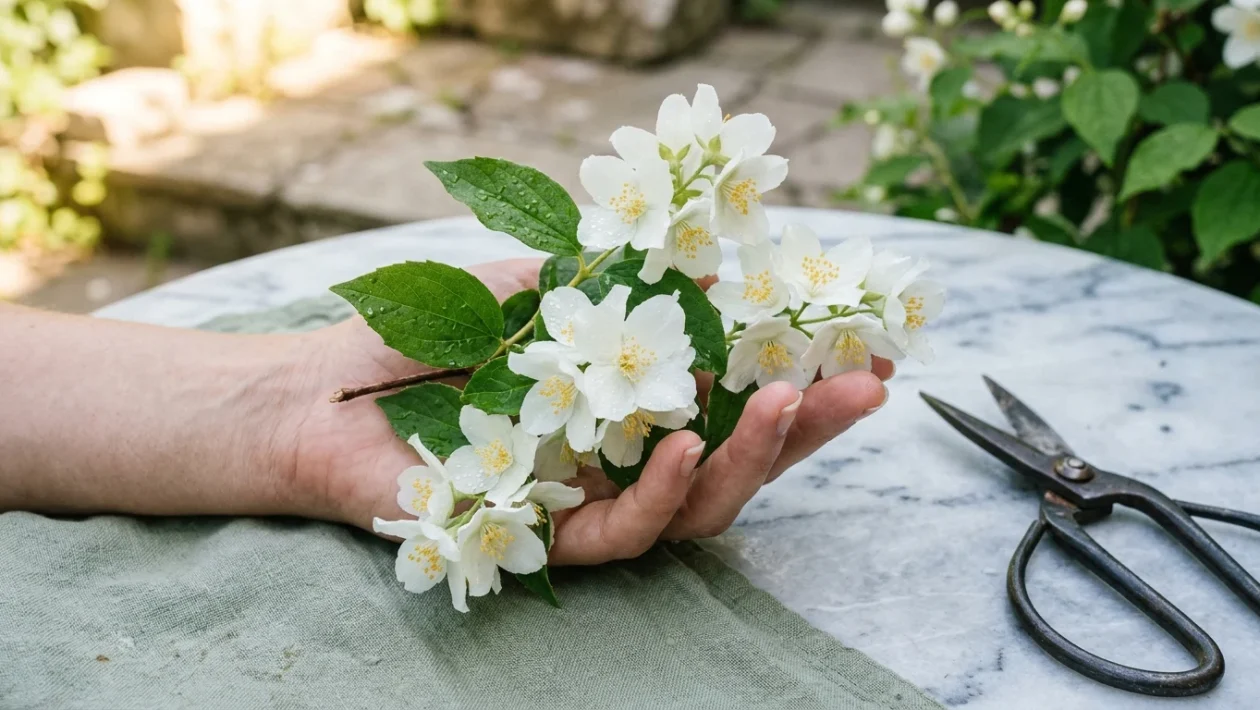
The mock orange (Philadelphus coronarius) carries a scent so powerful it defines the start of summer. For two weeks in June, this historic shrub erupts in striking, four-petaled white flowers that smell intensely of citrus blossoms.
It was once a staple of American landscapes. In the spring of 1807, Thomas Jefferson planted nine mock orange shrubs around the corners of his Monticello home.
Today, the plant has largely vanished from residential yards. Modern gardeners demand multi-season interest, and mock orange is undeniably a plain green bush for most of the year. It also grows leggy without strict maintenance.
Yet, for those with space to spare, its historic pedigree and brief, intoxicating fragrance make it an unbeatable background filler.
Choosing the Right Cultivar and Location
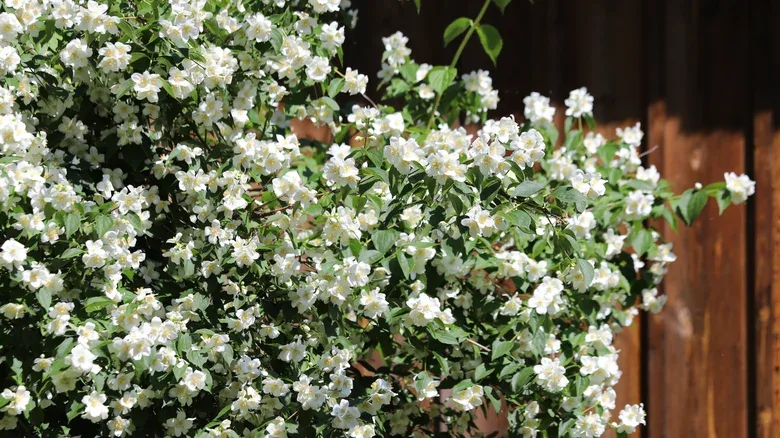
A flowering mock orange shrub planted in a mixed garden bed.
Mock orange thrives as far north as USDA Zone 3. It serves best as a fragrant filler planted toward the back of a mixed shrubbery border.
Because the scent is most potent on summer evenings, position the shrub within catching distance of a patio or open window.
Depending on the cultivar, mock orange can span anywhere from 2 to 10 feet in height and width. Size matters when selecting one for your space.
The ‘Beauclerk’ variety reaches 8 feet tall and requires constant pruning if squeezed into a tight corner. For smaller yards, ‘Manteau d’Hermine’ tops out at a manageable 30 inches, while ‘Belle Etoile’ provides a reliable middle ground at 5 feet.
To mask the shrub’s bare lower stems, surround its base with lady’s mantle (Alchemilla) or hardy geraniums. Planting asters or Japanese anemones (Anemone × hybrida) in front will guarantee a vibrant burst of autumn color long after the mock orange blossoms fade.
Planting and Pruning Fundamentals
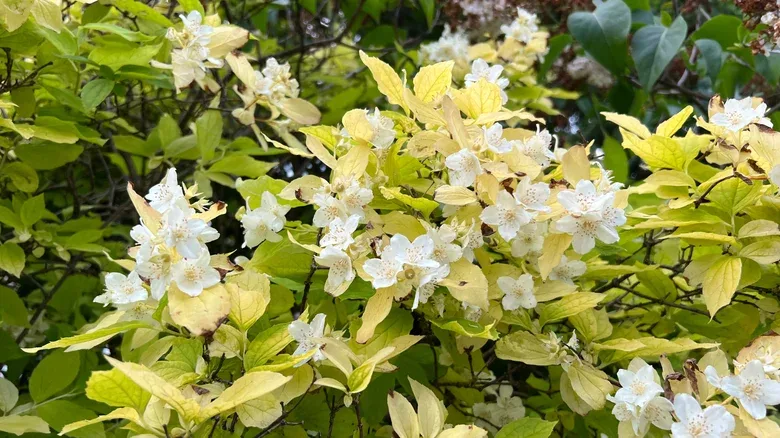
White blossoms growing on a mock orange branch.
Standard mock orange requires full sun and well-draining soil for maximum flower production. However, the golden leaf variety (Philadelphus coronarius ‘Aureus’) needs protection from harsh, direct sunlight to prevent leaf scorch.
Planting in autumn or spring gives the root system time to establish before extreme weather hits. Dig a hole twice the width of the root ball, mix in well-rotted compost, and apply mulch—leaving a strict 2-inch gap around the central stem.
While mature shrubs hold their own, new plantings need consistent watering during dry spells for the first two years. There is no need to deadhead the plant, and it rarely requires feeding unless your soil is highly depleted.
Pruning is non-negotiable. Mock orange sets its buds on old wood, meaning a cut at the wrong time destroys the next season’s display.
Prune immediately after the summer blossoms drop, never between October and March. Remove the oldest stems at ground level, taking no more than one-third of the total plant.
Trim the remaining branches back to a strong new shoot to keep the shrub dense and contained.