Household grime is a given, but powdery fungal growth demands immediate action. When mildew appears in damp, poorly ventilated corners of your home, skip the harsh chemical cleaners. The most effective weapon against these stains is likely sitting in your kitchen pantry.
Mildew thrives in warm, moist environments like shower grout, under kitchen sinks, and on neglected clothing. While closely related to mold, mildew is distinct. The U.S. Environmental Protection Agency classifies it as a surface-level fungus that grows flat rather than penetrating deeply into materials.
You can identify mildew by its flat profile and white, gray, or light brown coloring. Mold, by contrast, is raised, fuzzy, and often green, yellow, orange, or black. Though less destructive than mold, mildew exposure can still trigger allergic reactions, skin and nail infections, aggravated asthma, and respiratory issues.
The Science Behind Vinegar As a Cleaner
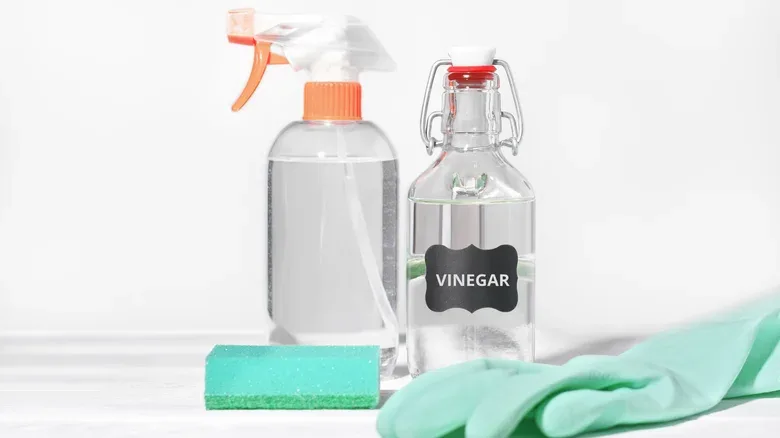
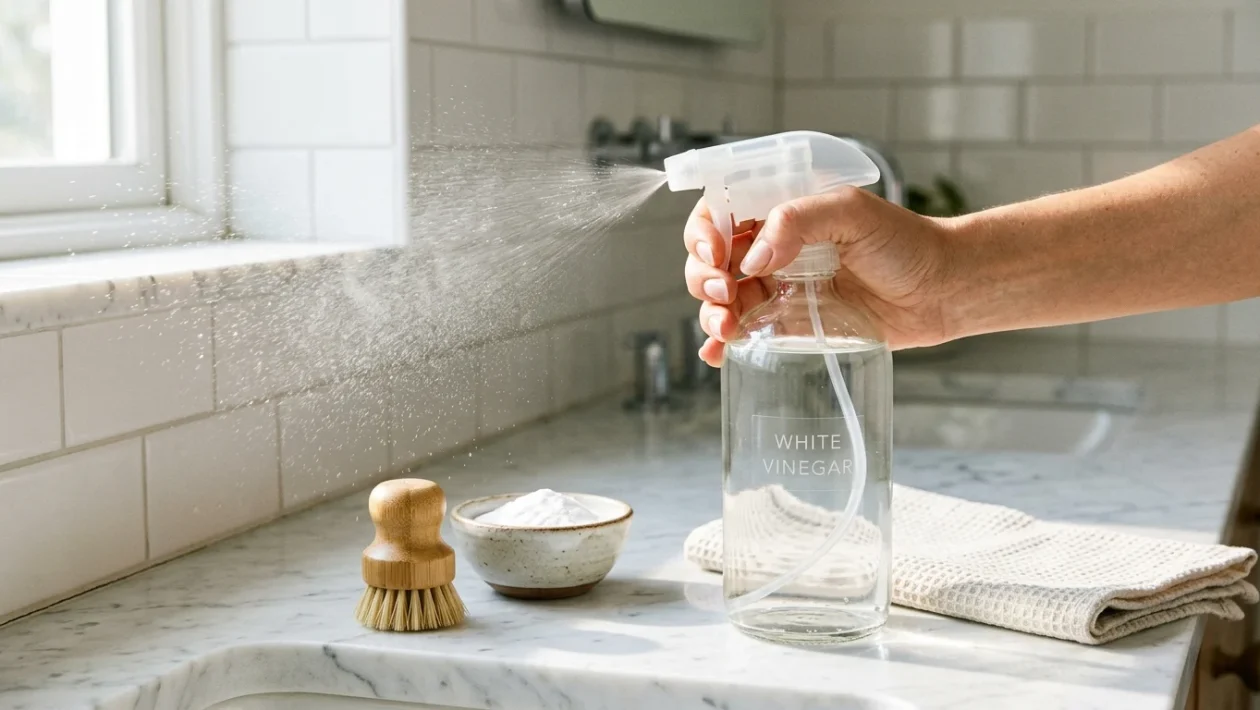
White vinegar prepared for household cleaning tasks.
Standard white vinegar contains between 4% and 8% acetic acid. With a highly acidic pH level resting between 2 and 3.5, it easily eradicates a wide variety of household bacteria and fungi.
It works best on non-porous surfaces like vinyl, hard plastic, and stainless steel. However, strict caution is required when using it around the house. Leaving highly acidic vinegar on hardwood floors or certain metals for extended periods can cause lasting corrosion or structural damage.
Eradicating Mildew From Clothing
If mildew spores have infiltrated your wardrobe, load the affected items into the washing machine. Run a hot water cycle using standard detergent alongside one to two cups of white vinegar.
For heavily stained garments, apply a pretreatment paste made of equal parts white vinegar and baking soda. Gently scrub the paste into the fabric and let it sit for at least 30 minutes before washing. Finally, dry the clothes outside in direct sunlight to neutralize any lingering spores.
Sanitizing Household Surfaces
To tackle non-fabric areas, drench the mildew stain directly with undiluted white vinegar containing 5% acetic acid. Allow the liquid to sit undisturbed for a full hour to effectively break down the fungus.
Once the hour passes, scrub the remaining mildew away with a soft-bristled brush. Wipe the area completely dry with a clean rag to prevent the moisture-loving spores from returning.
Proper Cleanup and Safety Measures
Fungal spores easily become airborne during the cleaning process. Always work in a well-ventilated space and wear goggles, rubber gloves, and a face mask for respiratory protection.
When the job is done, sanitize your scrubbing brush by soaking it in bleach for a full hour. Rinse the brush thoroughly and allow it to dry entirely before storing, and immediately launder all used rags in the washing machine.