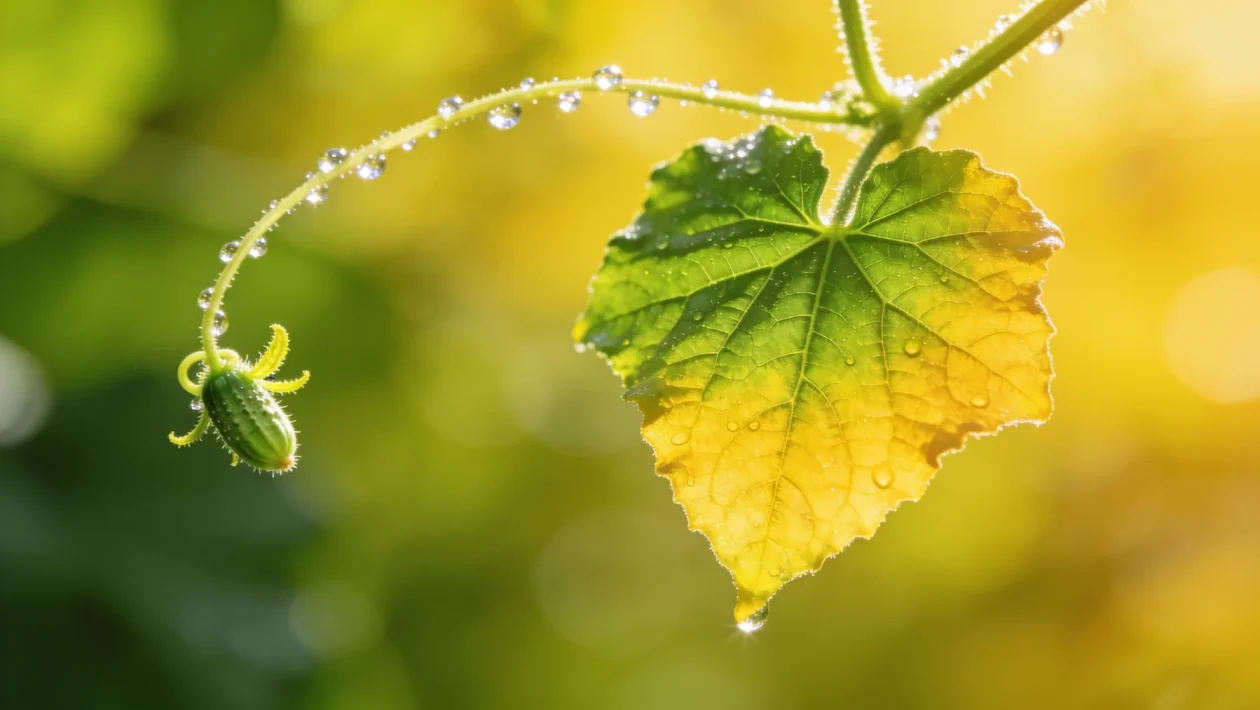
Cucumber leaves usually start turning yellow at the worst possible time. The plants are covered in blossoms, the first crisp cucumbers are hanging on the vine, and you are already planning your summer salads. A few yellow leaves do not mean your harvest is over.
Yellowing foliage is simply a distress signal. Your plant might be starving for water, nutrients, or airflow, or it could be battling pests and disease. The key is to stay calm and avoid dumping random fertilizers or sprays onto the soil all at once.
Start by checking these five basic factors. Often, addressing the root cause is enough to stop the problem in its tracks and keep your cucumbers producing for weeks to come.
1. Note Exactly Which Leaves Are Yellowing
Before taking action, inspect the entire plant. The location of the yellowing leaves tells a specific story about the plant’s health.
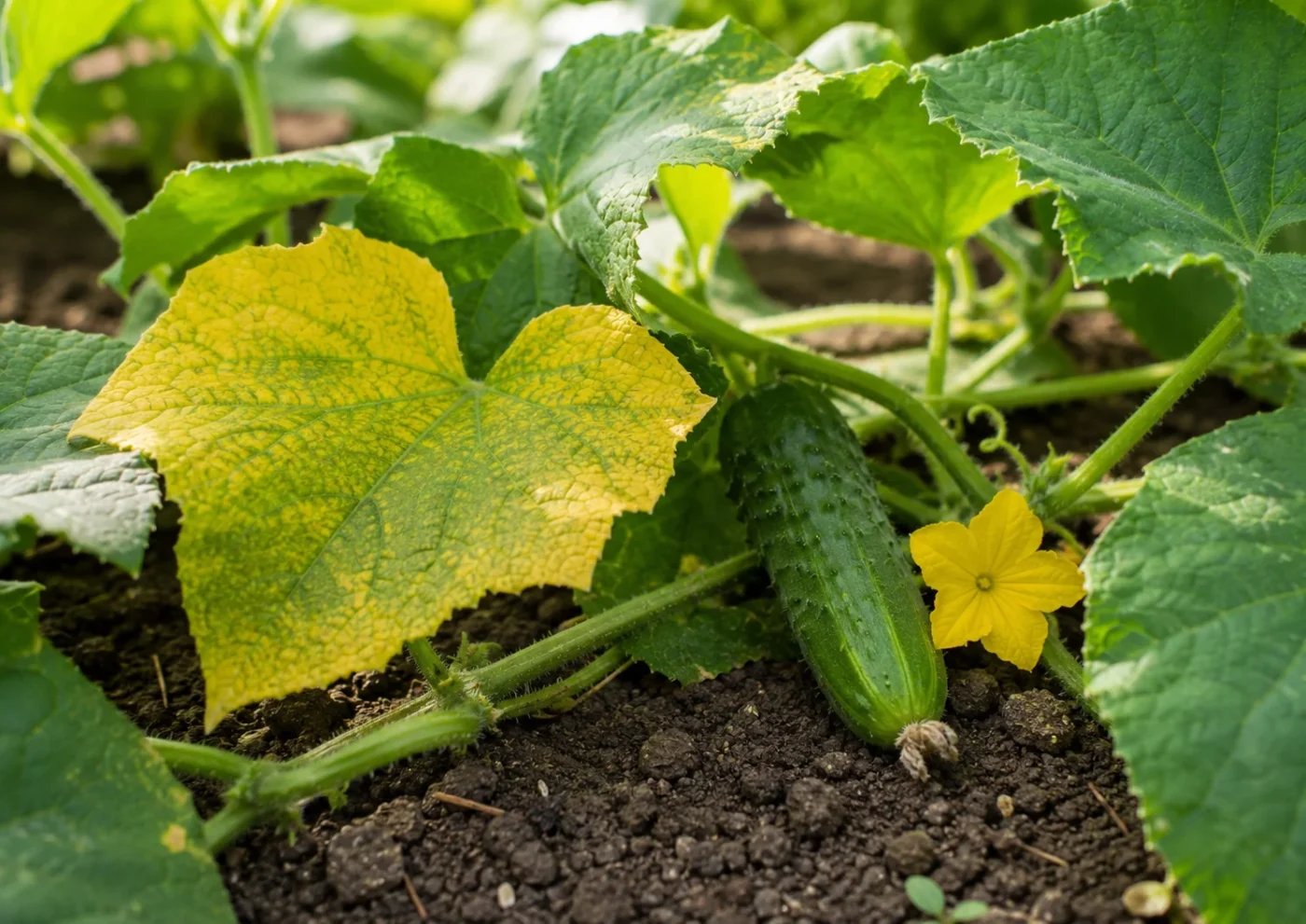
AI generated illustration of cucumber plants.
If only the oldest, lowest leaves turn yellow while the top of the plant stays green and continues flowering, this is normal aging. During peak production, the plant channels its energy into growing fruit and naturally abandons its oldest foliage.
You can snip off fully yellowed or dried leaves resting on the ground using clean shears. This reduces moisture buildup and removes potential breeding grounds for disease. Just avoid heavy pruning, as removing too much foliage at once will weaken the plant’s ability to photosynthesize.
You should be concerned if yellowing affects new growth at the top, spreads rapidly, or causes the leaf edges to turn brown and crispy. Curling leaves, dropping blossoms, deformed fruit, or visible bugs also indicate a larger issue beyond natural aging.
2. Test Soil Moisture and Adjust Watering
Cucumbers have shallow root systems. They react quickly to both drought and waterlogged soil, both of which cause leaves to yellow, wilt, and lose their firmness.
Stick your finger about two inches deep into the soil. If it feels dry and crumbles easily, your plants need water. If the soil is heavy, muddy, or smells foul near the root zone, you are overwatering.
A common gardening mistake is watering cucumbers lightly every day. This only dampens the top layer of soil, forcing roots to stay near the surface where they overheat and dry out instantly during a heatwave.
Instead, water your cucumbers deeply and less frequently to encourage deep root growth. Always water at the base of the plant early in the morning so the roots absorb moisture before the afternoon heat hits. Avoid using ice-cold water, which shocks the root system.
If your soil dries out too fast, apply a thin layer of grass clippings, straw, or compost as mulch. This retains moisture and regulates soil temperature. Keep the mulch pulled slightly away from the main stem to prevent rot.
3. Flip the Leaves and Inspect for Pests
The true cause of yellowing leaves often hides on their undersides. This is prime real estate for aphids and spider mites.
If your leaves look speckled with tiny light dots and feature faint webbing underneath, spider mites have likely moved in. These microscopic pests multiply rapidly in hot, dry weather and can take over a garden bed or greenhouse in days.
Remove heavily infested leaves immediately. If you use a pest control spray, saturate the undersides of the remaining leaves where the mites hide, following the product’s exact instructions.
Sticky, wrinkled, and yellowing leaves often point to aphids. These pests cluster around young shoots, flowers, and stems, and they often attract ants. A strong blast of water from the hose can dislodge a minor aphid infestation. For larger colonies, use an insecticidal soap approved for vegetables.
4. Look for Angular Spots Caused by Disease
If the yellow spots look angular and are confined between the leaf veins before turning brown, suspect downy mildew.
This common disease thrives in late summer when nights get cooler, morning dew lingers, and humidity levels spike. In damp conditions, you might even spot gray or purplish fuzz on the underside of the leaves.
If you spot downy mildew, immediately remove the most damaged leaves and stop all overhead watering. Thin out dense foliage to improve airflow around the healthy vines. Do not throw diseased leaves into a standard compost bin, as the pathogens can survive unless the pile gets exceptionally hot.
If the disease spreads quickly, treat the plants with a fungicide specifically labeled for edible crops. Never spray random homemade chemical mixtures on your plants. Even natural ingredients can scorch the foliage if the solution is too concentrated or applied under direct sunlight.
5. Save the Fertilizer for Last
When gardeners see yellow leaves, their first instinct is to add fertilizer. However, feeding a plant will only help if nutrient deficiency is the actual problem. Adding fertilizer to a plant suffering from root rot, pests, or disease will only cause further stress.
Certain visual cues can indicate specific deficiencies. A uniform pale color on older leaves paired with stunted growth points to a lack of nitrogen. Yellow patches between green veins suggest a magnesium deficiency, while yellowing and browning edges on older leaves indicate a need for potassium.
Never rely on color alone. Even if your soil is rich in nutrients, a cucumber plant cannot absorb them if the ground is too cold, bone-dry, or constantly saturated.
Once you have corrected your watering schedule and ruled out pests, you can apply a balanced vegetable fertilizer. Choose a formula that includes nitrogen, potassium, and essential trace elements. Follow the manufacturer’s dosage exactly, as doubling the strength will burn the roots rather than speed up recovery.
Ventilate Your Greenhouse
Cucumbers love warmth, but an enclosed greenhouse can quickly become an oven on a sunny day. Overheated plants will wilt, struggle to absorb water, and drop their blossoms.
On hot days, open the doors and roof vents to keep air moving through the space. If the sun is particularly intense, consider hanging a shade cloth to protect the vines.
Watch the New Growth, Not the Old
Even after you fix the underlying issue, a yellow leaf will rarely turn green again. Judge your success by watching the new growth.
If the new leaves emerge firm and green, the yellow spots stop spreading, and the blossoms stay on the vine, your plant is recovering. It takes a few days for a plant to bounce back, so avoid throwing a new remedy at it every 24 hours.
Keep picking your cucumbers every day or two. Leaving overripe, massive cucumbers on the vine drains the plant’s energy as it tries to mature the seeds. Harvesting regularly signals the healthy top vines to keep flowering and producing fresh fruit.