The Garden Center Clearance Rack Trap
By July, every garden center in the country has a discount table lined with dead or dying perennials. They looked perfect in the nursery back in May.
You brought them home, planted them carefully, and watered them through the early heat waves. They died anyway, and the retail industry is already counting on selling you a new flat next spring.
Breaking this cycle requires a very short list of plants. If you want a garden that builds itself without constant babying, you need perennials that actually return every single year.
The Cultivar Name Matters
Gardeners often fail because they buy the wrong variation of a good plant. Older, unnamed cultivars carry known genetic problems that lead to flopping, splitting, or systemic disease.
Five of the plants on this list are Perennial Plant of the Year winners. The rest are extension-validated selections. Plant these nine specific perennials once, and they will likely outlive your interest in gardening.
1. Heritage Peonies
Some plants define longevity. A properly planted heritage peony can deliver nearly a century of consecutive blooms from a single rootstock.
There are documented cases of peonies planted in 1928 that are still producing cut flowers for the planter’s great-grandchildren today. They require deep soil, full sun, and almost zero interference once established.
2. Baptisia (False Indigo)
Winner of the 2010 Perennial Plant of the Year, Baptisia is as tough as a native shrub. It sends a massive taproot deep into the soil, making it virtually immune to July droughts.
Once planted, do not try to move it. It will slowly widen into a massive bush of blue, yellow, or white spring flowers that requires no supplemental watering.
3. Amsonia hubrichtii (Bluestar)
The 2011 Perennial Plant of the Year is prized for its texture. In spring, it produces subtle blue star-shaped flowers, but its real visual value comes later in the year.
The feathery green foliage looks excellent all summer before turning a brilliant, glowing golden-yellow in the fall. It thrives entirely on neglect.
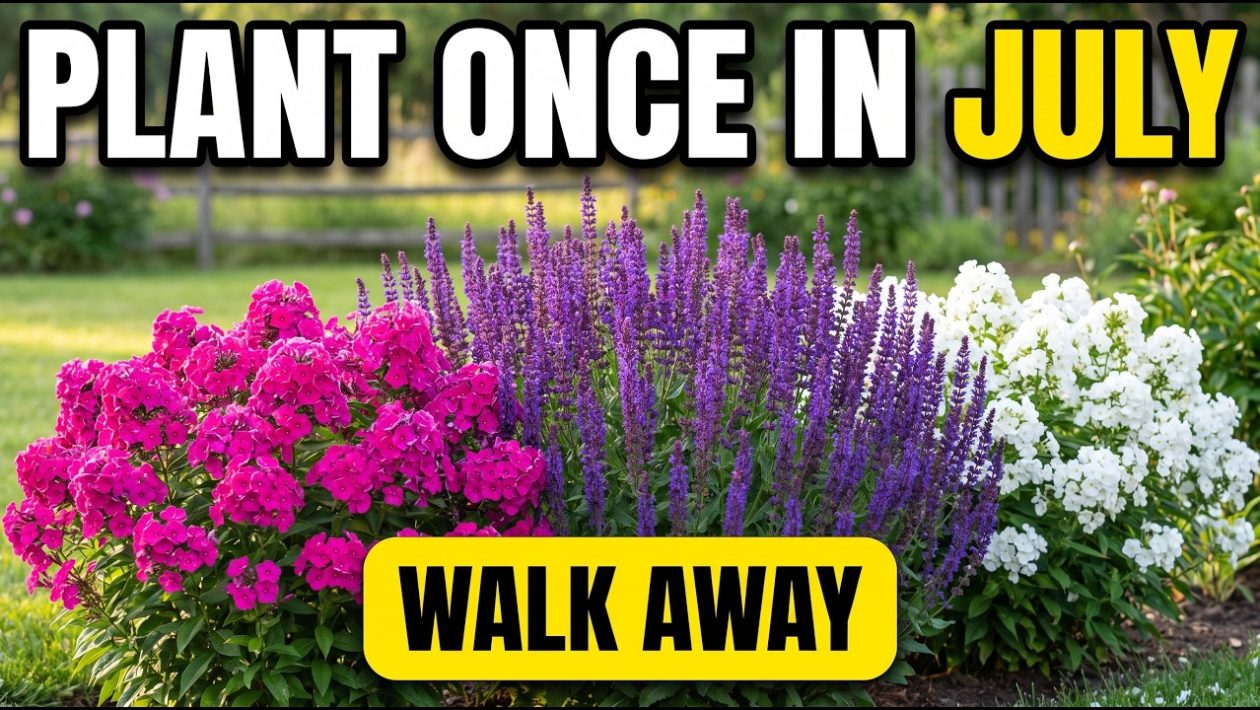
4. Garden Phlox ‘Jeana’
Classic garden phlox is notorious for powdery mildew that turns the leaves white and ruins the summer display. ‘Jeana’, the 2024 Perennial Plant of the Year, solves this issue entirely.
This specific cultivar features exceptional mildew resistance. It produces massive tiers of pink blooms that attract more butterflies than almost any other plant in the American yard.
5. Geranium ‘Rozanne’
Voted the 2008 Perennial Plant of the Year, ‘Rozanne’ quietly spreads to fill every empty space you usually forget to weed.
Unlike traditional clumping geraniums, this sprawling variety blooms relentlessly from early summer until the first hard frost. It weaves through other plants without choking them out.
6. Native-Strain Echinacea (Coneflowers)
Garden centers are currently flooded with fancy Echinacea hybrids in stunning shades of orange, double-pink, and yellow. Avoid them.
Those highly bred hybrids often lack root vigor and frequently die out after just three winters. Stick to the classic purple coneflowers or seed-grown native strains that naturally self-sow and survive extreme weather.
7. Modern Daylilies
Daylilies are bulletproof, but the landscape industry has severely overplanted the golden-yellow ‘Stella d’Oro’.
Upgrade to newer, extension-validated cultivars. You get the exact same rugged, drought-tolerant performance with vastly improved colors, reliable reblooming habits, and taller scapes.
8. Sturdy Upright Sedum
Sedum is a fantastic late-season perennial, but the famous ‘Autumn Joy’ cultivar has a fatal flaw: it often splits wide open in the center by late August.
Look for improved upright stonecrop cultivars with thicker, sturdier stems. These modern selections remain standing straight up even under the weight of heavy fall blooms and rain.
9. Disease-Resistant Rudbeckia
Black-eyed Susans are a staple of the late-summer garden. However, the ubiquitous ‘Goldsturm’ cultivar is highly susceptible to Septoria leaf spot, which turns the foliage black and crispy by August.
Seek out disease-resistant cultivars to get the classic golden daisies without the ugly, blighted foliage ruining your garden bed.