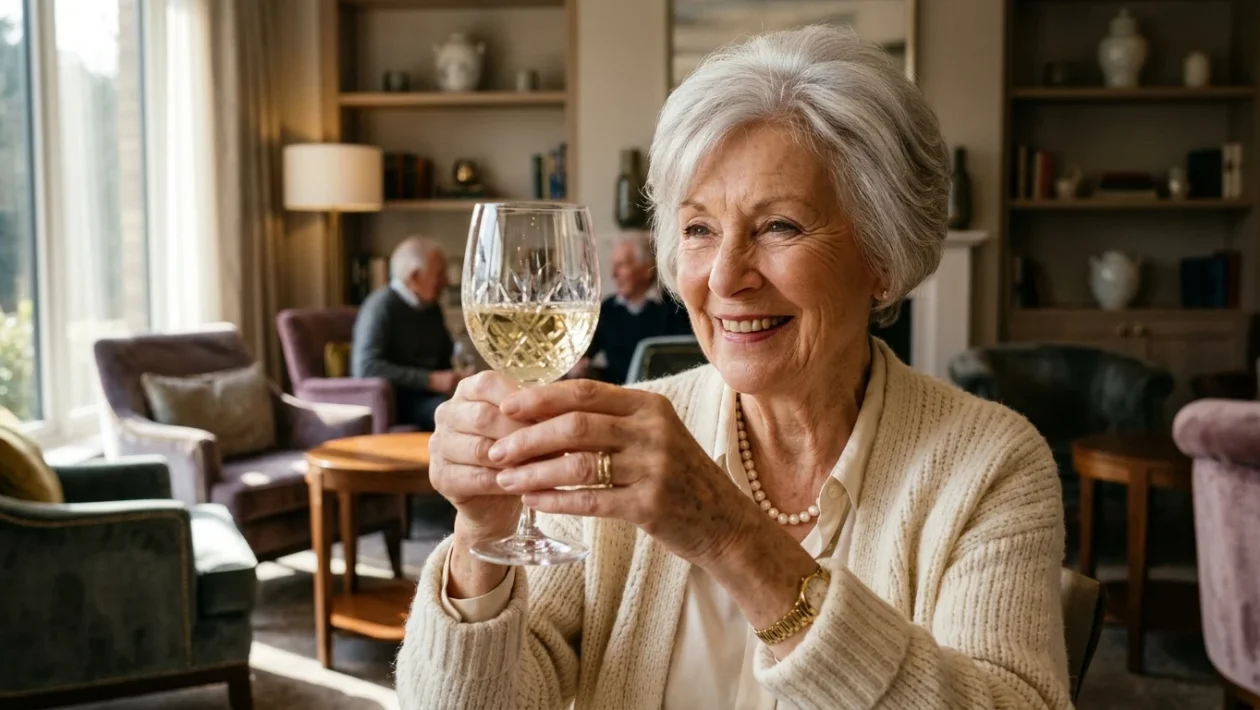
Anita LeBrun raising a glass of wine to celebrate the new Happy Hour legislation in Minnesota.
Fighting for the 5 PM Tradition
Anita LeBrun is not willing to give up her Pinot Grigio. The 82-year-old grandmother of five has a long-standing family tradition of kicking off a 5 p.m. Happy Hour at their lakehouse.
A portrait of 82-year-old Anita LeBrun smiling and holding a glass of white wine.
Her routine hit a roadblock last year after she moved into Amira Choice Champlin, an assisted living facility in Minnesota. LeBrun was stunned to discover state regulations prohibited the home from serving drinks to residents due to strict licensing laws.
Rather than accept a dry facility, the social butterfly became the face of a statewide mission to overhaul the rules.
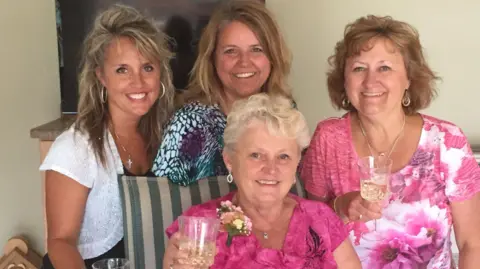
Anita LeBrun raising a toast to celebrate the passage of the new state legislation.
The “Grandparents’ Happy Hour” Bill
LeBrun testified twice before the state legislature to advocate for what quickly became known as the “Grandparents’ Happy Hour” bill. Her grassroots campaign paid off entirely.
This week, Governor Tim Walz visited her care home for a ceremonial signing of the new legislation. The law, which officially took effect this month, grants nursing homes and assisted living facilities the right to serve alcohol to residents and guests at special events without needing an expensive liquor license. Facilities simply need to notify the state beforehand.
“I’m very proud, because everybody’s so excited about it,” LeBrun said. She noted her fellow residents widely viewed the old restrictions as “ridiculous.”
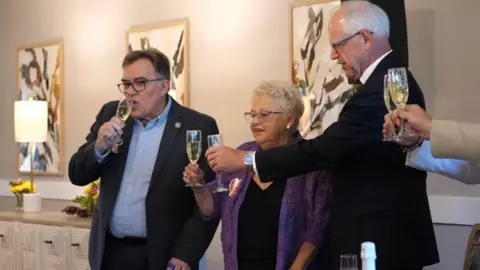
Governor Tim Walz signing the legislation surrounded by senior citizens at the care facility.
Cutting the Red Tape
The push for legislative change began after a local government warned Amira Choice they had violated rules by serving champagne following renovations at an event in April 2025. The facility quickly reached out to LeadingAge Minnesota, a nonprofit for senior care providers.
Together, they argued that acquiring a traditional alcohol license was financially prohibitive. But the fight was about much more than money.
“This is their home,” said LeadingAge’s Erin Huppert. “They should be allowed to take part in legal consumption of alcohol, just like they could if they lived in a single-family home in the community of their choice.”
Governor Walz echoed this sentiment at Tuesday’s signing ceremony. “Growing older shouldn’t mean giving up the traditions and freedoms you’ve enjoyed your whole life,” he stated.
Walz emphasized that the new law eliminates unnecessary red tape. This allows senior communities to focus less on paperwork and more on celebrating “birthdays, anniversaries, Happy Hours, and everyday moments together.”
A Nationwide Conversation
Rules regarding alcohol in senior care facilities vary drastically by state. However, the push for socializing over drinks is gaining national attention.

TikTok star Grandma Droniak holding up a warning letter from her care facility in Connecticut.
Recently, 96-year-old TikTok star Lillian Droniak—known to her 15.1 million followers as “Grandma Droniak”—made headlines after defiantly sharing a warning letter from her Connecticut facility. Management demanded she stop throwing room parties and serving alcohol to other residents, citing safety concerns.
Her grandson, Kevin Droniak, told the BBC that Lillian fully supports the recent legislative victory in Minnesota.
Celebrating the Golden Phase
Back at Amira Choice, residents have always been permitted to drink in their private rooms or bring personal alcohol to community functions. Moving forward, however, alcohol consumption at organized social events will be limited to two drinks per person to mitigate fall risks, according to staff member Sara Luehmann.
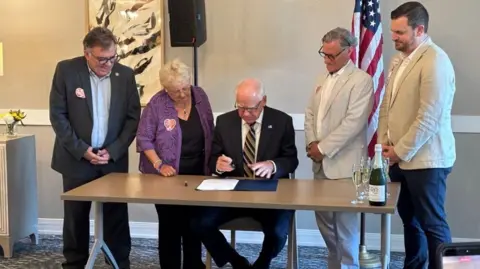
Anita LeBrun sitting at a table sharing drinks with a group of friends.
The community is currently gearing up for a massive celebration next month. Luehmann confirmed it will be an “all-day party for residents,” adding that LeBrun has rightly earned the title of “resident superstar.”
Before her historic victory, LeBrun practiced her legislative testimony over the phone with her daughters and in front of her mirror. Her message to the Minnesota Senate committee was clear and unwavering.
“Just because we are older and live in assisted living doesn’t mean that we should have fewer freedoms than anyone else,” she told lawmakers. “My friends and I love happy hour, just like many of you do.”
“Over a shared drink, we get to reminisce about parts of our life, military service, raising a family, the loss of a friend, and celebrating the golden phase of our lives.”