
Fox attacks on chicken coops are on the rise, especially in semi-rural areas and near wooded borders. Finding a pile of scattered feathers and missing hens is a devastating morning discovery. The culprit is almost always a fox.
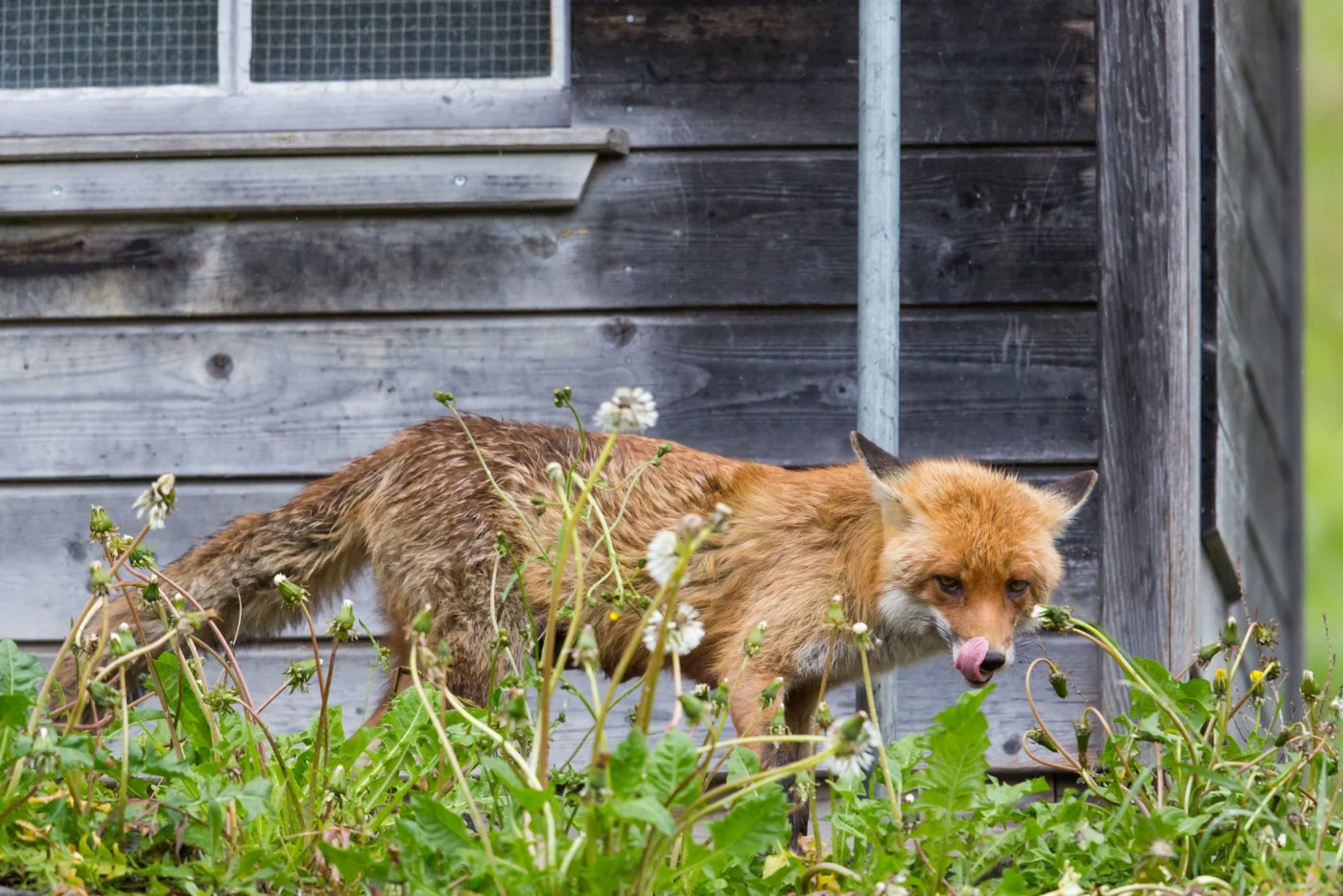
A red fox prowling for food in an outdoor setting.
Understand the Predator’s Tactics
Before upgrading your security, you have to know your adversary. Foxes are discreet, highly intelligent, and incredibly agile, operating mostly at dusk and dawn.
A determined fox can jump over six feet high, scramble up a coop roof, or dig under a standard fence. Once they identify a structural weakness, they will relentlessly return until they break in.
1. Build a Tall, Buried Perimeter Fence
A truly fox-proof coop starts with an impenetrable perimeter. A standard chicken wire enclosure is simply not enough to stop a motivated predator.
- Go high: The fence must be at least 6.5 feet (2 meters) tall to deter jumping.
- Dig deep: Bury the fencing 12 to 16 inches (30 to 40 cm) underground so the fox cannot tunnel underneath.
- Upgrade the material: Use galvanized, welded wire mesh rather than woven chicken wire, which tears easily.
For maximum security, lay a concrete slab under the coop or bury flat wire mesh outward along the exterior perimeter.
2. Reinforce Every Access Point
Foxes are notorious opportunists. They actively look for loose latches, gaps in wire, or unsecured trapdoors.
Inspect every window, door, and roof panel daily. Replace flimsy hardware with heavy-duty, locking deadbolts. Use thick wood or metal paneling around the base of the structure.
A highly effective but often overlooked tactic is to elevate the entire coop about 12 inches off the ground. This eliminates blind hiding spots and heavily deters burrowing rodents and foxes alike.
3. Lock Up at Dusk Without Fail
The vast majority of attacks happen under the cover of darkness. You must lock your flock securely inside their shelter the moment the sun goes down.
If your schedule makes this difficult, invest in an automatic coop door. These devices run on timers or daylight sensors, ensuring your flock is sealed safely inside even when you are not home.
4. Deploy Strategic Repellents
If a fox smells danger, it will likely look for an easier meal. Strategic repellents add an invisible layer of defense around your yard.
- Predator urine: Commercial wolf or dog urine sprayed around the perimeter signals that a larger predator claims the territory.
- Harsh scents: Scatter strong-smelling household items like black pepper, crushed garlic, white vinegar, or coffee grounds near the fence line.
- Visual and audio deterrents: Install motion-sensor LED floodlights or leave a radio playing softly at night to simulate human activity.
Keep in mind that these methods only work in tandem with a solid physical barrier. A hungry fox will eventually ignore smells if the fence is easy to breach.
5. Bring in a Guardian Animal
Livestock guardian dogs are bred to protect vulnerable flocks. Breeds like the Great Pyrenees, Border Collie, or Australian Shepherd are highly alert and territorial.
The mere presence and scent of a working dog will keep most foxes far away. However, rigorous training is required to ensure the dog protects the chickens rather than chasing them.
6. Disrupt Your Routine and Track Prints
Foxes pattern their prey. If they realize you only visit the coop at 8:00 AM and 6:00 PM, they will orchestrate an attack outside those hours. Randomize your visitation schedule to leave fresh human scent at unpredictable times.
Finally, clear a dirt path or lay down fine sand around the coop perimeter. This allows you to track paw prints, identify exactly where a fox is probing your defenses, and reinforce that specific vulnerability before a breach occurs.