Cleaning wooden kitchen cabinets with the wrong tools or solutions guarantees permanent damage. Improper techniques strip protective layers, dull custom finishes, and expose raw wood to grease and decay.
Experts warn that certain everyday products can cause unsightly scratches and costly structural issues. Here are the tools and methods you should immediately ban from your kitchen.
The Six-Month Curing Window
Freshly painted or brand-new wooden cabinets require extreme care for the first six months. This is exactly how long it takes for a new finish to fully settle and harden.
“Scrubbing with cleaning material over new wood cabinets can polish off the finish and create glossy spots on the places you cleaned; it makes your cabinets look noticeably spotty,” says Jared Robinson, owner of custom cabinet maker Robinson Trim.
Instead of wiping vigorously, Robinson advises gently dabbing the surface with a lightly dampened microfiber cloth and mild soap.
Excessive Water Application
Wood acts like a sponge, making heavy moisture its biggest enemy. Soaking your cabinets with a dripping cloth leads to irreversible structural damage.
“Too much liquid or cleaning agent can seep into seams or edges, causing warping, swelling, or deterioration over time,” says Selina Han, a scientist at Pine-Sol for The Clorox Company.
Abrasive Scrubbing Tools
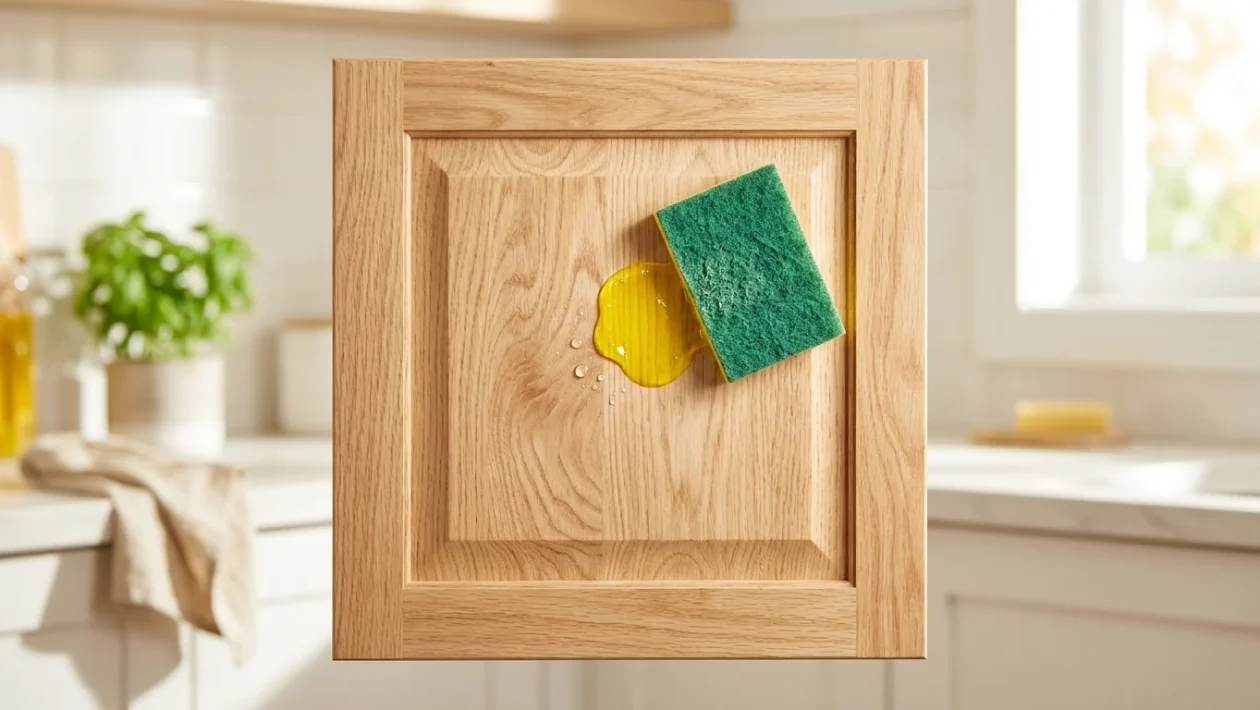
Scouring pads, steel wool, and rough sponges instantly compromise your cabinetry. These tools carve permanent scratches into the protective layer, leaving the raw wood completely vulnerable to grease splatters and acidic food stains.
“Never clean your wood cabinets with scouring pads, as they will scratch the wood,” Robinson says. “I only use a microfiber towel to clean my custom wood cabinets.”
Generic Degreasers and Harsh Chemicals
Grabbing a standard multi-purpose degreaser to wipe down wood cabinets is a costly mistake. Harsh chemicals eat right through the protective finish and expose the raw material underneath.
According to Han, stripping this barrier discolors the wood and leaves behind a dull, uneven appearance. Always use cleaners explicitly formulated for natural wood surfaces.
Oil-Based Waxes and Polishes
Unless specifically designed for your cabinet’s exact finish, oil-based products are a kitchen hazard. They routinely leave behind a sticky, tacky residue that traps airborne dust and grime.
“Always follow the label instructions and test the product on a small, inconspicuous area first to ensure it’s safe for your specific cabinet finish,” Han says.
Mixing Cleaning Products
Dumping leftover cleaning solutions into a single spray bottle creates a destructive chemical cocktail. Combining random formulas triggers reactions that melt through factory cabinet coatings.
Han warns that mixed solutions strip away the finish entirely or leave stubborn residues that are nearly impossible to remove without professional refinishing.