Japan’s summers routinely push past 95 degrees Fahrenheit with suffocating humidity. Despite this, many older and traditionally built homes lack air conditioning and heavy insulation.
Instead of relying on power-hungry AC units, residents use centuries-old, natural techniques to lower the temperature. These methods rely on evaporation, smart shading, and psychological cues—and they work just as effectively in American homes.
Growing a Natural AC Unit
In Japan, residents often grow climbing plants like bitter melon on nets outside their windows. This creates a dense, living “green curtain.”
The foliage physically blocks direct sunlight from heating the glass. Simultaneously, the leaves continuously release moisture into the air, creating a natural evaporative cooling effect.
The Japanese government actively promotes this method during intense summer heatwaves to reduce national power grid strain. If bitter melon isn’t available, tuinexperts note that any fast-growing climbing vine will achieve the exact same results.
Sudare: Breathable Bamboo Blinds
Walk through any Japanese neighborhood in July, and you will see sudare—traditional roll-up blinds made of bamboo or woven reeds. Hung outside windows or around porches, they stop harsh sunlight before it ever enters the house.
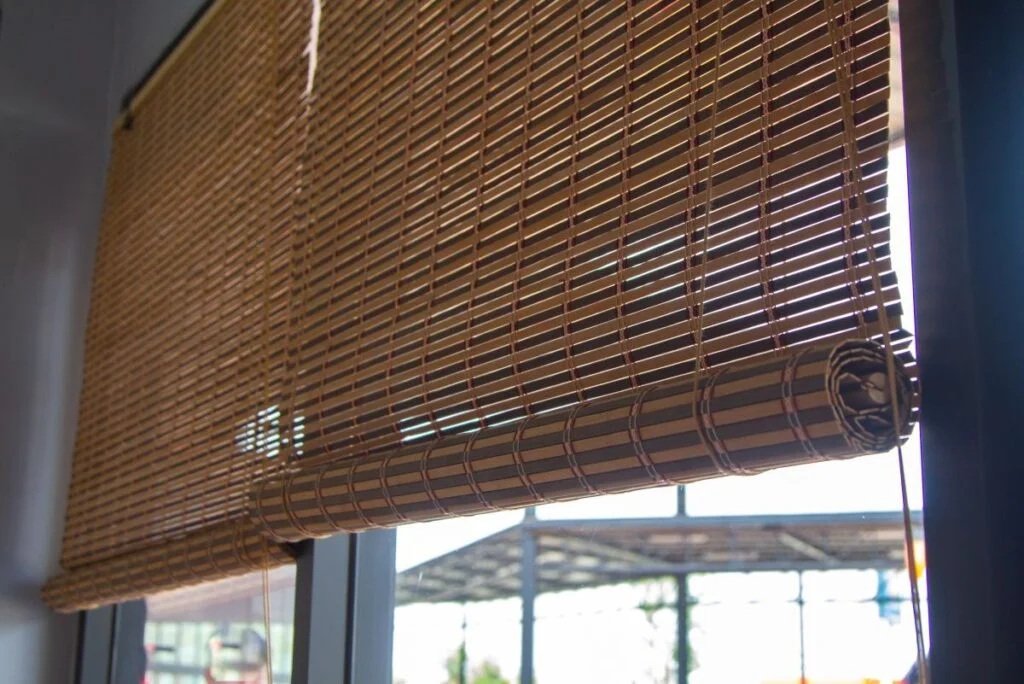
Bamboo roller blinds
Unlike heavy fabric curtains, the natural gaps in the bamboo allow breezes to flow freely through the home. Bamboo absorbs very little heat, preventing the immediate area from baking in the sun.
These blinds are lightweight and easy to roll up at night to let in cool air. Similar bamboo blinds are now widely available at western home improvement stores.
Uchimizu: The Power of Evaporation
The practice of uchimizu dates back hundreds of years. It involves splashing water onto streets, garden paths, and sidewalks outside the home.
Japanese heat trick
Residents typically perform this ritual in the early morning or late evening. As the water evaporates from the hot pavement, it rapidly pulls heat from the surrounding environment, lowering the ground temperature temporarily.
You can still see this tradition daily in the historic districts of Kyoto and Kanazawa. Nationwide uchimizu events are also held annually, drawing millions of participants who splash recycled water onto city streets to combat urban heat.
Fūrin: Cooling the Mind
The Japanese wind chime, or fūrin, produces a crisp, delicate ring at the slightest hint of a breeze. Since the 14th century, Japanese culture has strongly associated this specific sound with a refreshing wind.
While a glass or metal chime does not physically lower the room temperature, the psychological effect is highly documented. Hearing the chime tricks the brain into registering a cool breeze, making oppressive heat feel significantly more tolerable.