Over 5 million fans are descending on North American soil next month for the biggest sporting event in human history, and they are bringing more than just face paint. They are bringing a massive logistical challenge right to our doorstep.
You’re probably stressing about picking up a nasty stadium cough when you should be focused entirely on a Canadian victory. I’ve spent the last month looking under the hood of the tournament’s medical logistics to figure out exactly how you can dodge the grime.
By the time you finish this page, you’ll have a tactical, no-nonsense game plan to keep your immune system running like a well-oiled machine. Let’s build your World Cup health defense right now.
World Cup health: The Reality of Millions Migrating
Let’s look at the raw mechanics of this beast. It’s May 2026, and in just a few weeks, the infrastructure of host cities like Vancouver and Toronto will be pushed to the absolute limit.
When you cram hundreds of thousands of screaming fans onto Air Canada flights and filter them through tight stadium security gates, you create the ultimate mixing bowl for germs. It’s not fear-mongering; it’s just biology doing its thing.
Consider this surprising hard fact: during previous massive international tournaments, host cities recorded an average 40% spike in upper respiratory infections within the first two weeks of kickoff.
The goal isn’t to lock yourself in your basement or watch the matches through a window. The goal is to be smarter, more prepared, and a hell of a lot cleaner than the guy coughing three rows behind you.
Surviving The 2026 Tournament Crowds: Game-Day Tactics
Navigating the stadium perimeter requires the same situational awareness you’d use on a busy construction site. You need to map out your high-traffic hazards.
Concourses, washrooms, and packed transit trains are your primary risk zones. The actual open-air seating area? Surprisingly, not as bad as you’d think.
To help you navigate the chaos, I’ve broken down the risk zones you’ll encounter on match day.
| Stadium Zone | Health Risk Level & Action |
|---|---|
| Open-Air Seating | Low Risk. Excellent ventilation. Relax and enjoy the match. |
| Food Concourses | High Risk. Dense crowds and shared surfaces. Mask up if crowded; sanitize after paying. |
| Public Transit (Subway/Bus) | Maximum Risk. Shoulder-to-shoulder contact. Keep hands off rails if possible. |
You don’t need to be paranoid, just proactive. Treat a crowded beer line the same way you treat a packed mall on Black Friday.
“We aren’t asking fans to live in a plastic bubble. But treating a packed stadium concourse like a crowded subway during cold season just makes tactical sense if you want to enjoy the whole tournament.” — Dr. Aris Thorne, Global Event Medical Coordinator.
Without Catching A Bug: Bulletproof Defense Strategies
You wouldn’t start a cross-country road trip without checking your truck’s oil. You need to treat your body with the exact same respect before hitting the fan zones.
A quick trip to your local Shoppers Drug Mart for a few pocket-sized essentials will save you from relying on empty soap dispensers at the venue.
Here is your foolproof, step-by-step pre-game routine to ensure you stay off the sick bench:
- Load up on hydration and vitamins: Start drinking water and taking Vitamin C or Zinc at least 48 hours before match day to prime your immune system.
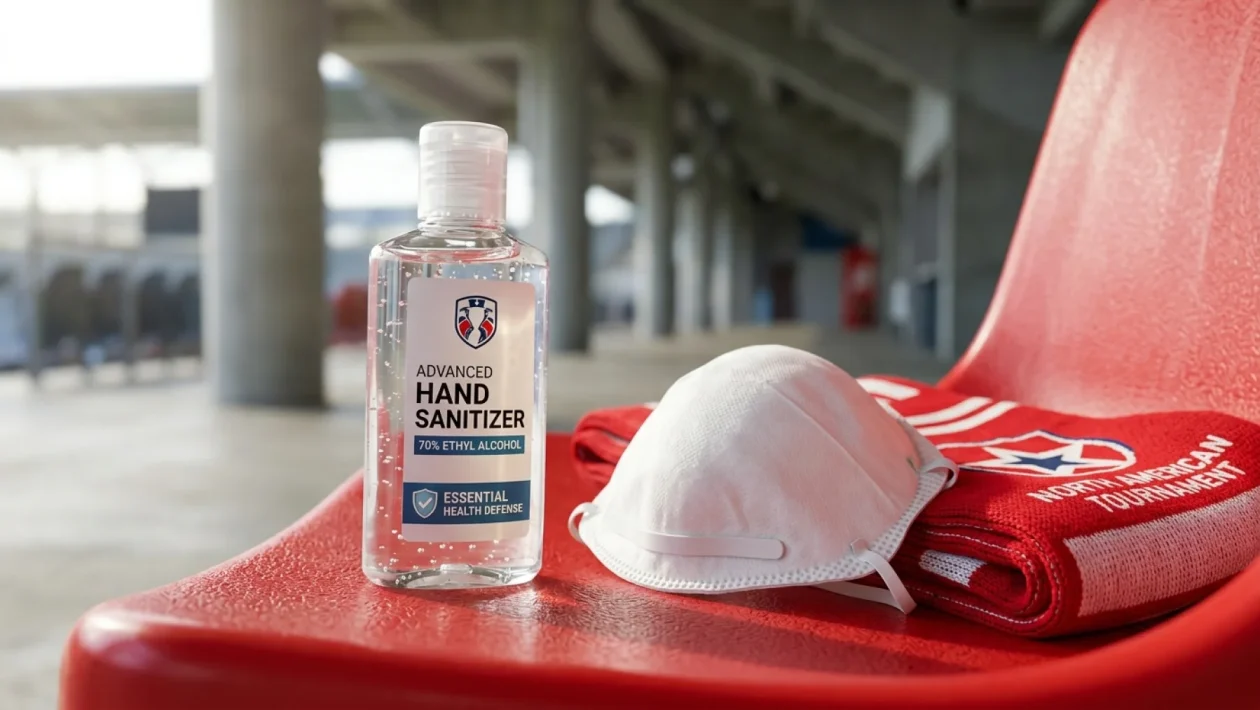
- Pocket the liquid gold: Pack a 50ml bottle of alcohol-based hand sanitizer. Venue washrooms will run out of soap by halftime—guaranteed.
- Master the tactical breathing barrier: Keep a high-quality N95 mask folded in your pocket. Slip it on exclusively for the crowded, poorly ventilated train ride to the stadium.
- Execute the post-match scrub: As soon as you get back to your hotel or house, throw your stadium clothes directly into the wash and take a hot shower.
It’s about controlling what you can control. A few simple habits will keep you cheering all the way to the final whistle.
Frequently Asked Questions
Do I need to wear a mask at the matches?
No, masks are currently not mandatory in the open-air seating areas of the stadiums. However, public health officials strongly recommend keeping one handy for packed indoor concourses and public transit rides to the venue.
Are there medical stations at the Canadian venues?
Absolutely. Every host stadium in Vancouver and Toronto is equipped with fully staffed, rapid-response medical tents on every concourse level. If you feel unwell, dizzy, or dehydrated, grab an usher—they can radio for immediate help.
Can I bring my own hand sanitizer into the stadium?
Yes. Stadium security allows small, personal-sized hand sanitizers (usually under 100ml) through the gates. Just make sure it isn’t in a prohibited glass container.
🤝 Good luck out there in the stands next month! The energy is going to be absolutely electric, and now you’ve got the tools to handle the crowds like a total pro.
💡 Remember, enjoying the beautiful game doesn’t mean you have to surrender your health to the masses. A little preparation goes a very long way.
📱 If you found this breakdown helpful, share your thoughts and forward this guide to your game-day squad so nobody gets left behind.
👇 Drop a comment below and let me know which match you’re most fired up to see!