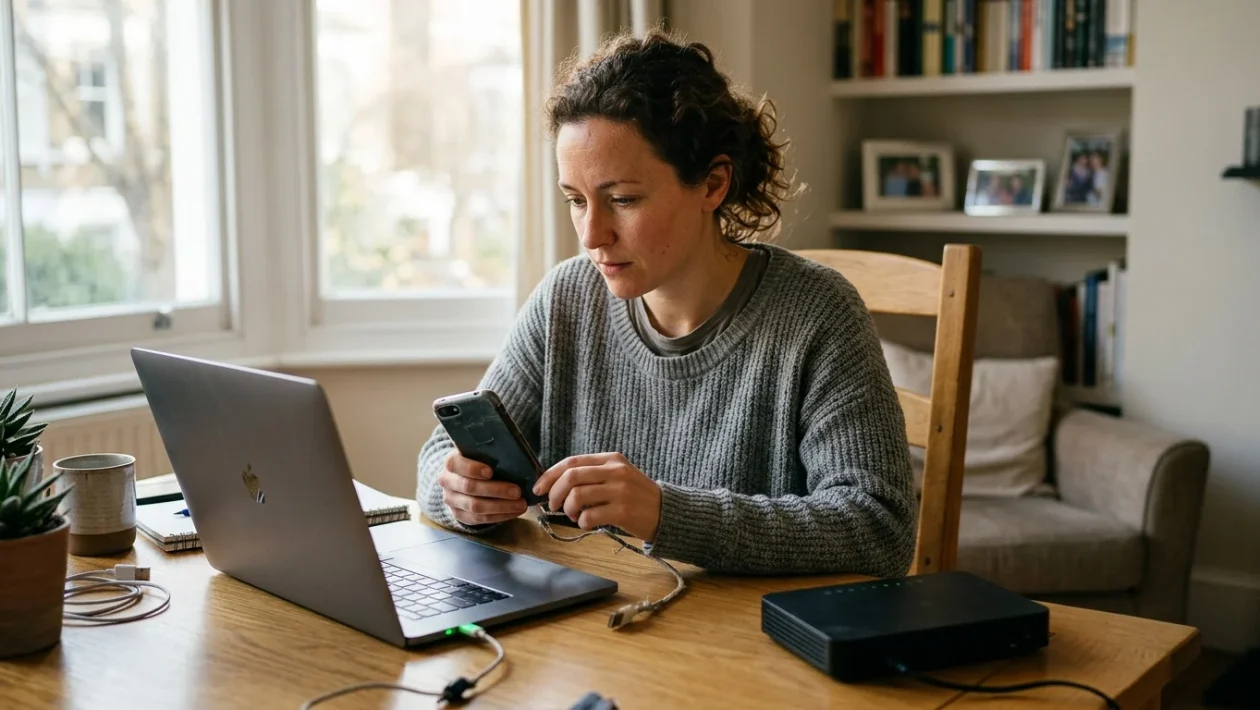
A smartphone connected to a laptop, acting as a mobile hotspot tether during an internet outage.
When a home internet connection drops, remote workers usually scramble for a local coffee shop. Tech journalist Monica J. White took a far more practical approach during a mid-day outage on July 19, 2026.
Faced with a sudden blackout from her primary ISP, White dug into her hardware reserves. Instead of waiting on customer support, she repurposed an old smartphone into a dedicated backup home internet device.
Deploying the Emergency Modem
An aging smartphone often ends up forgotten in a desk drawer, but its internal cellular antenna makes it an ideal emergency modem.
White, a veteran hardware tester who has spent two decades building PCs, used the retired device to instantly restore her home network. By activating the phone’s mobile hotspot and tethering capabilities, she routed a cellular data connection directly to her main workstation.
This bypassed the need to rely on the erratic or dead signal from her primary router. The setup required zero new hardware and took only minutes to configure.
Salvaging the Remote Workday
The makeshift connection provided immediate stability. White was able to resume filing her hardware reports, communicating with editors, and managing her daily workflow without missing a single deadline.
The old phone easily handled standard web browsing, email synchronization, and cloud storage access. While it might not support heavy 4K video rendering, the cellular bandwidth was more than sufficient to keep a standard workday on track.
The Value of Hardware Redundancy
Relying on a single point of failure for home internet is a massive risk for remote professionals. White’s quick fix highlights a highly effective strategy for digital redundancy.
Keeping an older smartphone charged and on hand—ideally paired with a cheap, active backup SIM card—serves as a low-cost insurance policy. It transforms an otherwise obsolete piece of tech into a vital professional lifeline when infrastructure fails.