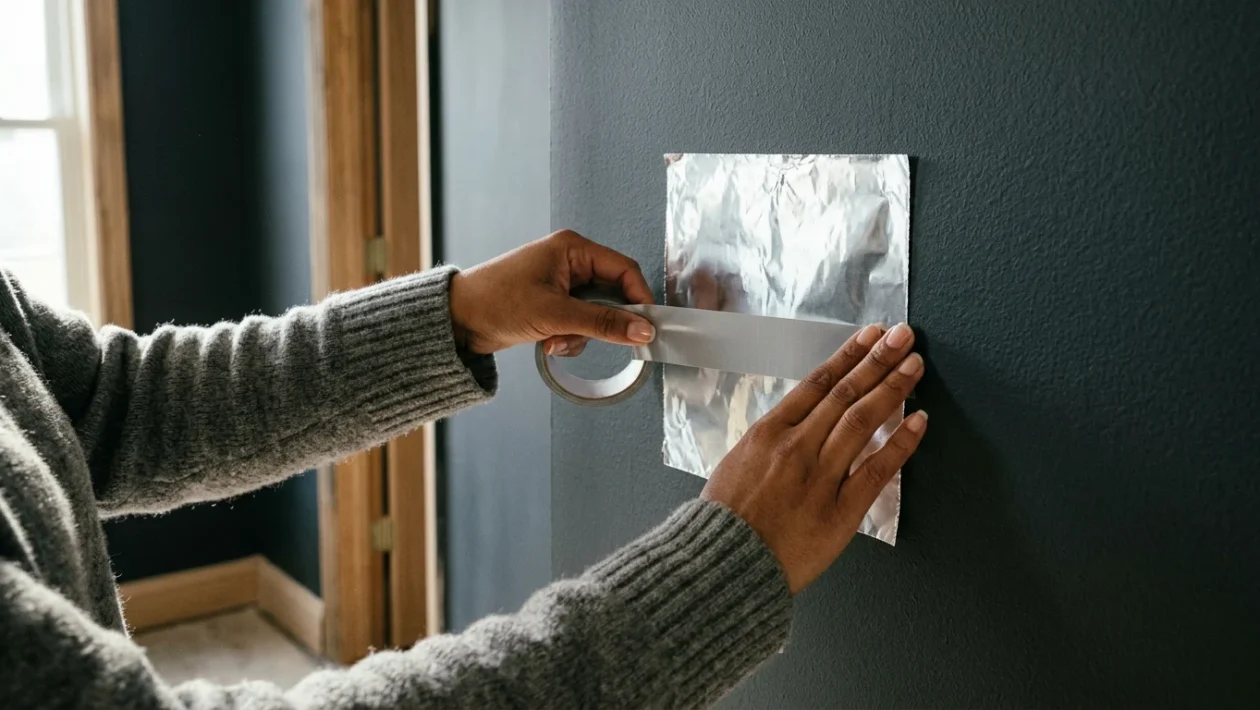
A square of aluminum foil taped securely to a house wall to test for moisture sources.
Damp walls can silently ruin a home’s structure and trigger respiratory issues. Before bringing in expensive contractors, a common kitchen item can help identify the root of the problem.
Placing aluminum foil directly on a wall serves as a highly effective, preliminary diagnostic tool. This straightforward method requires no specialized equipment and yields results in a matter of days.
Decoding the Source of the Dampness
The foil trick leverages the material’s natural insulating properties. By isolating a specific section of the wall, you can track exactly how the moisture behaves over a set period.
The primary goal is to determine if the water is seeping outward from a structural leak or if it is merely condensation settling from a humid room.
If you check the foil after 48 hours and find water droplets or damp stains on the inside—the side touching the paint—the moisture is originating from within the wall. This points to internal plumbing leaks or exterior groundwater seepage.
Conversely, if the wall-facing side of the aluminum remains completely dry, the dampness is environmental. This means poor indoor ventilation or high room humidity is the culprit, rather than a failing structure.
How to Run the Foil Test
Setting up this home diagnostic test takes only a few minutes. Follow these specific steps to ensure an accurate reading:
- Prep the surface: Wipe the targeted wall area thoroughly with a clean, dry cloth to remove loose dust or debris.
- Size the foil: Cut a piece of aluminum foil slightly larger than the visible damp spot you want to analyze.
- Seal the edges: Place the foil flat against the wall and use strong adhesive tape to seal all four borders tightly, ensuring no air can enter or escape behind it.
- Wait 48 hours: Leave the setup completely undisturbed for two full days to allow moisture to accumulate.
- Analyze the results: Carefully peel back the tape and inspect the interior side of the foil to make your diagnosis.
While this aluminum foil method provides a fast and reliable early indicator, it does not replace a professional assessment. Any confirmed internal leaks will eventually require a full technical inspection to prevent severe structural damage.