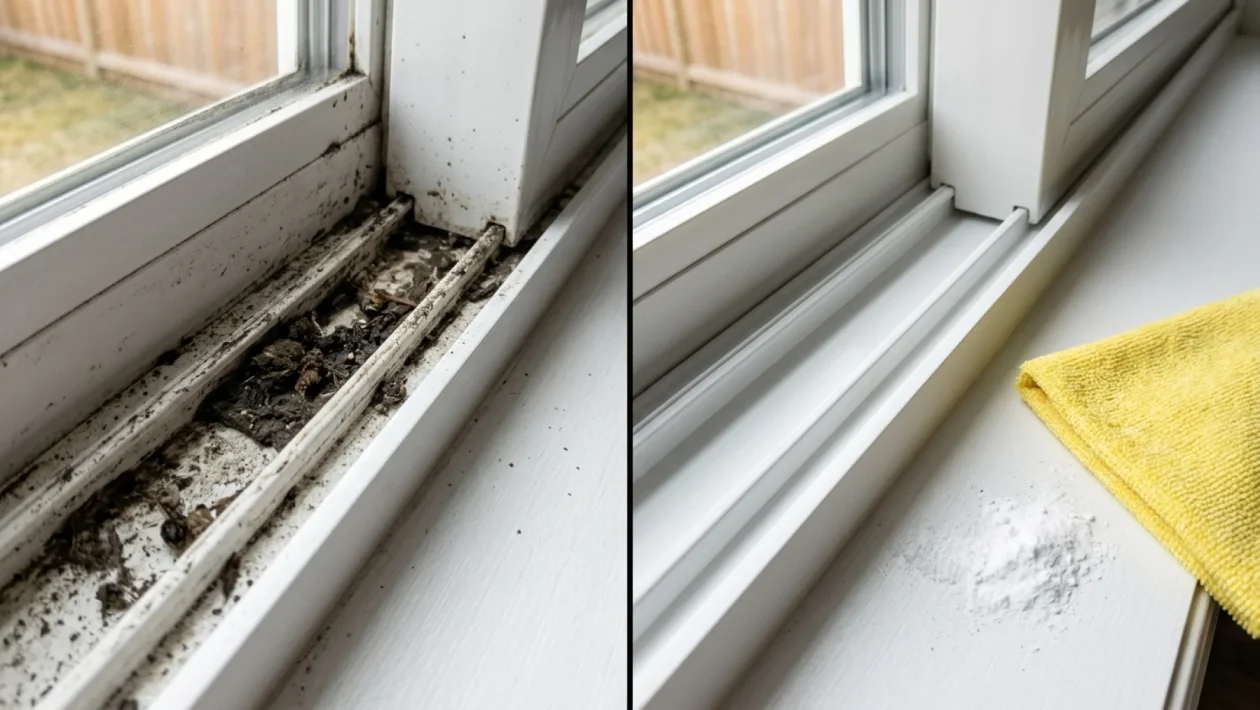
You step up to slide open your living room window to let in the fresh July air, and it hits you—a screeching, stubborn halt followed by a distinct whiff of musty dampness. Those deep grooves at the bottom of your window frames are an absolute magnet for dead bugs, hardened mud, and invisible moisture.
Fortunately, you don’t need an arsenal of harsh, expensive chemicals to get things moving again. A simple, yellow box of Arm & Hammer you likely already have sitting in your pantry is the ultimate weapon to melt away the filth.
By leveraging basic household chemistry, you can completely restore your window tracks in minutes. Let’s break down exactly how this straightforward method tackles every single issue hiding in your window frames.
Window Track Cleaning: The Overlooked Dust And Moisture Trap
Most of us wipe down the glass and completely ignore the structural tracks below. Over time, that neglect turns into a concrete-like sludge.
This isn’t just an aesthetic issue, either. A recent industry survey by North American indoor air specialists revealed that up to 68% of residential window tracks contain active mold colonies due to trapped summer condensation.
When you force a window over that accumulated debris, you are grinding dirt directly into the hardware. Window track cleaning needs to be part of your seasonal routine to protect the longevity of your home’s exterior envelope.
How Baking Soda Erases Grime (Without Ruining Your Frames)
The biggest mistake homeowners make is blasting their window frames with aggressive industrial degreasers. Those chemicals can quickly degrade the delicate weatherstripping and discolor white PVC.
Baking soda works entirely differently. It boasts a naturally mild abrasive texture that acts like microscopic sandpaper on hardened dirt.
It physically lifts away the grime without putting a single scratch on your expensive aluminum or vinyl frames. The powder gently dissolves the bonds holding the sludge together.
| Baking Soda Method | Harsh Chemical Cleaners |
|---|---|
| Costs just pennies per application | Can cost upwards of $10 per bottle |
| 100% safe on PVC, aluminum, and rubber seals | Can severely dry out and crack weatherstripping |
| Naturally absorbs and neutralizes odors | Masks musty smells with artificial fragrances |
Stops Odors Dead: The Hidden Health Benefit
If you’ve ever caught a whiff of “old basement” when opening your bedroom window, you are smelling the bacteria feeding on trapped track moisture. Baking soda is naturally alkaline.
This means it actively neutralizes the acidic compounds produced by mold and mildew. Instead of just washing the dirt away, you are fundamentally changing the pH level of the track.
This creates a hostile environment for future bacteria to grow. It essentially deodorizes the entire frame while you clean.
Restores Smooth Gliding: Your 10-Minute Action Plan
You don’t need specialized gear for this. Grab your powder, some warm water, and a cheap nylon detail brush from your local Home Depot.
- Dry vacuum the track: Use your shop vac or household vacuum crevice tool to suck up loose dust, cobwebs, and dead insects before adding any liquid.
- Apply the powder: Liberally sprinkle baking soda directly into the grooves, paying special attention to the dirtiest corners.
- Activate the paste: Drip a small amount of warm water over the powder until it bubbles up and forms a thick, spreadable paste.
- Let it sit, then scrub: Wait 5 to 10 minutes for the paste to break down the hardened mud, then scrub the track vigorously with a stiff-bristled toothbrush.
- Wipe and dry: Clear out the resulting gray sludge with a damp microfiber cloth, then thoroughly dry the track to ensure perfectly smooth, frictionless gliding.
“Most folks reach for bleach sprays, but that actually eats away at the window’s seals over time. Baking soda provides the perfect micro-abrasion to lift dirt while actively absorbing the moisture that causes those nasty odors in the first place,” says Mark Vance, a veteran home restoration contractor based in Toronto.
Frequently Asked Questions About Window Track Maintenance
Can I add household vinegar to the baking soda?
Absolutely. Adding white vinegar instead of water creates an immediate, foaming chemical reaction. This bubbling action is fantastic for lifting deeply stubborn dirt out of the tightest corners of the track.
How often should I clean my window tracks?
For most North American climates, aiming for twice a year is the sweet spot. Give them a deep clean once in early spring to remove winter debris, and once in late fall before you lock them down for the freezing months.
Do I need to lubricate the track after cleaning?
Yes! Once the track is completely dry, a very light spray of dry silicone or Teflon lubricant will protect the freshly cleaned PVC and keep the window sliding effortlessly.
🤝 Good luck tackling those dirty window tracks this weekend, and don’t be surprised when you can finally open your windows with a single finger!
💡 Share your thoughts in the comments below if you have your own variation of this cleaning method or a favorite tool you use.
📱 Send this guide to that one friend or family member who is always battling sticky, stubborn, hard-to-open windows.
👇 Drop a comment and let me know exactly what DIY household maintenance project you want me to break down for you next!