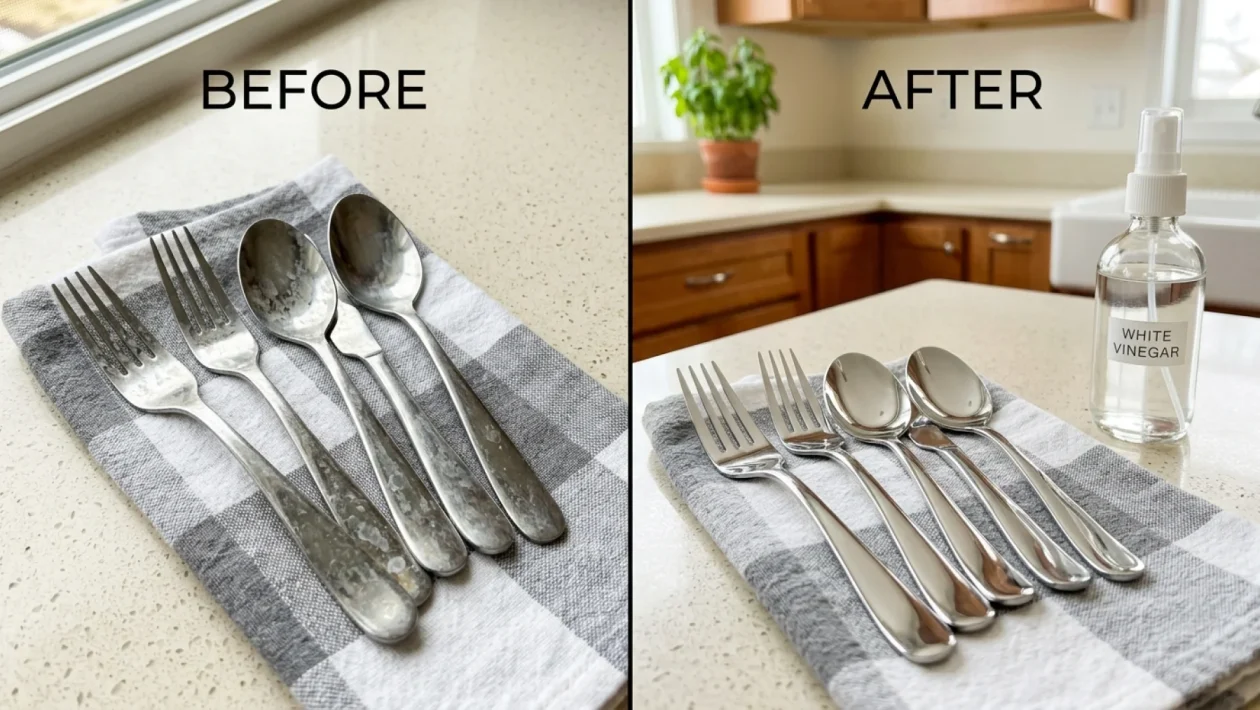
You pull a freshly washed fork from the dishwasher, ready to dig into your dinner, only to find it covered in chalky, grey water spots. It looks dirty, even though it’s perfectly clean. Those cloudy mineral deposits are the absolute bane of every stainless steel flatware set, silently ruining the aesthetic of your dining table. But before you toss your spoons in frustration or run out to buy an overpriced polishing paste, reach into your pantry. The ultimate solution is likely sitting right next to your baking soda.
Why Vinegar On Cutlery Outperforms Expensive Chemical Cleaners
We often assume we need harsh, industrial-strength chemicals to get a streak-free finish on our metal kitchenware. That is a complete myth. Plain white vinegar contains acetic acid, a naturally occurring compound that aggressively targets and dissolves stubborn mineral buildup.
Whether you use a classic jug of Canadian favorite Allen’s Double Strength or standard Heinz white vinegar, this acidic profile melts away the grime without degrading the metal. A staggering 85% of North American homes struggle with hard water, meaning calcium and magnesium are constantly baking onto our dishes during the drying cycle. Acetic acid neutralizes those specific minerals on contact.
Let’s look at exactly why this inexpensive pantry staple is the undisputed champion of the kitchen sink.
| Feature | White Vinegar Advantage |
|---|---|
| Cost per bottle | Under $3 at most grocers |
| Chemical Residue | Absolutely Zero (Food Safe) |
| Odor Neutralization | Highly Effective |
| Mineral Spot Removal | Instant Dissolve Rate |
The Professional Secret To Erasing Hard Water Stains
Getting rid of those stubborn, chalky watermarks requires a specific, deliberate approach. You cannot just dunk your silverware into a bucket of acid and walk away.
The professional method relies on targeted application and immediate buffing. This prevents the acid from etching the metal while maximizing its stain-dissolving power. By working quickly, you lift the minerals before they have a chance to resettle.
Here is the exact step-by-step method to erase those ugly blemishes from your flatware:
- Prep the surface: Lay your freshly washed, dry cutlery flat on a clean kitchen towel.
- Apply the solution: Lightly mist pure white vinegar directly over the forks, knives, and spoons using a small spray bottle.
- Let it activate: Allow the vinegar to sit undisturbed for two to three minutes so the acetic acid can properly break down the stubborn mineral bonds.
- Buff it out: Wipe each piece vigorously with a dry microfiber cloth to lift the dissolved minerals and polish the metal.
- Final rinse: Quickly rinse the utensils under warm tap water and dry them immediately with a fresh towel to prevent new water spots from forming.
Restoring Stainless Steel Brilliance In Your Own Kitchen
When you properly strip away the microscopic layers of calcium, magnesium, and old dishwasher detergent residue, something incredible happens. Your everyday flatware suddenly catches the light like it did the day you brought it home.
This isn’t just about removing surface stains; it’s about restoring the true factory finish of your stainless steel. The metal itself is incredibly durable, but its microscopic surface easily traps impurities that dull its reflective shine over time. Stripping that layer away is the secret to a pristine table setting.
High-end culinary experts rely on this exact, no-nonsense process to keep their dining rooms looking absolutely immaculate.
“In a busy commercial kitchen, we simply do not have time for multi-step polishing pastes. A quick spritz of standard white vinegar and a microfiber towel is the absolute best way we keep our cutlery looking pristine for evening service. It cuts the grease, removes the hard water scale, and leaves zero chemical residue behind for our guests.” – Chef Marcus Reynolds, North American Culinary Director.
Frequently Asked Questions
Does the vinegar smell linger on the cutlery?
Not at all. While the initial spray carries a notoriously strong scent, the acetic acid evaporates incredibly fast. Once you give the utensils a final rinse and dry them, the smell disappears completely, leaving behind a perfectly neutral, tasteless surface.
Can I use apple cider vinegar instead of white vinegar?
It is strongly advised against. Apple cider vinegar contains organic sugars, pectin, and dark coloring that can leave a sticky residue on your stainless steel. Always stick to pure, distilled white vinegar for any household cleaning purposes.
How often should I treat my silverware with this method?
You definitely do not need to do this every time you wash your dishes. Treating your cutlery once a month, or simply whenever you start noticing a heavy buildup of cloudy water spots, is more than enough to maintain a brilliant, eye-catching shine.
🤝 Maintaining your kitchen gear doesn’t require a cabinet full of expensive, toxic chemicals or specialized equipment.
💡 Sometimes, the absolute most effective tools are the ones our grandparents used, hiding right in plain sight on the pantry shelf.
📱 Share your thoughts in the comments below if you’ve tried this trick on your own silverware, or let me know if you have another go-to method for battling hard water stains.
👇 Good luck with your next kitchen deep-clean, and enjoy that brilliant, restaurant-quality shine at your very next dinner party!