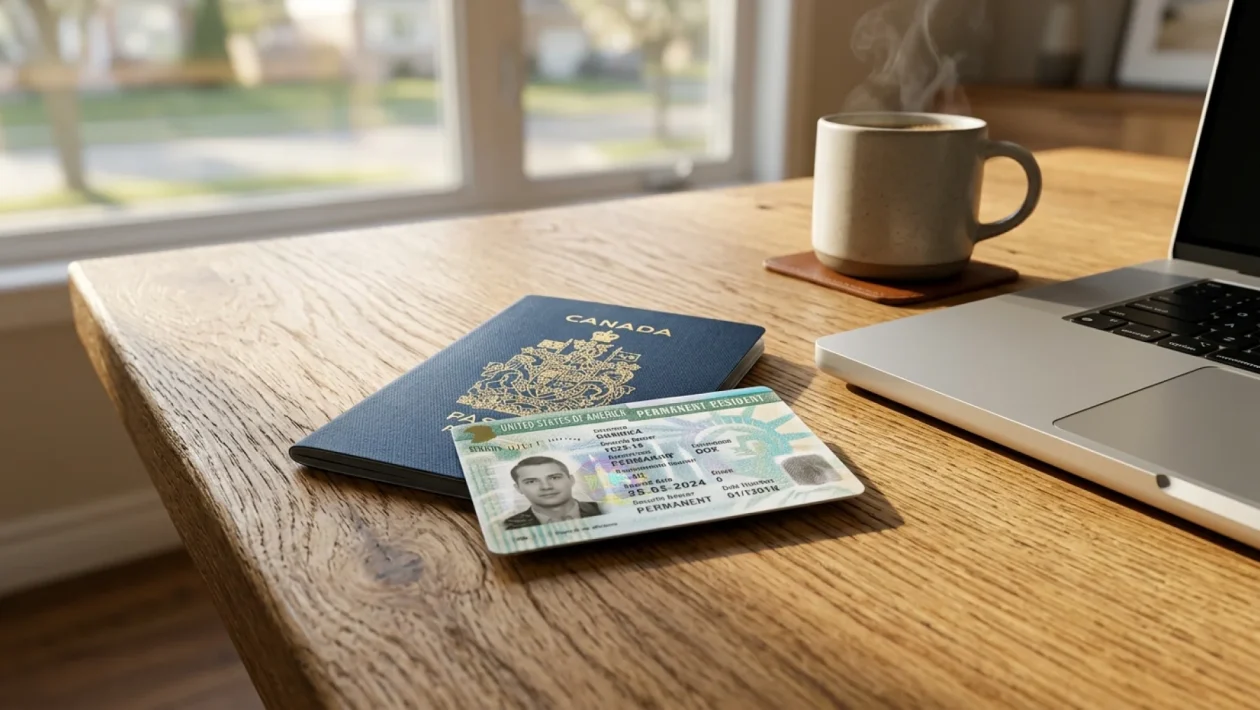
If you are staring down the barrel of another brutal property tax hike while dreaming of a sun-soaked driveway in Texas or a corner office in Chicago, you need to pay attention right now. The landscape for cross-border immigration just shifted beneath our feet. Navigating the US Green Card process has always felt a bit like rewiring an old house—one wrong move, and the whole system shorts out.
But here is the good news: the rules have fundamentally changed this spring. If you know exactly which levers to pull, securing permanent residency south of the border is faster and clearer than it has been in a decade. I am going to break down exactly how you can legally hack the system, avoid the dreaded bureaucratic black hole, and make your move stick.
US Green Card Rules 2026
Let us get right into the nuts and bolts. The United States Citizenship and Immigration Services (USCIS) rolled out a massive overhaul earlier this year. The days of sending a paper application into the void and waiting three years are largely behind us.
The most surprising hard fact of the year? By early 2026, the USCIS processing backlog finally plummeted by a staggering 34%. This means digital applications for skilled Canadians are moving through the pipeline at record speeds.
However, the new US Green Card rules demand absolute precision. The digital portals implemented this spring will automatically kick back applications for the slightest formatting error. Think of it like measuring twice and cutting once; you simply cannot afford to eyeball your paperwork anymore.
The Canadian’s No-Nonsense Guide
As a Canadian, you already have a distinct advantage. You do not need to deal with the same visa lotteries as folks from other nations. But transitioning from a temporary work visa to a permanent US Green Card requires a solid blueprint.
Here is exactly how you lay the foundation for a successful application this year:
- Audit Your Current Status: Are you currently on a TN or L-1 visa? L-1 is “dual intent,” making the jump to a green card seamless. If you are on a TN, you need to carefully plan your adjustment of status to avoid border friction.
- Secure Labor Certification (PERM): If your employer is sponsoring you, they must prove to the Department of Labor that no American worker can do your job. The new 2026 digital PERM system speeds this up, but the job description must be bulletproof.
- File Form I-140: This is the official petition your employer files. Pay for premium processing. It is worth every single penny to cut the wait time down from months to mere weeks.
- Submit Form I-485: This is the actual application to register permanent residence. Under the Spring 2026 rules, you must upload all medical exams and biometrics pre-clearances simultaneously.
Moving South
The logistics of moving your life across the 49th parallel go far beyond government forms. You need to seamlessly transition your finances and your physical life without missing a beat.
Before you even book those one-way Air Canada tickets to your new home, you have to sort out your cross-border credit. Your Canadian credit score does not automatically follow you.
Smart movers set up accounts with TD Cross-Border Banking months in advance. This allows you to leverage your Canadian credit history to secure US credit cards and mortgages before you even step foot on American soil.
Let us look at the financial reality of the paperwork itself. Here is the no-nonsense cost breakdown for a standard employment-based application in 2026:
| Application Component | 2026 Estimated Cost (USD) |
|---|---|
| I-140 Employer Petition | $715 |
| Premium Processing (Optional) | $2,805 |
| I-485 Adjustment of Status | $1,440 |
| Immigration Medical Exam | $300 – $500 |
Why “Good Enough” Doesn’t Cut It Anymore
I have seen too many smart, capable people try to DIY this process to save a few bucks, only to get slapped with a Request for Evidence (RFE) that stalls their life for a year.
You need to treat your application like a high-stakes business proposal. The immigration officers reviewing your file are overworked, and if they have to guess what your documentation means, they will just reject it.
“The 2026 updates removed a lot of red tape, but they also removed the margin for human error. If a Canadian applicant misses a single digital signature flag on the new portal, the system automatically archives the file. Precision is your best immigration attorney.”
FAQ
Can I still travel back to Canada while my Green Card is processing?
If you are applying from within the US (Adjustment of Status), you cannot leave the country until you receive your Advance Parole document. If you cross the border before that arrives, the US government considers your application abandoned.
Is the TN Visa still a valid stepping stone in 2026?
Yes, but tread carefully. The TN visa is strictly for temporary stays. You cannot enter the US on a TN visa with the preconceived intent to file for a permanent US Green Card. You must establish your life first and wait for circumstances to change organically.
How long does the whole process take right now?
Thanks to the recent backlog clearing, an employment-based application with premium processing can take anywhere from 10 to 18 months from the initial PERM filing to holding the physical card in your hand.
Conclusion
🤝 Good luck with your journey south! Moving across the border is a massive undertaking, but with the right preparation, it is incredibly rewarding.
💡 Remember the golden rule: organize your documents like a pro, do not cut corners on the application fees, and always measure twice before you submit.
📱 Share your thoughts and experiences with the new digital portals below, especially if you have navigated the system this spring.
👇 Drop a comment if you are planning to make the leap this year, and let us know which state you are aiming for!