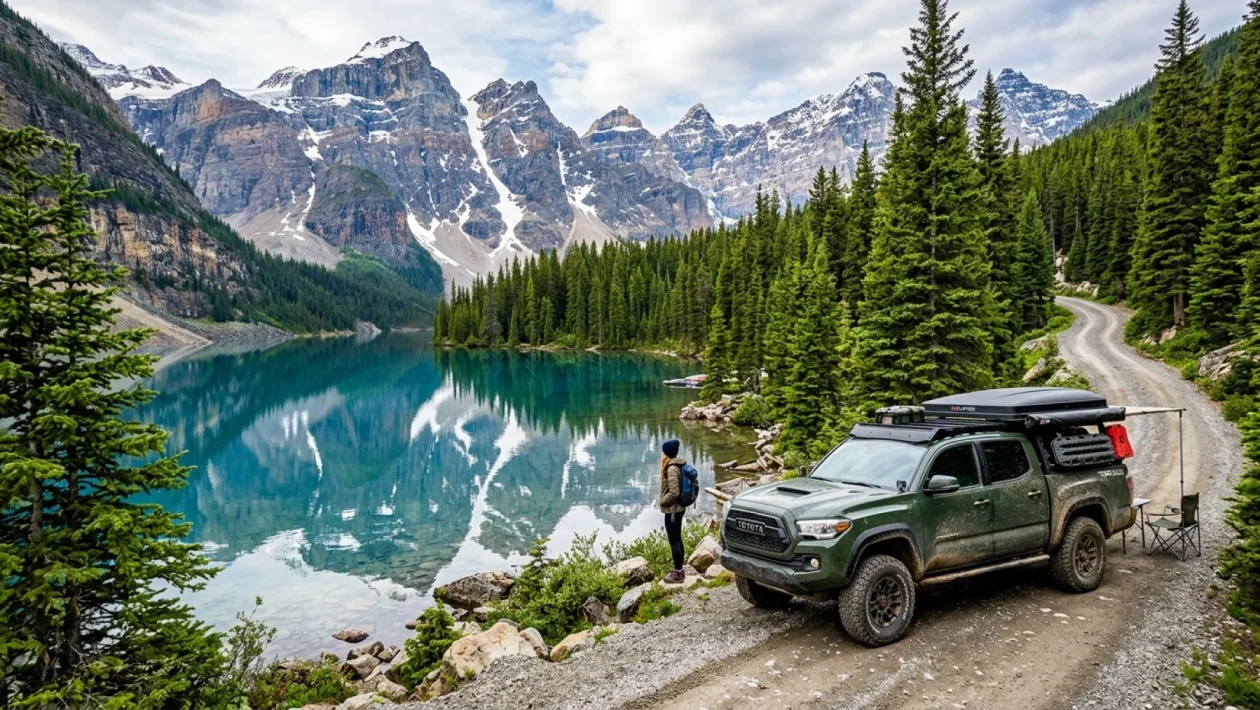
Banff is an absolute masterpiece, but right now in May 2026, you are going to be elbow-to-elbow with a million other folks fighting for the exact same Instagram photo at Lake Louise. If you want a real adventure this year, you need to look past the glossy travel brochures. We are talking about the untouched, dirt-road, no-cell-service locations where the only traffic jam is a stubborn moose refusing to leave the trail. Here is your ultimate guide to the rugged, off-grid territories you actually want to spend your hard-earned time off exploring.
To truly get the grease under your fingernails and experience the wild, you have to dig deeper. I have worn out plenty of tire treads tracking down these spots, and I am handing the keys over to you.
Hidden Gems Canada: 5 Untamed Destinations
You cannot call it an adventure if there is a paved parking lot and a gift shop waiting for you. Hidden gems Canada are all about the raw, unfiltered experience. Did you know that barely 12% of international tourists ever step foot outside of our major urban centers and flagship provincial parks? That leaves a whole lot of empty, glorious space for the rest of us.
First up is the Sunshine Coast backcountry in British Columbia. Forget the main highway; take the logging roads up to the high alpine lakes where the water is glass and the trout are practically jumping into your boat. Next, look at Saskatchewan’s Grasslands National Park. Most folks drive right past it, but the unpolluted night sky there will completely blow your mind.
Over in Northern Ontario, the forgotten logging routes north of Sault Ste. Marie offer endless crown land camping. Then there is the rugged fringe of the Yukon’s Tombstone Territorial Park—if you want to feel small in the best way possible, this is the place. Finally, the quiet coastal corners of Fogo Island, Newfoundland, offer a kind of rough-hewn isolation you just cannot find anywhere else.
Why You Need to See These Specific Spots Now
The window for exploring these locations in absolute peace is rapidly closing. As backcountry camping gear gets lighter and overland vehicles get more capable, the barrier to entry is dropping. Grab a solid tent from MEC, throw some extra water in the back of the truck, and get out there before the secret is entirely out.
It is not just about avoiding people; it is about reclaiming the independence of the road trip. When you are relying on your own wits, a good map, and your vehicle’s suspension, the payoff is infinitely sweeter.
| Mainstream Parks | Untamed Destinations |
|---|---|
| Reserved months in advance | First-come, first-served freedom |
| Paved paths and heavy traffic | Gravel roads and deep silence |
| Overpriced entry fees | Often free on Crown Land |
Beating the Crowds In 2026: Your Action Plan
Preparation is the only difference between an epic weekend and a miserable call to a tow truck. You cannot just punch these coordinates into your dashboard GPS and hope for the best. Parks Canada does a great job maintaining the beaten path, but out here, you are your own park ranger.
If you want to do this right, follow a strict protocol. Keep it simple, keep it safe, and over-prepare your truck.
- Download offline maps: Cell service is a myth where you are going. Download topographical maps to your phone and bring a physical paper map as a backup.
- Pack a self-recovery kit: A basic winch, traction boards, and a reliable tire deflator are non-negotiable.
- Tell someone your route: Leave your exact itinerary and expected return time with a trusted friend before your tires leave the pavement.
- Carry extra fuel and water: Calculate what you think you need, and then add twenty percent.
“The best parts of Canada aren’t on the highway signs. They are hidden behind the dirt roads that most people are too afraid to scratch their paint on. Prepare your rig, respect the land, and the country opens right up to you.” – Mark Davies, Backcountry Guide & Mechanic
Frequently Asked Questions
Is it safe to travel to remote Canadian areas in 2026?
Absolutely, as long as you respect the environment and pack accordingly. Wildlife encounters and vehicle breakdowns are the main risks. Pack bear spray, carry a first-aid kit, and always have a satellite messenger device if you are heading deep into the bush.
Do I need a heavy-duty 4×4 to reach these spots?
Not always, but ground clearance is your best friend. A standard all-wheel-drive SUV with good all-terrain tires can handle most gravel and logging roads. Just know your vehicle’s limits and do not push through deep mud holes if you are traveling solo.
How do I handle cell service gaps?
Embrace them! That said, for safety, invest in a satellite communicator. They are cheaper than ever in 2026 and allow you to send SOS signals or brief text messages to family without relying on traditional cell towers.
🤝 Share your thoughts and let me know if you end up checking any of these spots off your list. The Canadian wilderness is vast, but the community of people who truly appreciate it is incredibly tight-knit.
💡 Good luck out there this season. Remember, the journey is half the fun, so take your time, keep your eyes on the road, and leave the campsites cleaner than you found them.
📱 If you found this breakdown helpful, send it to your favorite road-trip buddy and start planning your next weekend escape.
👇 Drop a comment below with your own hidden gem—unless, of course, you want to keep it to yourself. I wouldn’t blame you!