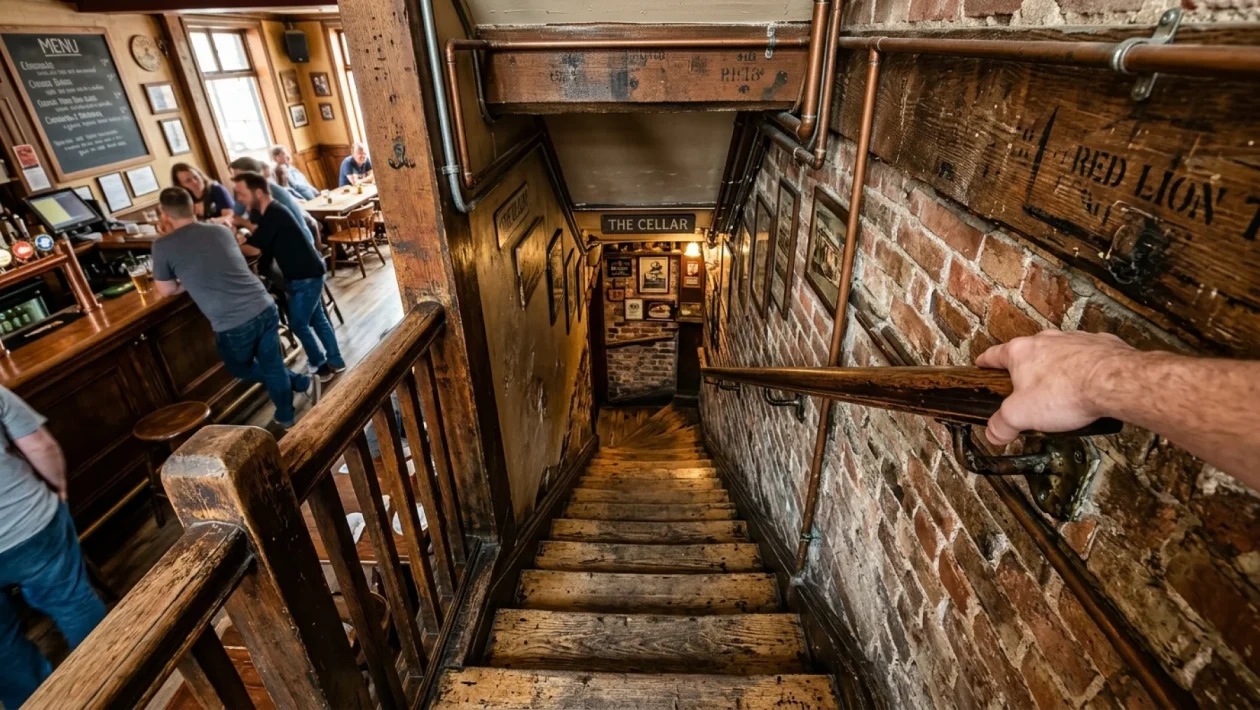
You are three pints deep at a cozy downtown pub, nature calls, and suddenly you are staring down a staircase that looks like it belongs in a medieval dungeon. We have all been there, bracing ourselves against a wobbly handrail to access a dingy washroom buried deep underground. But this is not just a case of cheap property management or lazy renovations. It is actually a massive architectural hangover from the 1800s.
Today, I am putting on my contractor hat to break down exactly why the city’s plumbing is stuck in the cellar. I will show you why this historical headache exists, and how to spot these structural quirks the next time you are out on the town.
Toronto basement bathrooms
If you have ever enjoyed a cold Steam Whistle at an old tavern, you already know the drill. The main floor is packed with tables, a beautiful bar, and zero signs of a washroom door.
Instead, a tiny sign points you toward a dark, descending stairwell. Toronto basement bathrooms are so incredibly common in the downtown core that we barely even question them anymore.
As a guy who has spent years looking at building blueprints, I can tell you that this layout was never designed with the modern patron in mind. It was a purely functional decision based on the constraints of a rapidly expanding city.
The 1800s design flaw
To understand the problem, we have to rewind to the late 19th century. Back then, commercial lots in the city were notoriously narrow, often measuring a mere 15 to 20 feet wide.
Builders had to maximize every single square inch of the valuable street-level real estate for storefronts and saloons. Moving the water closets to the cellar was the only way to avoid eating into their profit-generating floor space.
There is also a fascinating hard fact about early municipal infrastructure. When the city first laid down its subterranean sewer lines, they were buried incredibly deep to avoid the harsh Canadian frost heave.
When these Victorian commercial buildings went up, it was simply cheaper and gravity-friendly to dump the plumbing directly into the foundation rather than pump it up to the main floor, says prominent heritage architect Mark Davies.
Ruining your pub crawl
Fast forward to May 2026, and those Victorian plumbing decisions are a massive headache for everyone involved. For patrons, it turns a simple bathroom break into an extreme sport.
If you want to survive the journey down to the cellar, you need a solid strategy. Here is my foolproof method for tackling these treacherous stairs:
- Assess the handrail: Give it a firm shake before committing your body weight, because 150-year-old anchors often come loose.
- Angle your feet: Those Victorian steps have notoriously shallow treads that barely fit a modern shoe.
- Duck your head: Watch out for exposed, low-clearance HVAC ducts and copper pipes lurking right above you.
For modern restaurant owners, updating these spaces is a nightmare. Even if you are armed with a Mastercraft tool belt and a hefty renovation budget, moving plumbing up a floor requires tearing out historical joists.
| The 1800s Cellar Washroom | The Modern Main-Floor Washroom |
|---|---|
| Maximizes profitable seating upstairs | Eats up valuable dining space |
| Major accessibility nightmare | Bright, inclusive, and easy to reach |
| Riddled with exposed, aging pipes | Clean, hidden, and updated plumbing |
Frequently Asked Questions
Can restaurants easily move these washrooms upstairs?
Rarely. Rerouting century-old cast iron plumbing to a main floor is incredibly expensive. It often triggers a domino effect of modern building code upgrades that small business owners simply cannot afford.
Are there building codes preventing new basement bathrooms?
Modern accessibility laws heavily discourage them. Any new commercial build must include accessible, barrier-free washrooms on the main floor. The basement ones you see today are grandfathered in.
🤝 Good luck navigating those cellar steps on your next night out, and remember to blame the Victorians when you stub your toe.
💡 If you found this dive into local architecture interesting, keep your eyes peeled the next time you visit a historic downtown building.
📱 Make sure to share your thoughts on your worst basement bathroom experiences with your friends over a pint.
👇 Until next time, stay safe, watch your head, and keep your hard hat handy!