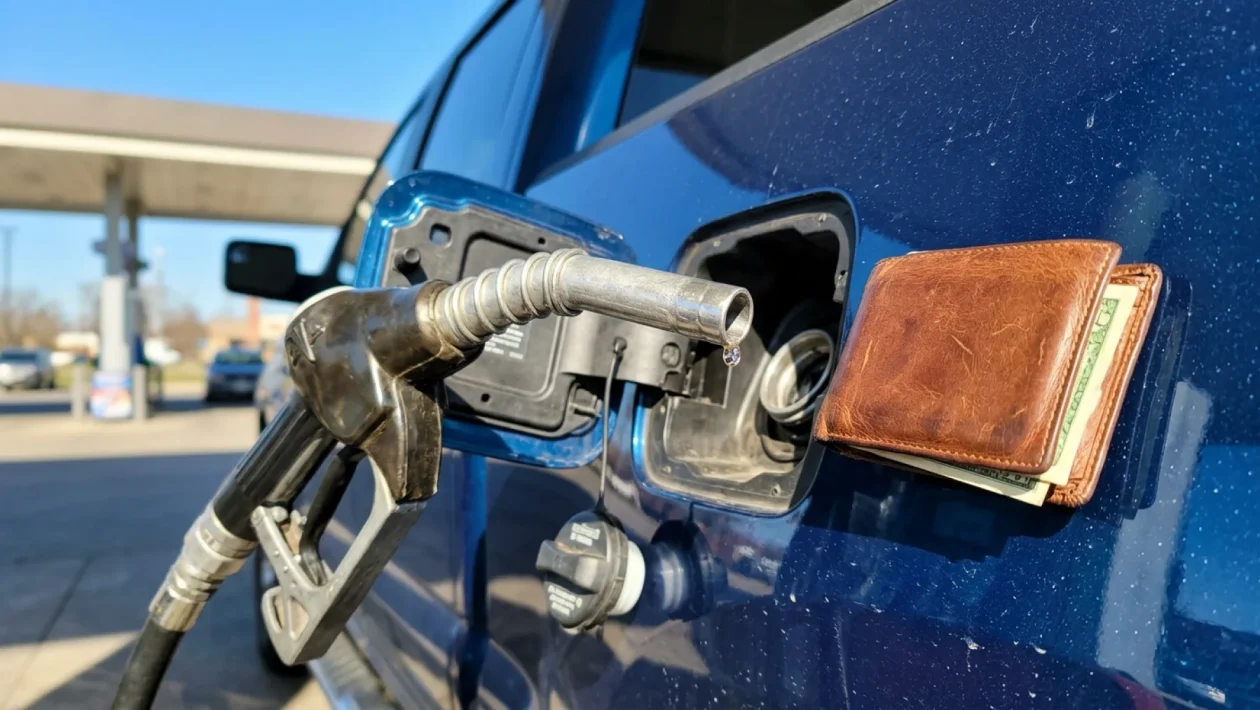
You pull up to the pump, glance at the digital sign, and instinctively wince. We’ve all been there. But if you’re filling up your tank in Newfoundland and Labrador right now, you finally caught a break. A sudden drop just rolled out across the province, pushing gasoline prices down by more than five cents a litre.
The catch? While unleaded gas is giving your wallet some much-needed breathing room, diesel and furnace oils are creeping in the exact opposite direction. Let’s break down exactly what this means for your daily commute, your household budget, and how you can outsmart the pumps this season.
N.L. Gas Prices Drop
I don’t know about you, but saving a few bucks on a fill-up pays for my morning coffee, and I’ll take a win wherever I can get it. The Public Utilities Board (PUB) officially decreased the maximum price of gasoline by 5.2 cents per litre.
What does that look like in the real world? It means the maximum price on the Avalon Peninsula has finally dropped below that painful $2.10 mark. Across Newfoundland, you’re looking at a range of $2.08 to $2.22 per litre.
If you’re up in Labrador, the spread is a bit wider, sitting between $1.48 and nearly $2.18 per litre. It’s a solid chunk of change staying in your pocket, especially if you drive a heavy-duty truck or an older SUV that loves to drink fuel.
Decoding The May 2026 Shift
If you feel like gas prices change more often than your socks, you aren’t crazy. We are dealing with incredible market volatility right now. In fact, this latest price adjustment marks the 13th time the PUB has shifted prices just this month.
Why the rollercoaster? It comes down to a chaotic mix of global crude shifts and local supply chain bottlenecks. Here is a surprising hard fact: in Atlantic Canada, provincial taxes, federal carbon pricing, and wholesale markups account for roughly 35% of the final pump price. When global commodity costs twitch, the PUB has to rapidly adjust to keep suppliers from taking a massive hit.
| Fuel Type | May 2026 Market Trend |
|---|---|
| Regular Unleaded | Decreasing (-5.2 cents) |
| Diesel | Increasing (+2.9 cents) |
| Furnace Oil | Increasing (+2.5 cents) |
| Stove Oil | Increasing (+1.0 cents) |
Diesel Spikes
Now, for the bad news. While commuters are celebrating, our tradespeople, delivery drivers, and folks trying to heat their homes are taking a hit on the chin.
The price of diesel increased by 2.9 cents per litre across most of Newfoundland, and 1.6 cents in Labrador West and Churchill Falls. Furnace oil also jumped by over 2.5 cents.
When diesel goes up, the cost of doing business goes up. Everything we buy is hauled on a truck burning diesel, meaning these “minor” spikes eventually trickle down to our grocery bills and hardware store receipts.
Fuel-Saving Strategies
You can’t control the PUB, but you can control how your rig burns fuel. I’ve spent enough time under the hood of my truck to know that a little proactive maintenance goes a long way. Plus, leveraging rewards programs from heavyweights like Petro-Canada or Irving can earn you significant cents off per litre over a year.
Here is my foolproof method to squeeze every last drop out of your tank this spring:
- Check your tire pressure: Under-inflated tires create drag. Pumping them up to the manufacturer’s spec can instantly improve your fuel economy by up to 3%.
- Ditch the dead weight: Stop using your trunk as a storage locker. An extra 100 pounds in your vehicle reduces your miles per gallon by about 1%.
- Ease off the pedal: Aggressive acceleration burns fuel at an alarming rate. Pretend there is an egg under your gas pedal and drive smoothly.
- Stack your rewards: Link your credit card to a regional gas rewards app to double-dip on points every time you fill up.
“The easiest way to beat the pump is behind the steering wheel. Dropping your highway speed from 120 km/h to 100 km/h improves your fuel efficiency by up to 15%. It’s literally free money.” – Mark Tremblay, Automotive Efficiency Analyst.
Frequently Asked Questions
Why do gas and diesel prices move in opposite directions?
Gasoline and diesel are refined differently and draw from different inventory pools. In the spring, refineries often shift production to summer-blend gasoline, increasing its supply. Meanwhile, diesel reserves might tighten up due to heavy industrial demand, causing prices to split.
When is the next PUB price update?
The Public Utilities Board typically schedules regular updates on Thursdays, but volatile market conditions can trigger unscheduled daily adjustments. The next official review is expected this Friday.
How can I find the cheapest gas in N.L.?
Download a community-driven app like GasBuddy. It relies on local drivers reporting prices in real-time, letting you spot the cheapest station in your specific neighborhood before you pull out of your driveway.
🤝 Good luck out there on the roads, and I hope these insights help you keep a little extra cash in your pocket this week.
💡 Remember, staying informed is half the battle when it comes to outsmarting the cost of living.
📱 If you found this breakdown useful, share your thoughts or send this article to a buddy who drives a gas-guzzler!
👇 Drive safe, keep your tires pumped, and I’ll see you at the pumps!