
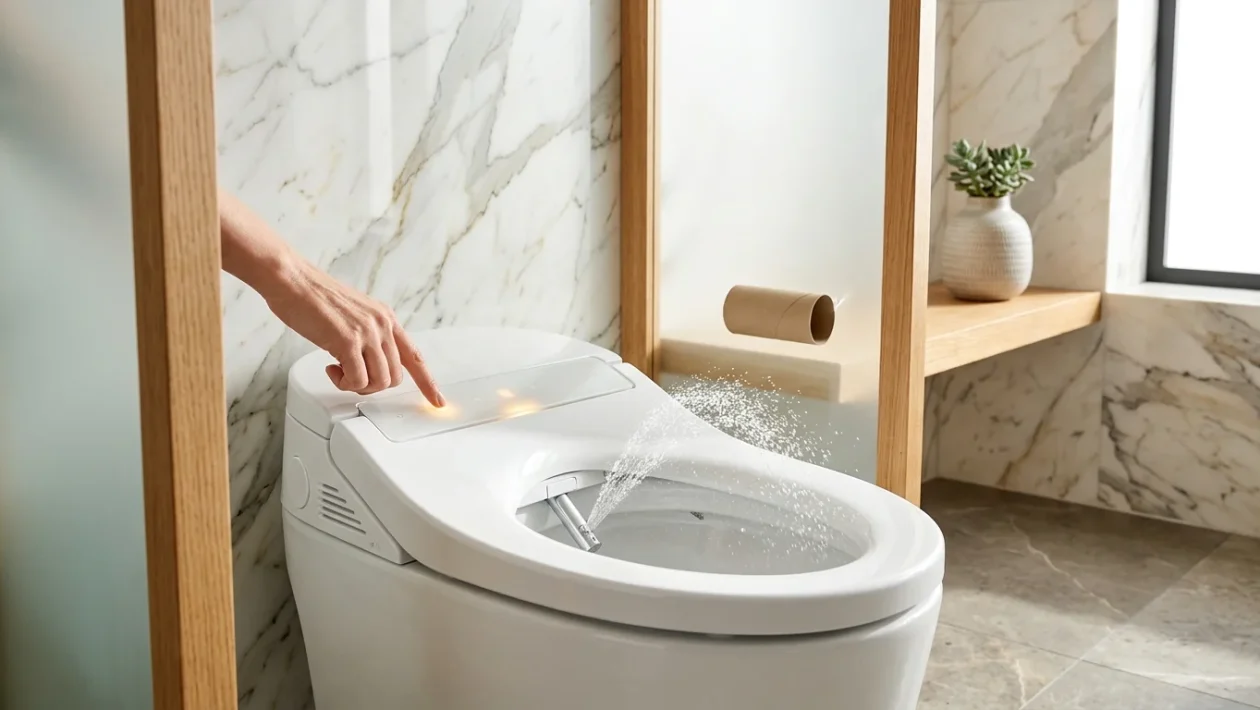
American bathrooms are undergoing a radical, high-tech transformation. For decades, toilet paper was the undisputed standard for personal hygiene. Now, a massive shift in home design is threatening to wipe it out completely.
A pristine, modern smart toilet installed in a minimalist bathroom setting
Heading into 2026, smart toilets are no longer a niche luxury reserved for five-star resorts. They are rapidly becoming standard fixtures in modern homes, driven by a global push for better hygiene, sustainability, and automated comfort.
From Japan to Global Mainstream
The technology, widely known as the washlet, originated in Japan. It merges the traditional toilet and a bidet into one seamless device. Now, international markets are eagerly embracing the concept.
These automated systems replace abrasive paper with targeted water streams. Users can instantly adjust water temperature, pressure, and angle to suit their exact preferences.
A close-up view of a high-tech smart toilet featuring a sleek design and automated seat
The automation goes far beyond just water. Modern units feature hot-air drying, heated seats, and motion sensors that detect a user’s presence to open or close automatically.
Architects and interior designers no longer treat these devices as novelties. They consider them baseline expectations for new smart home projects designed to optimize daily living.
The Environmental and Health Impact
Ditching toilet paper completely fundamentally changes bathroom sanitation. Using water provides a dramatically more thorough clean than dry paper, eliminating skin irritation and minimizing direct contact.
Many of these high-tech fixtures also integrate antibacterial surfaces and automated self-cleaning programs. This drastically reduces cross-contamination and elevates overall household hygiene standards.
The environmental math is equally compelling. Eliminating toilet paper slashes a household’s paper footprint, significantly reducing the strain on natural resources. It makes the washlet a perfect fit for modern sustainability trends.
Maintenance Reality
Despite the futuristic features, these machines are not entirely maintenance-free. Automated functions simplify the daily routine, and advanced materials repel grime, but they do not eliminate the need for manual care.
Owners still need to stick to a regular disinfection routine. Proper manual cleaning prevents bacterial buildup and stops odors from developing inside the complex mechanical parts.
The transition is already well underway. As smart tech integrates deeper into daily life, the traditional paper roll is rapidly becoming a relic of the past.


