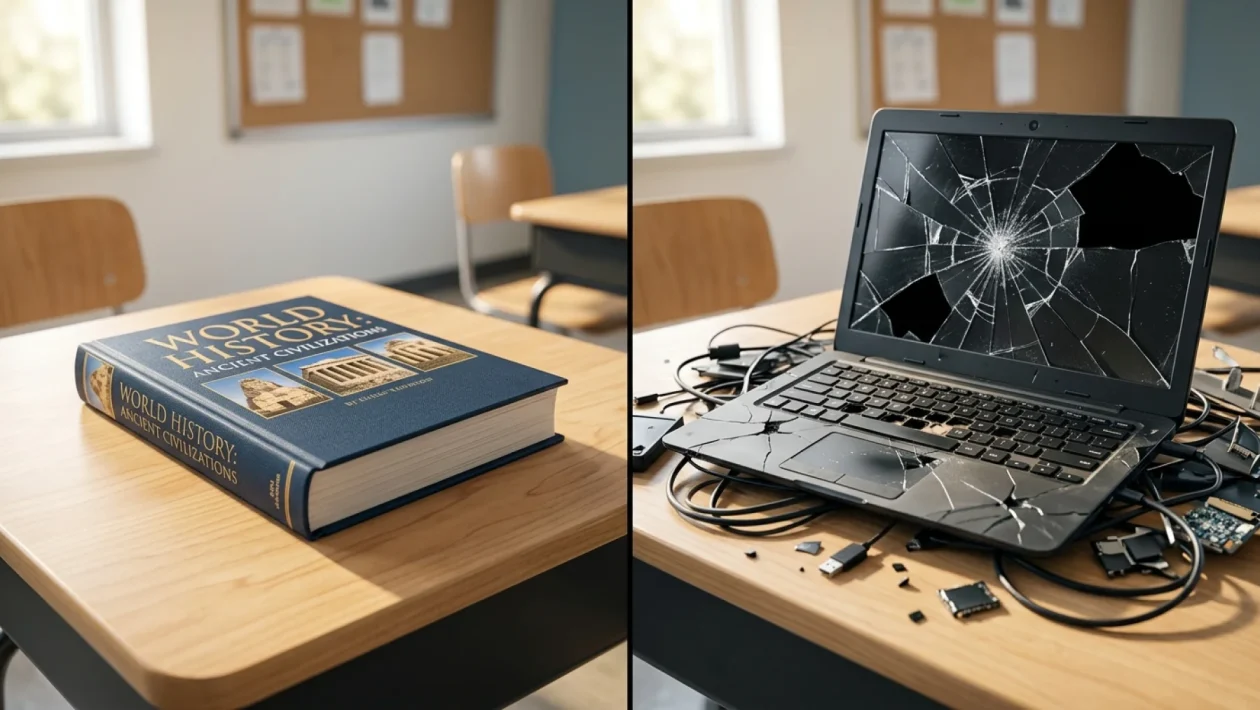
We poured $30 billion into replacing perfectly good physical books with shiny new screens, promising a high-tech utopia for North American students. Instead, we got a mountain of shattered plastic, bloated software contracts, and kids who cannot focus for more than three minutes. I have spent the last decade tearing apart gadgets and analyzing tech budgets, and let me tell you, this grand digital rollout completely missed the mark. Today, we are breaking down exactly how this historic cash burn happened, why your tax dollars are sitting in e-waste bins, and the practical steps schools are finally taking to fix the mess.
The Textbook to Laptop Switch: A False Promise
Remember when a dropped math book just meant a bent corner and a scuffed cover? Today, a dropped backpack sounds like shattering glass and smells like a completely voided warranty. The grand plan to digitize education was simple in theory: put a screen in every student’s hand to completely future-proof their learning.
Administrators rushed to swap out ten-year-old history books for budget-friendly digital devices. They sold parents on the idea of lighter backpacks and instant access to the world’s knowledge.
But hardware is not paper, and budget hardware is certainly not built to last. Laptops break, batteries rapidly degrade, and school Wi-Fi magically goes down right before the biggest test of the semester. Textbook to laptop initiatives ignored the harsh physical reality of how kids actually treat their belongings.
Inside the $30 Billion Bill We’re Still Paying
When policymakers approved this massive shift, they only looked at the upfront sticker price of the machines. They completely ignored the long-term total cost of ownership. Over $30 billion flowed into the EdTech sector across the US and Canada, promising efficiency but delivering an administrative nightmare.
Here is the brutal kicker: we did not just buy the hardware. We bought into an endless, punishing cycle of mandatory software licenses, cloud storage fees, and overwhelmed IT support.
Let’s look at the financial reality. The math paints a pretty ugly picture of where our education budgets actually went.
| Asset Type (5-Year Lifespan) | Estimated Cost Per Student |
|---|---|
| Traditional Physical Textbooks | $250 (One-time purchase, highly reusable) |
| Budget Laptops & Software Fees | $800+ (Hardware, repairs, annual licenses) |
Why the School Tech Disaster Hits Home
If you have ever tried to fix a stripped screw on a cheap plastic chassis, you know the daily pain school IT departments face. Kids are notoriously tough on gear, and these budget devices were never engineered to survive middle schoolers. They were built for spreadsheets, not locker rooms.
Now, we are seeing piles of unrepairable motherboards sitting in school basements like high-tech graveyards. Even major hardware players like Dell and massive tech support fleets akin to the Best Buy Geek Squad couldn’t keep up with the sheer volume of cracked screens and sticky keyboards.
This rapid hardware turnover is causing a literal mountain of toxic e-waste. According to a staggering 2026 environmental tech report, simply doubling the lifespan of these school devices from four years to eight would save taxpayers over $1.8 billion annually and prevent millions of tons of carbon emissions.
“We bought millions of devices with artificial expiration dates hardcoded into the software. We aren’t funding education anymore; we’re funding a mandatory hardware subscription model.” — Mark T., Lead School Board IT Director.
How We Stop the Bleeding and Fix the Hardware
As we prep for another back-to-school season this July 2026, we have to admit we cannot just go back to the Stone Age. Technology in classrooms is absolutely here to stay.
However, the deployment strategy needs a massive, immediate overhaul. Here is how proactive school districts are finally stopping the financial bleed and reclaiming their tech budgets:
- Demand modular, repairable hardware: Schools are finally refusing glued-together devices, opting for laptops that can be fixed with a standard screwdriver in under ten minutes.
- Negotiate longer software lifecycles: Administrators are pushing back against manufacturers that artificially lock devices out of updates after only three years.
- Reintroduce physical books for core subjects: Many districts are bringing back paper for reading and math to drastically reduce screen fatigue and limit hardware wear and tear.
Frequently Asked Questions
Are physical textbooks completely obsolete now?
Not at all. In fact, many educators are actively fighting to bring them back. Studies consistently show that physical reading improves reading comprehension and drastically reduces the eye strain associated with cheap screens.
Why can’t schools just repair the broken laptops?
Many budget devices were manufactured with glued-in batteries and proprietary parts. This intentionally hostile design makes professional repair more expensive than simply buying a brand-new replacement unit.
Will my taxes go up to pay for this tech disaster?
In many districts, they already have. School boards are frequently forced to pass emergency levies just to cover unexpected IT support costs and massive hardware replacement cycles.
The Bottom Line on Classroom Tech
🤝 It is time to hold tech companies accountable for the massive mess they sold to our school boards. We cannot keep treating taxpayer-funded educational tools like disposable coffee cups.
💡 Smart technology integration means buying durable gear, teaching kids the value of hardware maintenance, and knowing when a simple piece of paper does the job better. We need to demand that our local school boards start asking the hard questions before signing the next massive tech contract.
📱 I want to hear from you about what is happening in your local district. Are your kids constantly dealing with broken screens and locked software, or has your school figured out a better way?
👇 Share your thoughts in the comments below, pass this article along to your local PTA, and good luck to all the parents prepping for the upcoming school year!