Two separate parties. Two tragic mornings. And a mountain of unanswered questions that leave investigators and the public absolutely stunned. If you have been following true crime, the Tamla Horsford Nolan Wells similarities are impossible to ignore.
Both individuals attended social gatherings, only to be found dead the next morning under circumstances that defy basic logic. Authorities in both cases rushed to rule the deaths accidental, leaving grieving families to do the detective work themselves.
I have spent years analyzing crime scenes and breaking down police reports across North America. Today, we are going to dig right into the glaring overlaps between these two cases and expose why the official narratives simply do not add up.
The Core Tamla Horsford Nolan Wells Similarities
At first glance, a tragic accident is an easy pill for local jurisdictions to swallow. It closes the case file quickly and avoids expensive, drawn-out homicide investigations.
But when you put the Horsford and Wells files side by side, the coincidences are staggering. Both victims were surrounded by people who claimed to have seen or heard absolutely nothing during the time of death.
In both scenarios, witness statements shifted over time, and the timelines provided to law enforcement were full of gaping holes. It is a textbook example of how a compromised crime scene can ruin the search for the truth.
“When multiple witnesses at a private residence all claim amnesia during a crucial two-hour window, you aren’t looking at an accident. You are looking at coordinated self-preservation,” notes David Henderson, a veteran North American forensic consultant.
Breaking Down The Baffling Evidence Gaps
As we sit here in the summer of 2026, technology tracks our every move. Yet, in both of these cases, the digital footprint miraculously vanished.
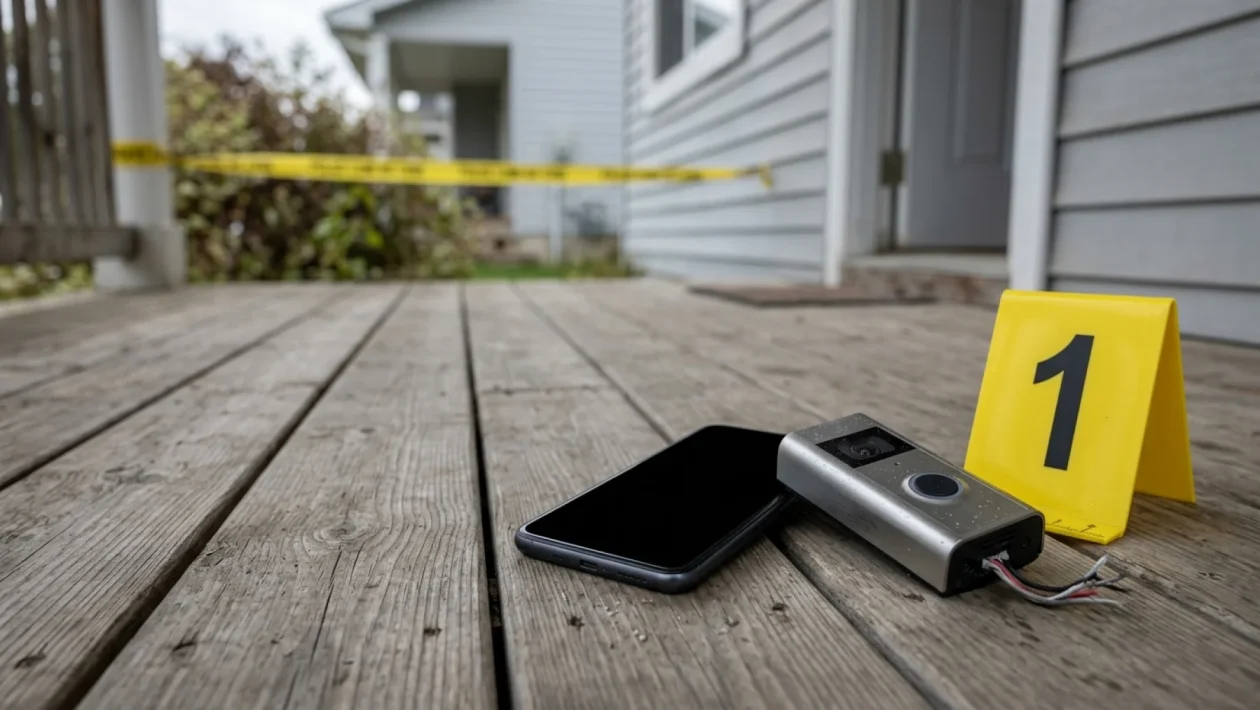
Whether it is missing footage from a residential Ring doorbell camera or suddenly wiped data on an Apple iPhone, the digital silence speaks volumes. Investigators are trained to look for what is missing just as closely as what is left behind.
Let’s look at a quick breakdown of where the physical and digital evidence failed in both investigations.
| Investigative Failure | Tamla Horsford Case | Nolan Wells Case |
|---|---|---|
| Digital Evidence | Security footage unavailable or incomplete | Phone location data mysteriously disabled |
| Crime Scene Integrity | Not immediately secured by initial officers | Scene cleaned before forensics arrived |
| Autopsy Anomalies | Unexplained blunt force trauma | Injuries inconsistent with a standard fall |
Two Baffling Crime Scene Parallels
One of the most frustrating aspects of the Tamla Horsford Nolan Wells similarities is how initial first responders handled the properties. You do not need a badge to know that a sudden death requires locking down the area.
Yet, civilians were allowed to roam freely, contaminate evidence, and corroborate their stories before formal police interviews took place. This violates every standard operating procedure in the modern policing playbook.
Consider this chilling reality: According to recent North American justice data, nearly 18% of unattended deaths initially ruled “accidental” contain critical staging anomalies upon secondary forensic review.
How Standard Protocol Was Ignored
When a body is found at a residential property, there is a very strict sequence of events that must happen to preserve the truth. When authorities skip these steps, justice is delayed indefinitely.
Here is exactly how a proper response should unfold, contrasting sharply with what happened in these two tragedies:
- First responders must lock down the perimeter immediately, refusing entry or exit to all party guests.
- All individuals present must be separated instantly so they cannot align their stories or swap information.
- Forensic teams must photograph the victim undisturbed and collect all mobile devices from the premises for a warrant hold.
- A detailed canvas of all neighboring properties must be conducted to secure third-party camera footage before it overwrites.
Frequently Asked Questions
Have either of these cases been officially upgraded to homicides?
Despite massive public pressure and independent forensic reviews highlighting severe inconsistencies, getting a medical examiner to change an official cause of death from “accidental” to “homicide” is an incredibly difficult legal battle.
What is the biggest obstacle in solving these mysteries today?
Time and memory. The longer a compromised crime scene sits without a formal homicide investigation, the harder it becomes to extract reliable physical evidence or secure digital backups that have long since been purged.
Can public pressure actually force authorities to reopen a case?
Absolutely. High-profile podcast coverage and relentless social media campaigns have forced multiple local precincts across Canada and the US to hand over botched investigations to state or federal agencies.
The Bottom Line
🤝 Share your thoughts on these baffling cases in the comments below, because public visibility is often the only tool grieving families have left.
💡 The glaring Tamla Horsford Nolan Wells similarities prove that we cannot blindly accept an “accidental” ruling when the physical evidence screams otherwise.
📱 Good luck to the independent investigative journalists and armchair detectives who refuse to let these files collect dust.
👇 Keep questioning the official narratives, stay safe out there, and never stop demanding the truth.