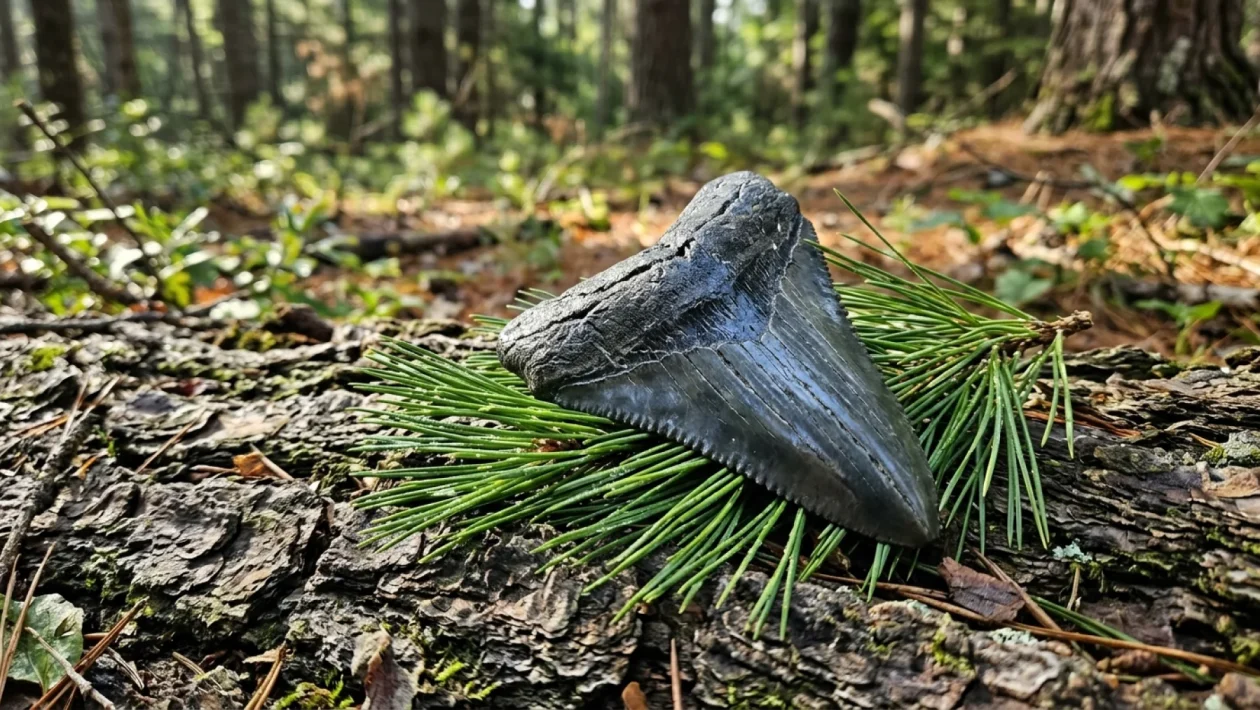
Picture this: you’re staring up at a towering pine tree, thinking it represents the ultimate symbol of ancient, rooted nature. You’re dead wrong. The truth is, the shark evolution timeline stretches so far back that these apex predators were patrolling the oceans long before a single tree existed on planet Earth. We are talking about a jaw-dropping evolutionary gap that flips everything you thought you knew about biology completely upside down.
Mapping The Shark Evolution Timeline
Let’s get straight to the hard numbers. According to fossil records, the earliest evidence of sharks dates back a staggering 450 million years to the Late Ordovician period.
To put that into perspective, the timeline separating the very first sharks from the very first trees is roughly 65 million years. That is the exact same amount of time separating you, reading this on your phone right now, from the extinction of the dinosaurs.
When you’re out hiking this summer, maybe wearing your favorite Arc’teryx gear and admiring the ancient North American wilderness, remember that the ocean’s most feared residents had already perfected their survival blueprint before wood was even invented.
When Ancient Ocean Predators Ruled A World Without Plants
The world these early cartilaginous fish swam in was completely unrecognizable. Most of Earth’s dry land was mashed together into a massive southern supercontinent called Gondwana.
While the oceans were teeming with trilobites and massive arthropods, the land was essentially a barren rock. The most advanced plant life you could find were tiny mosses and liverworts.
They grew flat against the damp ground, maxing out at a few centimeters tall. They simply didn’t have the biological hardware to support their own weight yet.
How Sharks Managed To Predate Earth’s First Forests
It wasn’t until about 430 million years ago that spindly, leafless vascular plants started showing up. Still, nothing resembling an actual forest existed.
The true breakthrough for terrestrial life happened roughly 385 million years ago during the Middle Devonian period. This is when Wattieza, the earliest known true tree, finally took root.
By the time this 8-meter-tall, fern-crowned plant stood upright in places like modern-day New York, our ocean-dwelling friends were already grizzled veterans of the planet.
“The survival of the cartilaginous-fish body plan is one of biology’s greatest triumphs. Sharks watched the first forests rise, witnessed dinosaurs come and go, and survived every mass extinction event Earth threw at them.” — Dr. Richard Sullivan, Paleontology Researcher
Breaking Down The 65 Million Year Evolutionary Gap
Understanding how this epic timeline unfolded requires a quick look at the major milestones. Here is exactly how life progressed while sharks were busy dominating the deep:
- The Deep Ocean Pioneers (450 Million Years Ago): Tiny fossilized scales, known as dermal denticles, prove the ancestors of modern sharks were already patrolling shallow seas.
- The Muddy Crawlers (430 Million Years Ago): Early vascular plants like Cooksonia appear, looking like nothing more than green wire stuck in the coastal mud.
- The First True Trees (385 Million Years Ago): Woody trunks finally develop, allowing plants to support a massive crown of foliage high above the ground.
- The Modern Apex (Recent History): Today’s familiar species, like the Great White, emerge relatively recently in the grand scheme—only a few million years ago.
Let’s look at the tale of the tape for a quick visual breakdown.
| Species / Milestone | First Appearance on Earth |
|---|---|
| Early Sharks | 450 Million Years Ago |
| First Vascular Plants | 430 Million Years Ago |
| First True Trees | 385 Million Years Ago |
| Modern Great Whites | ~3-4 Million Years Ago |
Frequently Asked Questions
Are the sharks we see today actually 450 million years old?
No. While the shark evolution timeline is unbroken, modern species like Great Whites evolved much later. What survived for 450 million years is their highly efficient cartilaginous body plan.
What did the first trees look like?
The very first tree, Wattieza, looked a lot like a modern tree fern. It had a substantial woody trunk that reached about 8 meters high, topped with a crown of fern-like foliage.
Why did it take plants so long to catch up?
Plants had to literally invent new biology. They needed to evolve lignin-stiffened tissues to support their own weight against gravity—a massive engineering problem that oceanic creatures didn’t have to worry about.
🤝 I hope this deep dive gives you a brand new appreciation for the ocean’s most misunderstood survivors. The next time someone tells you how ancient a forest feels, you can casually drop the fact that the sea was already perfected millions of years prior.
💡 Nature always finds a way, and the resilience of the shark is the ultimate proof of a design done right the very first time. They didn’t just survive history; they watched it being built.
📱 Share your thoughts with us below! Were you as blown away by this massive evolutionary gap as I was?
👇 Good luck out there this season, whether you’re hiking through the ancient woods or taking a dip in the even older oceans!