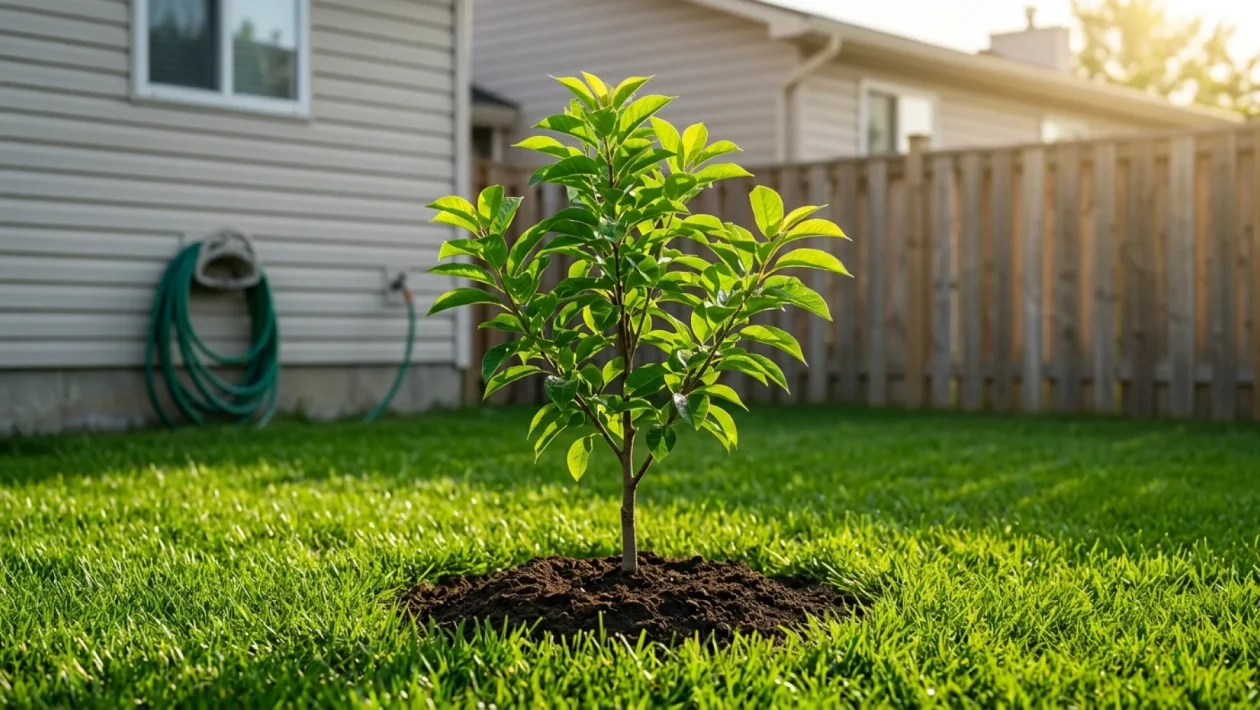
You are probably walking right past a piece of living, breathing deep-space history on your way to grab your morning coffee. We spend decades staring up at the stars, totally oblivious to the fact that parts of outer space are literally rooted in the dirt beneath our boots. I am talking about Moon Trees—the ultimate cosmic stowaways from the Apollo era that are quietly providing shade in our local parks, university campuses, and neighborhood squares. Let’s dig into the wildest, most successful forestry experiment NASA ever pulled off, and exactly how you can track one down.
Moon Trees: Defining A Botanical Marvel
Back in 1971, Apollo 14 did not just carry astronauts Alan Shepard and Edgar Mitchell to the lunar surface. It also hauled a tiny, personal preference kit belonging to Command Module Pilot Stuart Roosa.
Roosa was a former smokejumper for the US Forest Service, a guy used to parachuting into raging wildfires. Naturally, he decided to pack a few hundred seeds of loblolly pine, sycamore, sweetgum, redwood, and Douglas fir for the ride.
Here is the hard scientific fact that still blows my mind today: those tiny seeds traveled over 240,000 miles into deep space, orbited the moon 34 times, and took heavy doses of cosmic radiation. Yet, against all odds, they returned home to become towering giants that stand shoulder-to-shoulder with our native timber.
It is the kind of rugged, bomb-proof resilience you would expect from a heavy-duty tent you bought at MEC, but we are talking about fragile biological life here.
How Apollo’s Forgotten Space Seeds Survived Orbit
The craziest part of this story is not the rocket ride itself, but what happened after the capsule splashed down. The seed containers actually burst wide open during post-flight decontamination procedures.
Scientists thought the experiment was a complete bust. They assumed the harsh vacuum of space, combined with chemical exposure back on Earth, had destroyed the payload entirely. But nature always finds a way.
If you are wondering how they pulled this off and saved the project, here is the exact process the Forest Service used:
- Recovery and Sorting: Technicians painstakingly gathered the scattered, mixed-up seeds from the burst vacuum canisters.
- Controlled Germination: The recovered seeds were planted in highly monitored forest service nurseries across the country.
- Growth Comparison: Researchers carefully grew them side-by-side with terrestrial control seeds to monitor for strange mutations.
- Nationwide Distribution: After confirming they were perfectly healthy, the saplings were shipped to state capitals, schools, and parks during America’s 1976 Bicentennial.
“When we realized the seeds were sprouting exactly like their terrestrial cousins, it was a massive revelation for deep-space biological survival.”
To Grow In Our Backyards: Spotting The Space Forests
Because no master database was ever maintained, these trees are currently scattered across North America like a massive, leafy treasure hunt. You will not find them glowing in the dark or sprouting alien fruit.
In fact, that is exactly why they remain so anonymous today. To put it in perspective, let’s look at the hardware facts.
| Standard Earth Trees | Apollo Moon Trees |
|---|---|
| Grown from local terrestrial seeds | Seeds traveled 240,000+ miles in space |
| No special historical marker required | Often identified by a small, fading brass plaque |
| Zero exposure to cosmic radiation | Absorbed raw deep-space radiation in 1971 |
Now, as we enjoy the summer of 2026, the legacy is actively repeating itself. Thanks to the recent Artemis missions, a whole new generation of tree seeds just took a trip past the moon.
NASA and the Forest Service have been actively distributing these Artemis-generation seedlings to public institutions. Soon, you might find a second-generation space sapling planted outside your own local community center.
Frequently Asked Questions About Moon Trees
Are there any Moon Trees planted in Canada?
While the vast majority were planted in the US during the 1976 bicentennial, a few seeds were gifted internationally. However, if you are hunting for one locally, you will have the best luck checking border-state capitals or major North American botanical gardens.
Did space radiation physically change the trees?
Not at all. The Moon Trees look and behave exactly like completely normal trees. Decades of observation have shown absolutely zero genetic mutations from their time in microgravity.
Can I buy a Moon Tree for my own property?
Original Apollo trees are strictly located on public or government land. However, keep an eye on educational grants, as schools and museums can sometimes apply to receive the new Artemis-generation seedlings.
🌳 Share your thoughts on this wild piece of space history the next time you are out for a hike or hanging at the local park.
💡 You truly never know if that massive Douglas fir providing your afternoon shade has a secret cosmic backstory.
📱 Take a quick look for small brass plaques around your town’s older, heritage trees, because you might just discover a forgotten space relic.
🤝 Good luck on your botanical treasure hunt, and keep your eyes peeled for the new Artemis generation taking root in your neighborhood!