The internet doesn’t blink, and when the Joan Sebastian Guerrero shooting raw dashcam footage surfaced, it bypassed the usual media spin and hit the public right in the gut. We are living in an era where the truth isn’t dictated by sanitized press releases; it is recorded at 60 frames per second from the dashboard of a passing vehicle. If you haven’t realized how crucial these little windshield witnesses are, this high-profile incident is your final wake-up call. I am going to break down exactly why this unedited video shifted the narrative and how you can properly protect yourself on the asphalt.
Raw Dashcam Footage: The Unedited Truth
There is a reason the phrase raw dashcam footage carries so much weight in modern journalism and law enforcement. A camera lens does not panic, it does not hold bias, and it certainly does not forget the sequence of events. When incidents like the Guerrero shooting occur, the initial reports are often a chaotic mess of conflicting eyewitness accounts.
Raw video cuts through that noise instantly. According to a recent 2025 study by the Canadian Automobile Association (CAA), dashcam usage has spiked by a staggering 145% over the last three years. Drivers are finally waking up to the reality that their word isn’t always enough.
“A camera has no adrenaline and no memory gaps. In forensic analysis, raw, uncompressed video is the closest thing we have to an absolute truth.” — Dr. Marcus Thorne, Forensic Video Analyst.
When you strip away the commentary and watch a raw file, you are acting as the jury. The metadata embedded in these files—time, GPS location, and speed—transforms a simple video into an ironclad digital alibi.
Unpacking the Joan Sebastian Guerrero Shooting
When the Guerrero footage leaked, it became a massive flashpoint because it offered an unfiltered, terrifyingly real perspective of a complex altercation. People searched for it not just out of morbid curiosity, but because they demanded transparency. The footage laid out a definitive timeline of the escalation.
It highlighted the drastic difference between what is perceived in the heat of the moment and what actually happens. In high-stress situations, human memory degrades rapidly. A 4K video file does not.
| Evidence Type | Reliability Under Pressure |
|---|---|
| Human Eyewitness | Highly prone to stress-induced distortion. |
| Dashcam Video | 100% objective, timestamped, and court-ready. |
This shooting incident proved that relying solely on witness statements is a gamble no one should take. Whether it is a traffic stop gone wrong or a major highway collision, having that objective eye on your dashboard changes the entire power dynamic.
What It Means For Your Road Safety
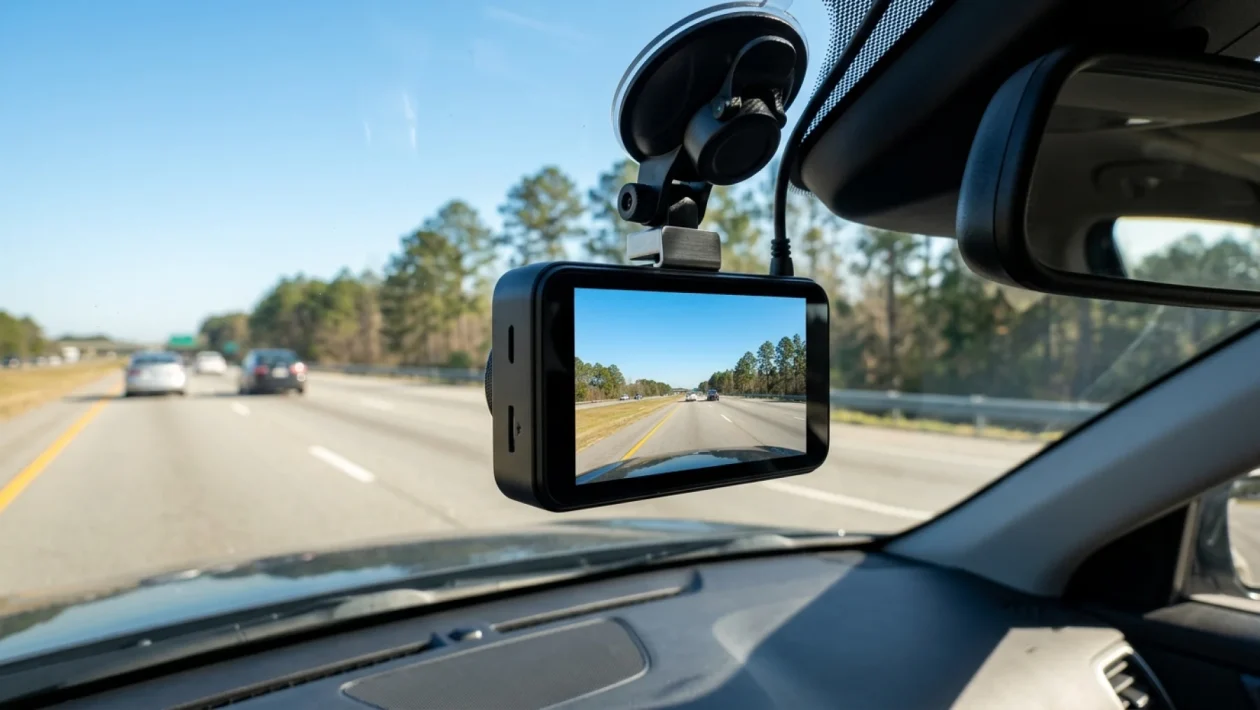
As we navigate the heavy traffic of this July 2026 summer travel season, the stakes on North American roads are incredibly high. You cannot control the erratic behavior of other drivers, but you can control how you document it. Equipping your truck or sedan with a reliable unit is no longer optional; it is a necessity.
Whether you are running a premium Garmin Dash Cam Live or a rugged Thinkware U3000, having the gear is only half the battle. You need to know exactly how to handle the data if you ever capture a critical incident like a shooting or a severe wreck.
Here is the exact protocol to follow if your camera catches something major:
- Lock the file instantly: Hit the emergency save button on your device so the loop recording doesn’t overwrite the crucial moments.
- Do not compress or edit: Never upload the raw file to social media first; social platforms compress video and strip out essential metadata like GPS coordinates.
- Back it up physically: Remove the SD card as soon as it is safe and transfer the raw files directly to a secure hard drive.
- Contact authorities: Hand over a copy of the footage to law enforcement, ensuring you retain the original master file for your own legal protection.
Frequently Asked Questions
Is it legal to share raw dashcam footage online?
While generally legal if recorded in a public space, sharing footage of an active investigation or severe trauma can complicate legal proceedings. It is always best to provide the raw file to authorities before posting it on the internet.
Can raw video be used as the sole evidence in court?
Absolutely. If the footage is unedited and contains verifiable metadata (like time and GPS stamps), judges and insurance adjusters heavily rely on it to establish fault and timelines.
What resolution is best for capturing clear license plates?
You want a minimum of 1440p (2K), though 4K is rapidly becoming the standard. The higher resolution ensures that even if you have to zoom in on a raw file, the details remain sharp and legible.
🤝 Thank you for riding along with me as we unpacked this heavy but crucial topic. The world is unpredictable, and having a reliable, silent witness on your dashboard is the best insurance policy you can buy.
💡 Do not wait until it is too late. If your windshield is currently bare, take this weekend to research and mount a quality camera in your vehicle.
📱 I want to hear from you. Have you ever captured something wild or legally significant on your daily commute?
👇 Drop a comment below and share your thoughts, and stay safe out there on the roads!