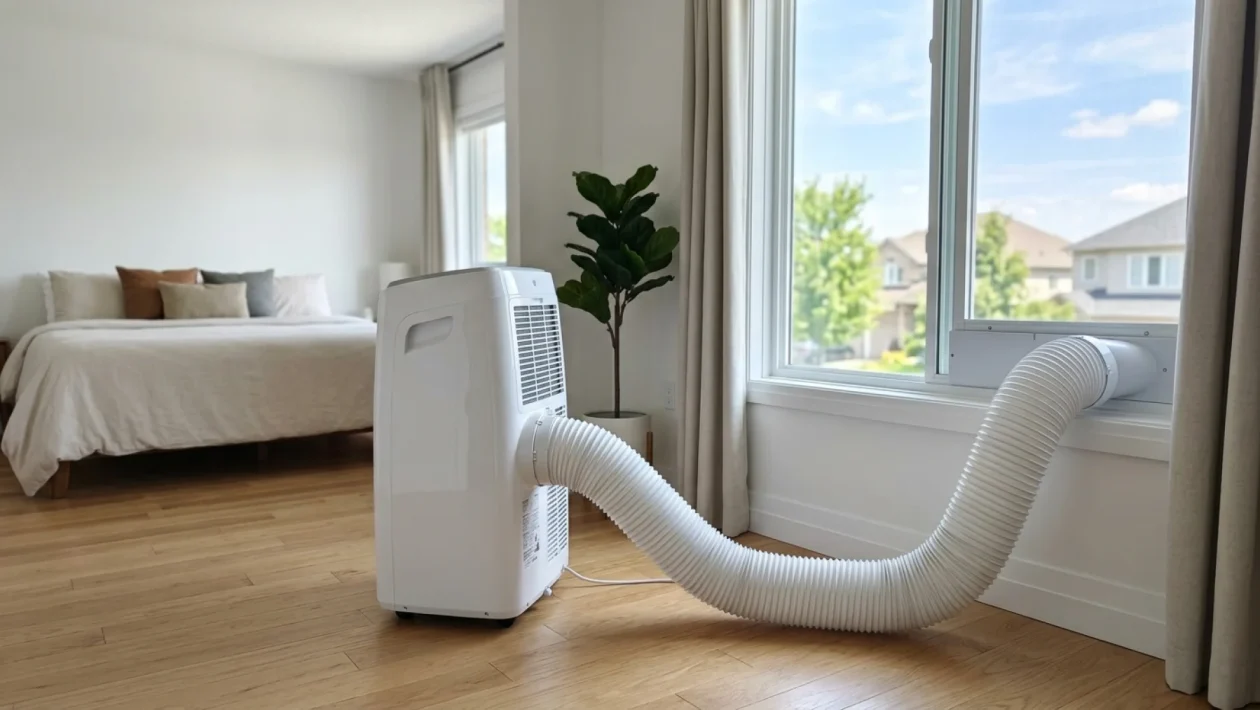
You lug a heavy, rectangular tower into your bedroom, plug it in, and expect instant arctic relief—only to find the room feels like a tropical sauna an hour later. If you are running a real refrigerant-based unit without an exhaust hose secured to a window, you are actively heating your space instead of cooling it. The ultimate fix isn’t just buying another oscillating fan; it’s understanding exactly how these machines pull heat and moisture out of your air, and why that thermal energy absolutely must be blasted outside.
Why Venting Matters
Real portable air conditioners don’t magically create cold air out of nothing. They are complex machines that grab the warm ambient air in your room and force it over chilled evaporator coils.
These coils are packed with refrigerant that literally absorbs the heat from the air. The chilled air is blown back into your room, but that absorbed heat hasn’t disappeared—it has to go somewhere.
If you don’t use the window vent, the internal compressor just dumps that scorching waste heat right back into your bedroom. As of 2025, portable units scooped up nearly 20% of the total room-cooling market, but a shocking number of folks still run them improperly.
“People hate dealing with the big plastic hose, but physics is physics. If you don’t exhaust the waste heat outside, you’ve essentially just bought an incredibly loud space heater.”
By securing that hose to your window, you give the unit a clear escape route for the heat. It is the only way a true air conditioner can actually lower the temperature of your space.
Swamp Cooler Myths
You might have seen flashy ads for “ventless” portable ACs and wondered why you shouldn’t just buy one of those instead. Those aren’t real air conditioners; they are evaporative coolers, commonly known as swamp coolers.
Instead of a compressor and refrigerant, they use a simple fan to pull air through pads soaked in water from a base reservoir. While they might feel nice if you sit directly in front of them, they are a terrible idea for most North American summers.
Here is a hard fact: commercial swamp coolers can bump up your ambient humidity by up to 3% for every single degree they drop the temperature. If you live anywhere humid—like Ontario or the East Coast—running a ventless cooler will turn your living room into a sticky, miserable jungle.
| Real Vented AC | Ventless Swamp Cooler |
|---|---|
| Uses refrigerant to extract heat | Uses a fan to blow air over wet pads |
| Actively lowers room humidity | Raises room humidity significantly |
| Requires a window exhaust hose | Requires constant water tank refills |
| Works perfectly in humid climates | Only effective in dry, desert climates |
Setup Essentials
If you just grabbed a solid dual-hose unit from Canadian Tire or a sleek smart model from Danby this July 2026, you need to set it up right. A sloppy installation ruins your machine’s efficiency and wastes your hard-earned electricity money.
Here is the foolproof method to get your room ice-cold in record time:
- Seal the gaps: Install the plastic window bracket and use weather stripping to block any tiny cracks where hot outside air can sneak back in.
- Keep the hose short: Do not stretch the exhaust hose out to its maximum length. Keep it as short and straight as possible so the hot air escapes quickly.
- Check the water tank: Real ACs pull humidity out of the air. While modern units often self-evaporate this moisture out the window, extreme heatwaves might require you to pull the bottom plug and drain the excess water into a pan.
Take ten extra minutes to dial in your window seal. Your hydro bill and your sleep quality will thank you.
Frequently Asked Questions
Can I run my portable AC without a window?
Absolutely not, unless you are only using the “fan” or “dehumidifier” mode. If you want the room to actually get cold, the machine must use an exhaust hose to vent the extracted heat outside.
What happens to the water in a portable AC?
Because these units lower humidity, condensation builds up inside. Many high-end models automatically vaporize this moisture and blow it out the exhaust hose. However, during highly humid days, a backup tank at the bottom catches the excess, which you will occasionally need to drain manually.
Are dual-hose portable ACs better than single-hose?
Yes. A single-hose unit creates negative pressure in the room, which sucks warm air in from other parts of the house through the cracks under your doors. Dual-hose models pull outside air to cool their internal compressor, making them much more efficient and faster at cooling your space.
🤝 Good luck beating the heat this summer! Taking the time to properly vent your machine is the difference between tossing and turning in sweat, and sleeping like a rock.
💡 Share your thoughts and your own cooling setups with the community below.
📱 Tag us on social media if you finally ditched that swamp cooler for a real vented powerhouse.
👇 Drop a comment letting us know which brand of portable AC has kept your home frosty this season!