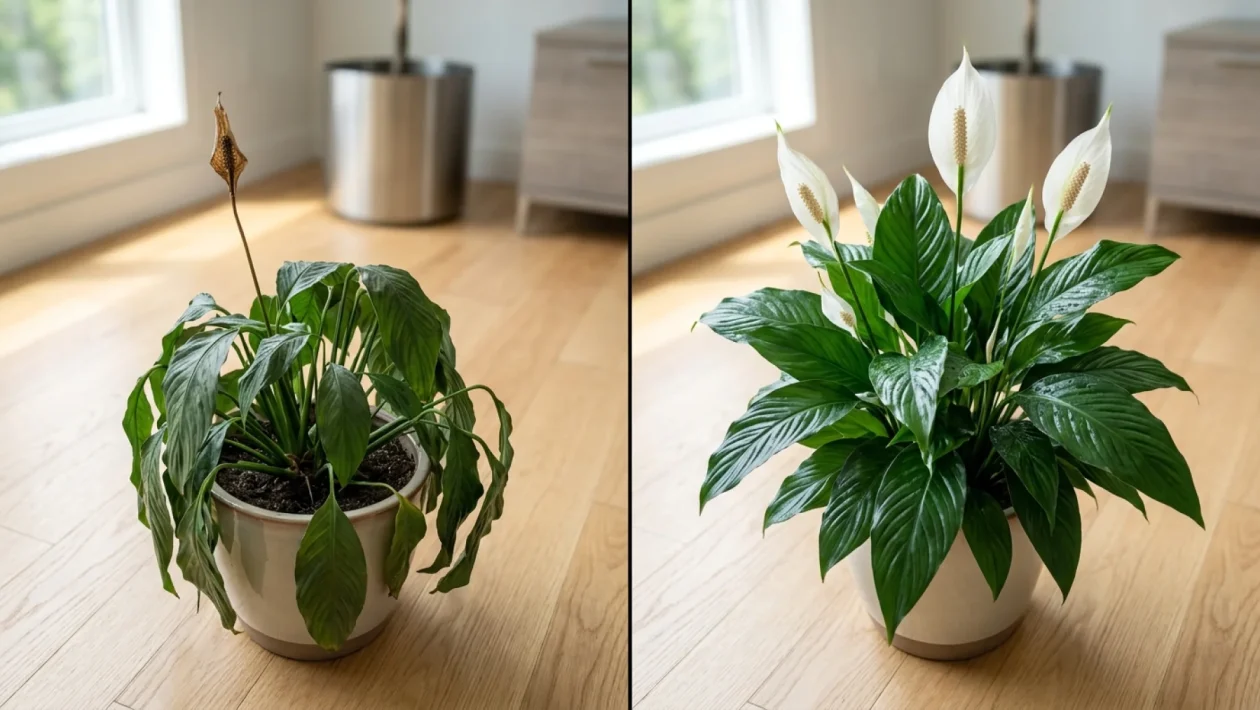
If your peace lily is looking completely exhausted right now, it’s not just you. Spring flowering takes a massive toll on these tropical beauties, leaving them drained, droopy, and desperate for a reset.
Right now, as we hit the peak of July 2026, your plant is at a critical crossroads. Left alone, it will merely survive the season. But with a few strategic tweaks, you can trigger a massive second wave of explosive white blooms and ultra-glossy foliage.
Here is the ultimate five-step game plan to revitalize your plant before the month ends.
Snip the Spent Flowers (The Energy Redirect)
By mid-summer, those brilliant spring flower spikes are likely turning a sad, crusty green or brown. Leaving them attached to the plant is a major rookie mistake.
Dead flowers act like energy vampires, draining nutrients the plant desperately needs for fresh growth. Proper peace lily care demands that you cut the cord.
- Grab a pair of clean, sharp micro-snips (I swear by the bypass pruners from Lee Valley Tools).
- Trace the faded flower stalk all the way down to the base of the plant.
- Make a clean, angled cut as close to the soil line as possible.
- Repeat for any yellowing or crispy outer leaves to instantly tidy up the plant’s silhouette.
Fuel the Foliage with Strategic Feeding
Your peace lily has been working overtime since April, and the soil in its pot is likely tapped out. July is the absolute perfect window to replenish those crucial nutrients.
However, these plants are highly sensitive to chemical root burn. You need a balanced houseplant fertilizer, ideally mixed at half-strength, applied every four to six weeks.
| Fertilizer Strategy | Best Use Case |
|---|---|
| Commercial Blend (e.g., Miracle-Gro) | Fast, measurable nutrient delivery targeted for blooming. |
| Diluted Organic Compost Tea | Slow, gentle feeding with virtually zero risk of root burn. |
Hydrate Deeply Without Drowning the Roots
Summer heat causes indoor soil to dry out significantly faster than you might think. But hitting your plant with a firehose every single day will just invite catastrophic root rot.
Did you know peace lilies naturally thrive in environments with an ambient humidity of exactly 50% to 70%? They are native to the dense, damp rainforest canopies of Central and South America.
To replicate this without drowning them, water deeply only when the top inch of soil feels bone dry. If you struggle to judge moisture levels by touch, grab a basic digital soil moisture meter from Canadian Tire—it’s a cheap investment that saves expensive plants.
Shield From the Harsh Afternoon Sun
We all love a brightly lit room, but intense July sunlight beaming through a window acts exactly like a magnifying glass on delicate foliage.
If your plant has been sitting on a southern or western sill, it’s in the danger zone for severe, irreversible leaf scorch.
“July sunlight can be intense enough to scorch the leaves, turning peace lily leaves brown. If the plant has been sitting on a sunny windowsill all spring, move it back a few feet or filter the light with a sheer curtain,” advises botanical expert Marina Prokaten.
Pull it back into bright, indirect light. A well-lit bathroom is often the holy grail spot due to the extra steam from the shower.
Hunt Down Summer Houseplant Pests
Warm indoor air and consistently damp soil create a five-star resort for insects. You must stay vigilant this month.
Make it a habit to check the undersides of the leaves every time you water. Watch out for these common summer invaders:
- Spider mites: Look for fine webbing and tiny dusty specks. They hate moisture, so misting helps deter them.
- Mealybugs: These look like tiny, sticky cotton balls hiding in the crevices of stems.
- Fungus gnats: Annoying little black flies that hover around wet soil.
Wipe your leaves down with a damp microfiber cloth once a week. It physically removes pests and allows the plant to photosynthesize at maximum efficiency.
Frequently Asked Questions
Why are the tips of my peace lily turning brown?
Brown tips are the classic SOS signal for inconsistent watering, a lack of humidity, or salt buildup from using too much fertilizer. Flush the soil with distilled water and dial back the feeding routine.
Can I move my peace lily outside for the summer?
You can, but keep it strictly in full shade. North American summer sun will fry the leaves in a single afternoon, and hot outdoor winds will sap its moisture incredibly fast.
How long does it take to see new blooms?
If you execute this specific July reset perfectly, you can realistically expect a fresh, vibrant flush of blooms by late August or early September.
🤝 You’ve got this! Reviving a tired houseplant isn’t about having a magical green thumb; it’s simply about knowing what the plant is trying to communicate.
💡 Give your peace lily the severe haircut it deserves, dial in that summer watering schedule, and keep it out of the blazing afternoon sun.
📱 If you found this July guide helpful, share your thoughts below or send this article to a buddy who is notoriously bad at keeping their houseplants alive!
👇 Good luck, grab those pruning snips, and enjoy those upcoming summer blooms!