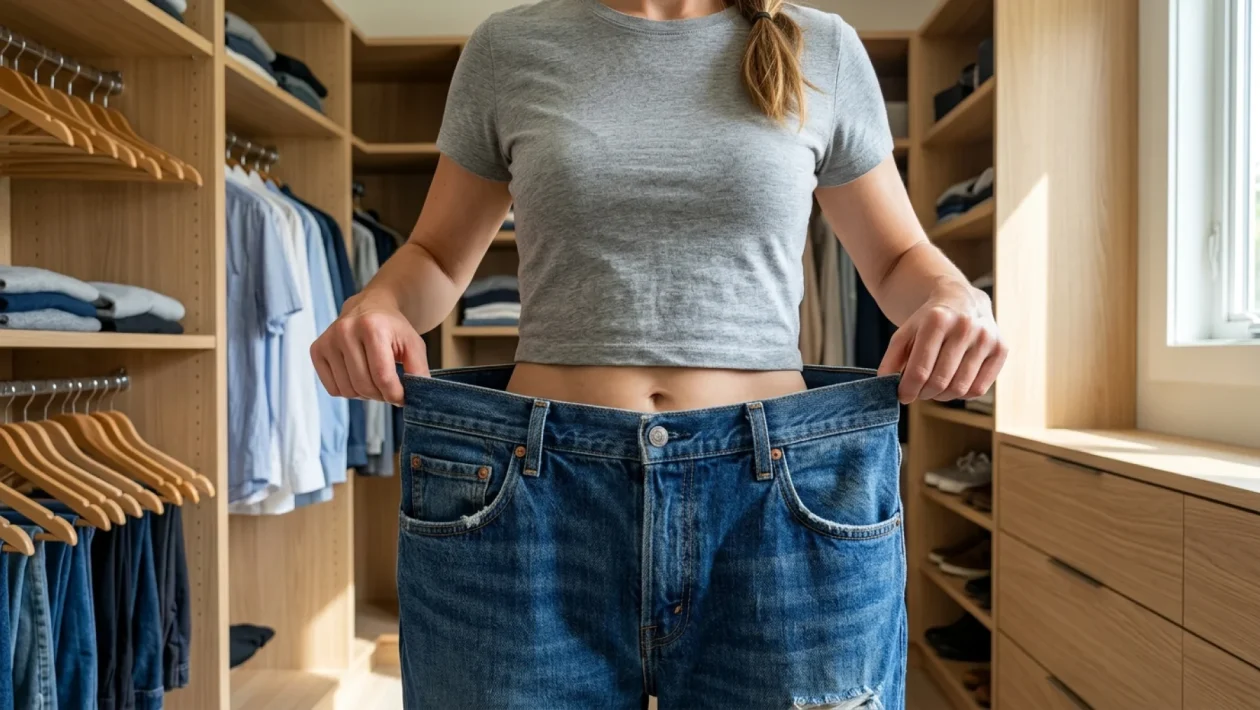
People are shrinking out of their clothes faster than they can buy new ones, and the retail industry is caught with its pants down. If you have recently dropped two belt sizes in three months, you already know the frustration of a closet full of expensive clothes that suddenly fit like oversized garbage bags. We are going to break down exactly how this pharmaceutical shift is destroying old retail models and give you a bulletproof strategy to rebuild your closet without burning through your savings.
Think of your wardrobe like a house. If the foundation suddenly shrinks, the framing is not going to hold up. Right now, North Americans are dealing with a foundation shift of historic proportions.
The Core Driver: Ozempic Weight Loss
The sheer speed at which people are dropping pounds has turned the apparel industry on its head. We are not just talking about dropping a few holiday pounds anymore. We are talking about massive, rapid transformations that require an entirely new approach to getting dressed every morning.
To put this into perspective, a staggering 12% of North American adults are actively using GLP-1 medications like Ozempic or Wegovy as of summer 2026. That is millions of people simultaneously realizing their favorite jeans no longer stay up.
Local tailors are suddenly the busiest guys in town. They are practically printing money taking in waistbands and darting shirts. But even the best tailor cannot take a size XXL shirt down to a medium without ruining the shoulders.
Rewriting The Rules Of Retail Inventory
Major brands are officially panicking in boardrooms from Toronto to New York. Retailers used to forecast their inventory based on historical data, buying massive quantities of larger sizes.
Now, store managers are staring at empty hangers where the small and medium sizes used to sit. The entire supply chain is buckling under this sudden demographic shift. Canadian staples like Hudson’s Bay and global giants alike are desperately re-evaluating their autumn orders.
“We are witnessing a historic transfer of consumer spending. The inventory algorithms built over the last twenty years are completely useless in the GLP-1 era. We simply cannot sew smalls and mediums fast enough.” – Marcus Thorne, Senior Retail Supply Chain Analyst.
The contrast between the old way of buying and this new era is stark.
| Before The GLP-1 Era | Summer 2026 Reality |
|---|---|
| Oversized, relaxed fits dominated shelves | High demand for tailored, adjustable silhouettes |
| Predictable seasonal sizing charts | Wild shortages in sizes Small and Medium |
| Consumers bought clothes to last years | Consumers buy transition pieces for 3-6 months |
Mastering Wardrobe Shopping In 2026
You need a tactical approach to clothing if you are in the middle of a weight-loss journey. Buying a premium custom suit right now is like painting a house before you fix the drywall. It is a massive waste of cash.
Instead, you need to build a “transition wardrobe” that flexes with your changing body. You want high-quality engineering and smart fabrics that forgive a fluctuating waistline.
- Find an anchor brand with stretch: Look for technical apparel. Brands like Lululemon have mastered the ABC (Anti-Ball Crushing) technology and four-way stretch materials that look like office wear but feel like gym clothes. They will forgive a ten-pound drop better than rigid cotton.
- Invest in a micro-adjustable belt: Ditch the traditional leather belt with five holes. Buy a ratchet-style track belt. It adjusts by the millimeter, saving you from punching new holes with a screwdriver every three weeks.
- Master the capsule wardrobe: Buy three neutral-colored shirts, two pairs of versatile pants, and one solid jacket. Mix and match them. Do not buy a dozen shirts until your weight stabilizes.
- Embrace clothing rentals: For weddings or big corporate events, do not buy a suit. Rent one. Let the rental company worry about your changing measurements.
Frequently Asked Questions
Should I throw away all my oversized clothes?
Keep a few high-quality, sentimental, or expensive pieces if you think a tailor can realistically salvage them later. Otherwise, donate the bulk of your oversized everyday wear. Keeping “fat clothes” around takes up valuable closet real estate and messes with your head.
What is the best fabric for fluctuating sizes?
Elastane and spandex blends are your best friends right now. Look for denim with at least 2% elastane—modern Levi’s often feature built-in stretch that helps jeans conform to your body even as it changes shape.
How long should I wait before buying a permanent wardrobe?
Most physicians suggest waiting until your weight has stabilized for at least three to four consecutive months. Until you hit that maintenance phase, stick entirely to your flexible transition pieces.
Wrapping It Up
🤝 Good luck navigating this massive retail shift. Rebuilding a closet from scratch is a great problem to have, provided you treat it like a strategic project rather than an impulse shopping spree.
💡 If you found this breakdown useful, I want to hear from you. Share your thoughts or tell us about your own tailoring nightmares in the discussion area.
📱 Stay sharp out there, and catch you on the next update!
👇 Drop a comment below and let me know which brand you think is handling the sizing crisis best right now.