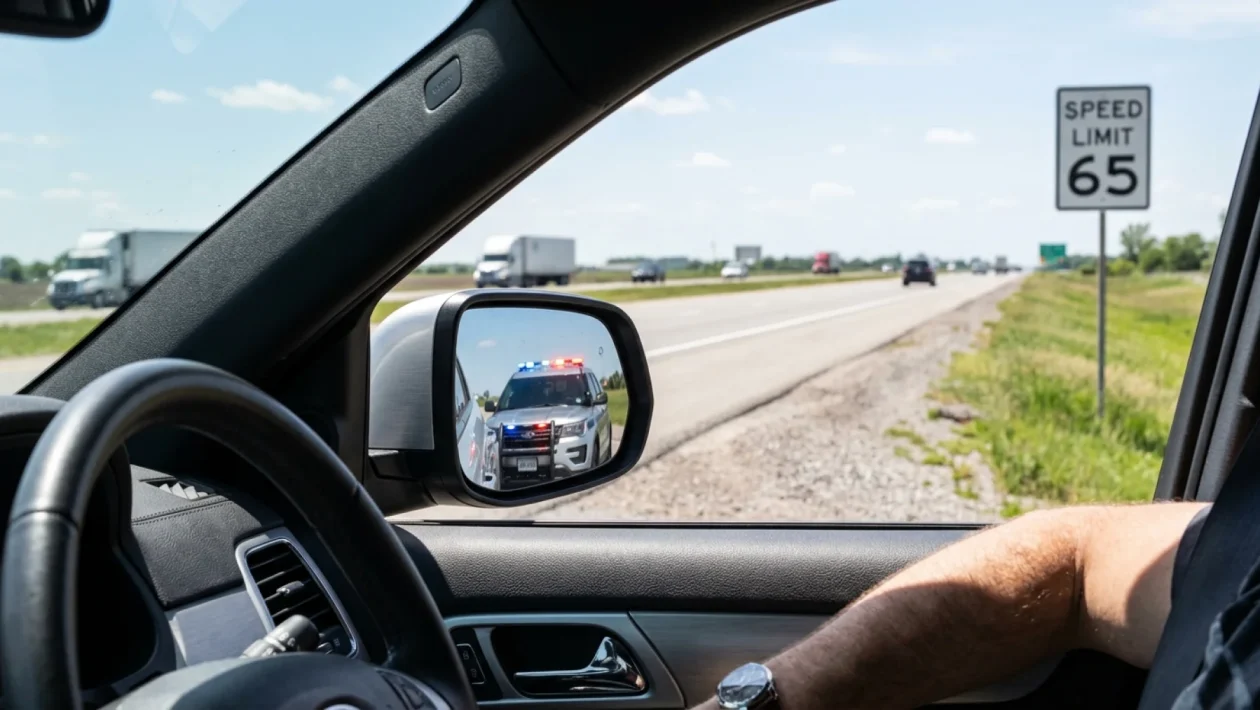
Picture this: you’ve loaded up the family SUV, crossed the border, and you’re cruising down a beautiful sun-drenched stretch of Route 66 in Oklahoma. You nudge the speedometer just a hair over the posted limit to safely pass a transport truck, and suddenly, flashing red and blues fill your rearview mirror. Welcome to the harsh reality of the Sooner State’s strict traffic enforcement, where a 1 mph mistake can completely derail your summer 2026 vacation.
Those stark black-and-white warnings aren’t just polite suggestions to slow down. I’m going to break down exactly why these highway warnings exist and, more importantly, the proven strategies to protect your wallet and driving record if you find yourself on the wrong side of the radar.
Oklahoma Speed Limits: The Difference Between Absolute and Basic Laws
To understand the danger to your road trip budget, you need to understand how this specific state handles its traffic code. Oklahoma operates under two very distinct sets of rules that govern your vehicle’s velocity.
The first is the Basic Speeding Law. This requires motorists to drive carefully based on current conditions, regardless of the posted number. Cruising at 55 mph on a clear, sunny afternoon is perfectly fine, but doing that same speed at night during a torrential downpour could easily get you pulled over for reckless driving.
Then comes the kicker: the Absolute Speed Limit Law. This rule dictates that if you travel even a single mile per hour faster than the posted sign, you are officially breaking the law. There is no unwritten “five over” rule here like we often assume back home in Canada.
Why ‘No Tolerance’ Signs Actually Mean Zero Wiggle Room
If you’re wondering where this hardcore approach came from, it isn’t a new cash grab. Back in 1998, the Oklahoma Turnpike Authority launched a massive public safety campaign designed to ruthlessly curb highway fatalities.
They plastered these unforgiving signs across the state’s turnpikes. By 2012, they doubled down with a Highway Safety Corridor Project on high-accident roads, explicitly instructing the Highway Patrol to ticket anyone going even a fraction over the limit.
It’s a statistical reality that catches out-of-towners off guard daily. In fact, highway safety data shows that strict absolute limit zones can increase ticket citations by up to 30% simply because visiting drivers rely on their hometown habits. When the sign says zero wiggle room, they absolutely mean it.
“When a highway warning says ‘No Tolerance’ in an absolute limit jurisdiction, officers are given a clear mandate: write the ticket first and let the local judge sort out the excuses later.” – John Carter, Traffic Enforcement Consultant
Massive Fines (And Even Jail Time) For Lead-Footed Drivers
Before you pack your Canadian Tire cooler and hit the I-35 heading south, you need to know exactly what you’re risking. The penalties escalate aggressively based on how heavy your right foot is.
It’s not just a quick roadside slap on the wrist. If you really push the pedal to the metal, you could literally be trading your hotel reservation for a jail cell.
| Speed Over Limit | Penalty / Consequence |
|---|---|
| 1 to 10 mph | $10.00 fine (plus hefty court costs) |
| 11 to 35 mph | Escalating fines based on 5 mph increments |
| 36+ mph | $205 fine AND up to 10 days in jail |
A second conviction at that top 36+ mph tier within one year jumps to 20 days in jail. Rack up a third? You could be looking at a devastating six months behind bars.
How To Contest Them When The Radar Gets It Wrong
Let’s say you get tagged, but you swear your dashboard dial was dead-on the limit. Inaccurate speedometers or uncalibrated police equipment are very real, common issues.
You have the legal right to fight back, but doing it from another jurisdiction requires a smart, systematic approach. Here is the best way to handle a questionable citation.
- Hire local legal muscle: Contact an Oklahoma-based traffic attorney immediately, as navigating the Absolute Speed Limit Law is notoriously tricky for outsiders.
- Request equipment logs: Have your lawyer legally demand the maintenance and calibration records for both the officer’s radar gun and the cruiser’s internal speedometer.
- Explore alternative options: If it’s your first offense in a while, ask the local court about a deferred sentence, a fine reduction, or taking an approved defensive driving course.
According to the Oklahoma Department of Transportation, proving your vehicle’s mechanical fault or the officer’s technological error rests entirely on your shoulders.
Frequently Asked Questions
Where are these strict limits most common?
You will typically encounter absolute limits in sensitive, high-pedestrian areas. Expect them in school zones (usually 25 mph), state parks or wildlife refuges (35 mph), and on rural county roads (55 mph).
Will an Oklahoma speeding ticket follow me back home?
Yes, it almost always will. Thanks to strict reciprocal agreements between most U.S. states and Canadian provinces, a speeding conviction down south can translate directly into demerit points and insurance hikes back home.
What if I just pay the ticket by mail to avoid the hassle?
Paying the ticket is an automatic, legally binding admission of guilt. While it’s the easiest route, it guarantees the conviction lands on your driving record. Always consider a quick consultation with CAA legal services or a traffic specialist before pulling out your credit card.
🤝 Good luck out there on the highways this summer, folks. Road trips are supposed to be about freedom and adventure, not stressful roadside chats with the state patrol.
💡 The absolute best tool in your glovebox isn’t your tire pressure gauge; it’s basic situational awareness. Respect the posted numbers, use your cruise control, and enjoy the historic scenery safely.
📱 Have you ever been hit with a ridiculous out-of-state ticket while traveling?
👇 Drop a comment below and share your thoughts—let’s keep the conversation rolling!