That expensive, healthy garnish sitting in your crisper drawer might be carrying a dangerous hitchhiker right now.
The Canadian Food Inspection Agency (CFIA) just dropped an urgent warning that affects anyone trying to eat a little cleaner this spring. If you buy groceries online in Ontario or Quebec, your latest health food haul could lead to a brutal stint in the hospital.
We need to talk about pathogenic E. coli, why these specific greens are getting flagged, and exactly what you need to do to sanitize your kitchen immediately.
Microgreens recall
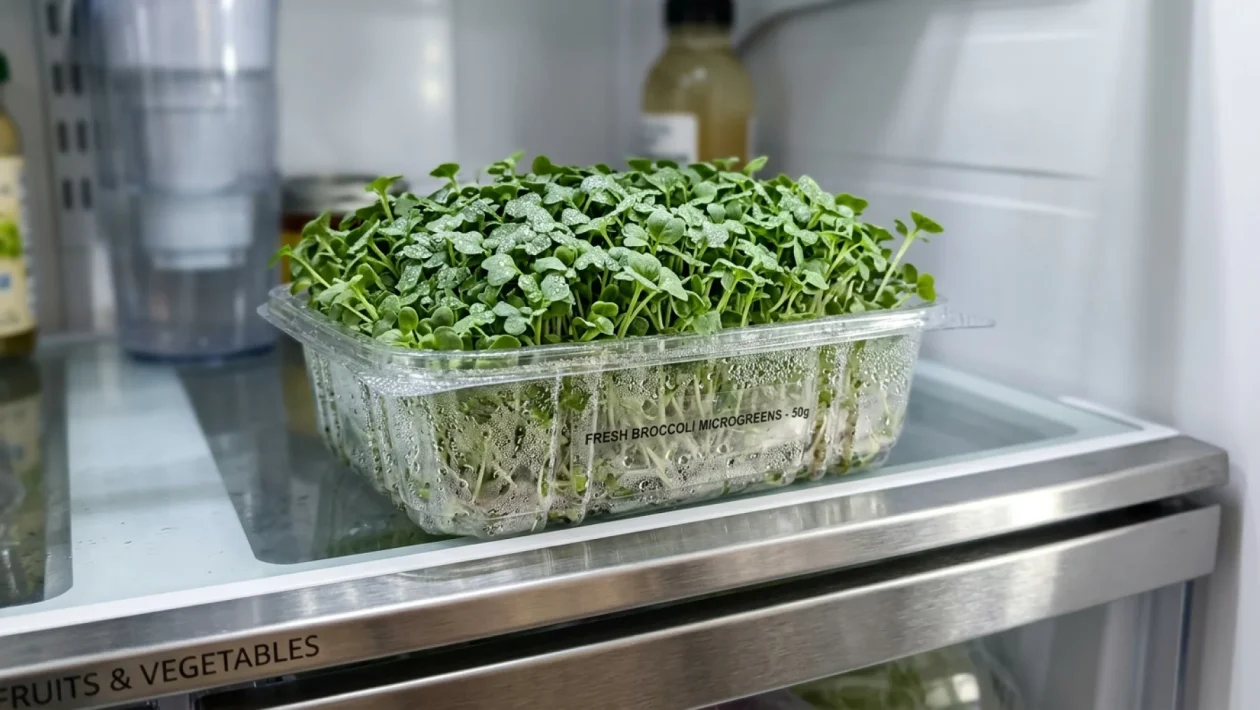
Here are the hard facts of the current situation. The CFIA has officially recalled 50-gram packages of Les Fermes Lufa (Lufa Farms) broccoli microgreens.
This isn’t a minor quality issue; this is a full-blown safety alert spanning across Ontario and Quebec. If you purchased these greens between April 20 and May 8, 2026, you are in the danger zone.
Lufa Farms is massively popular for their rooftop greenhouses and online delivery baskets, making this microgreens recall particularly tricky. Thousands of these packages were shipped directly to consumers’ doors, bypassing traditional grocery store shelves entirely.
Why Lufa Farms broccoli sprouts are making Canadians sick
Microgreens are incredibly nutrient-dense, but the way they are grown makes them the perfect breeding ground for pathogenic E. coli. These tiny plants need warm, incredibly humid environments to sprout—which happens to be the exact same environment where dangerous bacteria thrive.
The scariest part? Contaminated food usually looks and smells perfectly fresh. You cannot wash this type of E. coli away with a quick rinse in the sink.
If you ingest this pathogen, you are in for a rough ride. To give you an idea of what you are dealing with, here is a quick breakdown of the symptoms you need to watch out for.
| Mild to Moderate Symptoms | Severe (Emergency) Symptoms |
|---|---|
| Nausea, vomiting, abdominal cramps | Seizures, strokes, permanent kidney damage |
| Watery or bloody diarrhea | Requirement for blood transfusions or dialysis |
Here is a terrifying hard fact you probably didn’t know: E. coli bacteria can survive on hard stainless steel kitchen surfaces for up to 28 days if left untouched. It also survives perfectly well in standard refrigerator temperatures.
“Because microgreens are consumed raw and grown in concentrated, high-moisture environments, a single contaminated seed can easily spread pathogens throughout an entire batch before harvest. It’s an inherent risk in the industry.” — Dr. Sarah Collins, Food Safety Specialist
How to protect your fridge
If you find that recognizable 50-gram Lufa Farms container in your fridge, do not panic, but do act fast. You need to treat the package like a biohazard.
Do not eat it, do not serve it, and definitely do not toss it into your backyard compost pile where wildlife can spread it around.
Here is my foolproof method for clearing out a contaminated crisper drawer without cross-contaminating the rest of your groceries.
- Bag it up safely: Put the unopened or partially used container of microgreens directly into a double-lined garbage bag and tie it tight. Throw it in your outdoor trash bin immediately.
- Empty the zone: Take every single item out of the fridge drawer or shelf where the microgreens were stored. Check nearby produce for any leaking juices.
- Sanitize like a pro: Wash the empty drawer with hot, soapy water first. Then, follow up with a proper disinfectant spray like Lysol or a diluted bleach solution to kill any lingering bacteria.
- Wash your hands: Scrub your hands and wrists with hot water and soap for a full 20 seconds before touching any other food.
Frequently Asked Questions
Can I just cook the microgreens to make them safe?
Technically, heating food to an internal temperature of 71°C (160°F) kills E. coli. However, because microgreens are extremely delicate and meant to be eaten raw, cooking them turns them to mush. The CFIA strictly advises against consuming this recalled product in any form.
How long does it take for E. coli symptoms to show up?
Symptoms typically appear three to four days after eating the contaminated food. However, the incubation period can range anywhere from a single day up to 10 days. If you ate these greens recently, you need to monitor how you feel for the next week.
What should I do if I think I am already sick?
Do not try to ride it out on the couch. Pathogenic E. coli can be fatal, especially for young kids, the elderly, or anyone with a compromised immune system. Contact your healthcare provider immediately and tell them exactly what you ate.
🤝 Keep your kitchen safe by always paying attention to these local food alerts, because nobody wants a side of food poisoning with their spring salad.
💡 Check your digital receipts if you are a regular online grocery shopper to see if these specific dates and batches match your recent orders.
📱 Good luck scrubbing out those crisper drawers, and please pass this article along to anyone you know in Ontario or Quebec who loves their healthy greens.
👇 Share your thoughts in the comments below if you’ve had to throw out your recent delivery, and stay safe out there!