The Art of Open-Fire Cooking
Cooking in the backcountry is about stripping away the non-essentials. When you are miles from the nearest stove, the quality of your protein and the precision of your heat management become paramount. A pork steak—often overlooked in favor of beef—is an ideal candidate for campfire cooking due to its fat content and flavor profile.
The goal is a deep, caramelized crust on the exterior while maintaining a tender, juicy interior. Using a heavy-duty cast-iron skillet is non-negotiable. It provides the thermal mass needed to hold heat against the fluctuating temperatures of a wood fire, ensuring an even sear.
Essential Ingredients for the Trail
You don’t need a pantry full of spices to create a memorable meal. A minimalist approach allows the natural flavors of the meat and the smokiness of the fire to shine. Focus on these staples:
- High-quality pork steak: Look for a cut with good marbling.
- Aromatics: Fresh garlic cloves and woody sprigs of rosemary.
- Fat: Salted butter, which adds richness and assists in browning.
- Fresh eggs: For that final, decadent topping.
The Execution: From Flame to Plate
Start by building your fire and allowing it to burn down until you have a steady bed of hot coals. Cooking directly over roaring flames often leads to scorched meat and undercooked centers. Coals provide the consistent, intense heat necessary for the Maillard reaction—the chemical process that creates the steak’s flavorful brown crust.
Place your skillet over the coals and let it heat until it’s smoking slightly. Season the steak aggressively with kosher salt and coarse black pepper. Sear the pork on both sides, flipping only once to develop the crust.
Once the steak is nearly finished, introduce a generous knob of butter to the pan. Toss in the crushed garlic cloves and fresh rosemary. As the butter foams and turns nut-brown, tilt the pan and use a spoon to continuously baste the steak with the hot, herb-infused fat. This process, known as arrosé, infuses the meat with flavor while ensuring the center remains succulent.
Adding the Finishing Touches
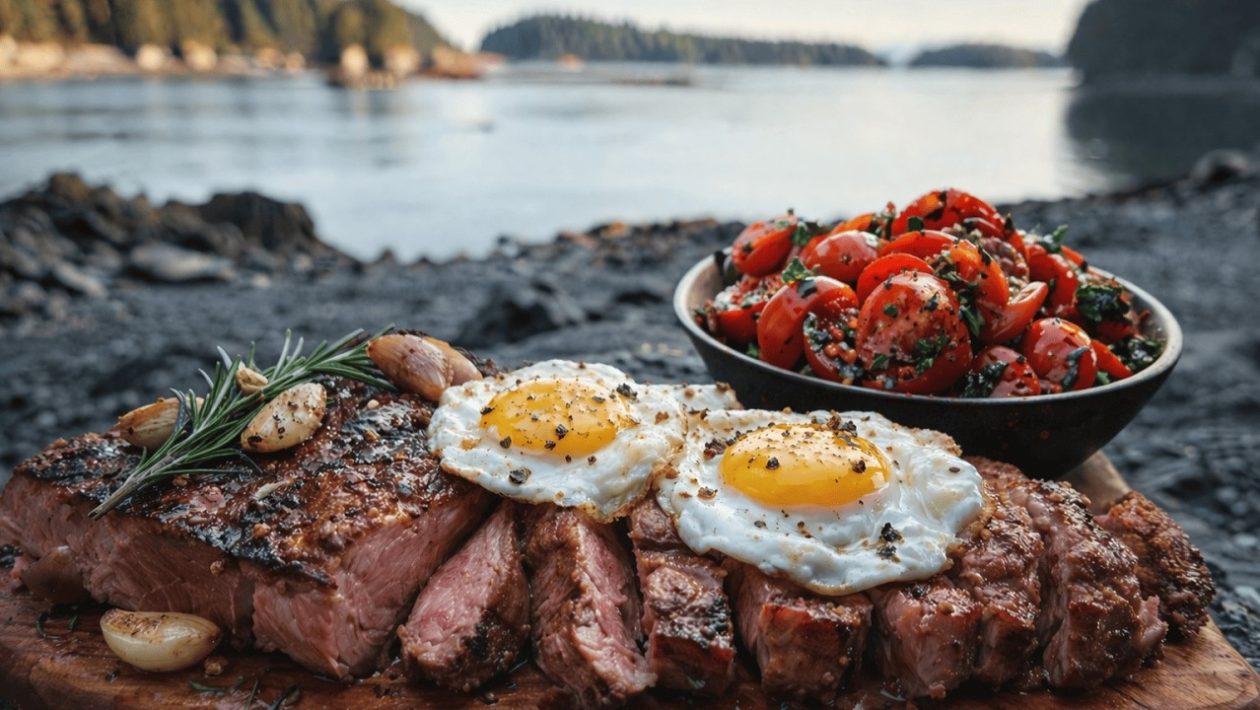
The beauty of a steak-and-egg breakfast or dinner is the interplay between the savory meat and the velvety yolk of a fried egg. After removing the steak to a board to rest, drop your eggs into the remaining rendered fat and garlic butter in the skillet.
Fry them until the whites are set but the yolks remain loose. Serve the steak sliced thin, topped with the eggs. The runny yolk serves as a natural sauce, coating the meat and pulling the entire dish together.
Balancing the Plate
To offset the richness of the butter-basted pork, contrast the dish with something acidic. Korean-style tomatoes—tossed with a light dressing of soy sauce, vinegar, sesame oil, and chili flakes—provide a crisp, refreshing sharpness. The bite of the vinegar cuts through the fat of the pork, keeping the palate refreshed between bites.
Simplicity, patience, and the right environment are the three pillars of a great outdoor meal. Whether you are cooking in the Alaskan wilderness or your own backyard, the techniques remain the same: control the heat, respect the ingredients, and don’t rush the process.