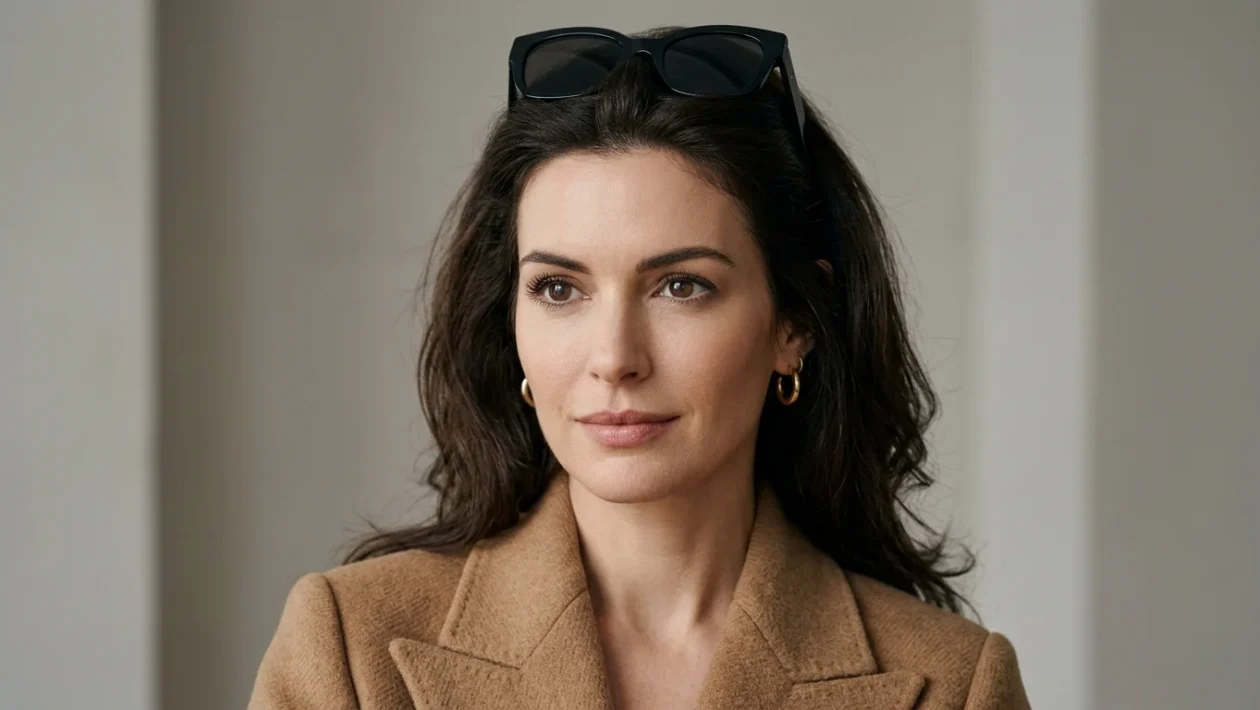
Anne Hathaway in a dramatic scene from Christopher Nolan’s movie The Odyssey
Nolan’s Secret Weapon
Anne Hathaway delivers one of the most commanding lines in Christopher Nolan’s The Odyssey with absolute conviction: “Those stories are true. Our civilization is collapsing.”
As Penelope, she breathes life into another of Nolan’s long-suffering wives. This time, however, she finds a complex humanity that is largely missing from the script itself.
She manages this feat while carrying scenes opposite a seemingly lost Tom Holland as Telemachus. It is nothing short of miraculous.
The Odyssey possesses all of Nolan’s trademark strengths and flaws. The film drags whenever it returns to the suitor-infested Ithaca, and Penelope’s repetitive storyline—weaving a shroud by day and undoing it by night—threatens to stall the movie entirely.
Yet, Hathaway elevates the material. She pivots effortlessly from regal and commanding to enraged and yearning.
She holds our attention even while Robert Pattinson’s arrogant Antinous and John Leguizamo’s fiercely loyal Eumaeus chew the scenery.
The Stigma of Ambition
Hathaway’s scene-stealing prowess shouldn’t be a surprise. She was the singular bright spot in The Dark Knight Rises and brought unexpected depth to Interstellar.
Famous since her teenage years, she secured an Academy Award by age 30. Despite her massive success, she remains strangely underestimated.
She is a global star who cannot seem to shake a 13-year-old cultural grudge.
After her 2013 Oscar win, public opinion turned fiercely against her. The term “Hathahaters” was coined to mock her theater-kid energy and relentless ambition.
Media outlets from CNN to the Globe and Mail scrutinized her, unfairly contrasting her earnestness with Jennifer Lawrence’s perceived chillness.
The backlash was rooted in undeniable sexism. As noted by writers like Ann Friedman and Ta-Nehisi Coates, Hathaway was simply a successful, hard-working woman pursuing her goals.
Yet, as Lena Dunham highlighted in Famesick, the early 2010s were a prime era for tearing down prominent women.
A Vassar Origin Story
Hathaway’s exceptional talent was obvious long before the Oscars.
When she was a freshman at Vassar College, she performed in a Valentine’s Day production of The Vagina Monologues. Her performance possessed a maturity, nuance, and grounded naturalism that set her miles apart from the rest of the cast.
A week later, I introduced myself to her in the campus library. She casually mentioned she had a movie coming out that summer with Julie Andrews.
When I asked who she was playing, she didn’t boast. “Oh, uh. I play the princess,” she said, delivering the news of The Princess Diaries as if she were ordering a sandwich.
She soon dropped out to become a global phenomenon. Years later, I spotted her at a Poughkeepsie train station, fully disguised in a camel-hair coat, makeup, and oversized sunglasses.
Waving at her felt like seeing Clark Kent without his glasses, leaving me wondering which version was the real person.
A Chameleonic Career
Hathaway’s filmography resists easy categorization.
Rather than mirroring the traditional trajectory of a blockbuster leading lady, her post-Oscar career looks more like that of a gritty character actor.
This year alone, she balances The Odyssey with a Colleen Hoover adaptation directed by Michael Showalter, a suburban dinosaur movie, and a film where she plays a world-famous singer.
She rarely carries a massive hit alone, frequently playing supporting roles opposite stars like Sandra Bullock, Hugh Jackman, Steve Carell, and Matthew McConaughey.
Even in The Devil Wears Prada, Meryl Streep was the primary box-office draw.
Perhaps Hathaway was simply born in the wrong era. Her elevated elocution and chameleonic style would have dominated the 1920s studio system.
You can see echoes of classic Hollywood in Eileen, where she plays the glamorous, martini-swilling prison psychologist Rebecca Saint John opposite Thomasin McKenzie.
In Colossal, she grounds a bizarre premise—an alcoholic writer controlling a South Korean kaiju—into a poignant meditation on shame.
Watching her spar in Rachel Getting Married or don wigs to age gracefully in Brokeback Mountain proves her unmatched versatility.
Opting Out of the Game
Stardom has always required an actor to cultivate a public persona that fans can cling to.
Hathaway’s career could easily be mapped to her roles. She was the normal girl thrust into fame in The Princess Diaries, the chewed-up victim of the world in Les Miserables, and the vapid actress seeking relevance in Ocean’s 8.
She has played the romantic partner of a fraudster in WeCrashed and a woman reclaiming her power in The Idea of You and Mother Mary.
But mapping her real life to her characters is a cheap trick. Hathaway no longer cares to play the likability game.
In a revealing 2024 New York Times interview with David Marchese, she maintained absolute control over the conversation. She shut down intrusive questions, discussed her years of sobriety, and made it explicitly clear she is done trying to ingratiate herself to the press.
She refuses to manage her star persona the way the industry demands. Actresses like Constance Wu have had their careers derailed by a single tweet, but Hathaway has learned to step away from the noise entirely.
As she fiercely declares while playing Penelope: “In this world, a man does what he chooses. I do what I can.”
She may not fit the traditional mold of a relatable celebrity anymore, but her raw acting abilities remain undeniable.