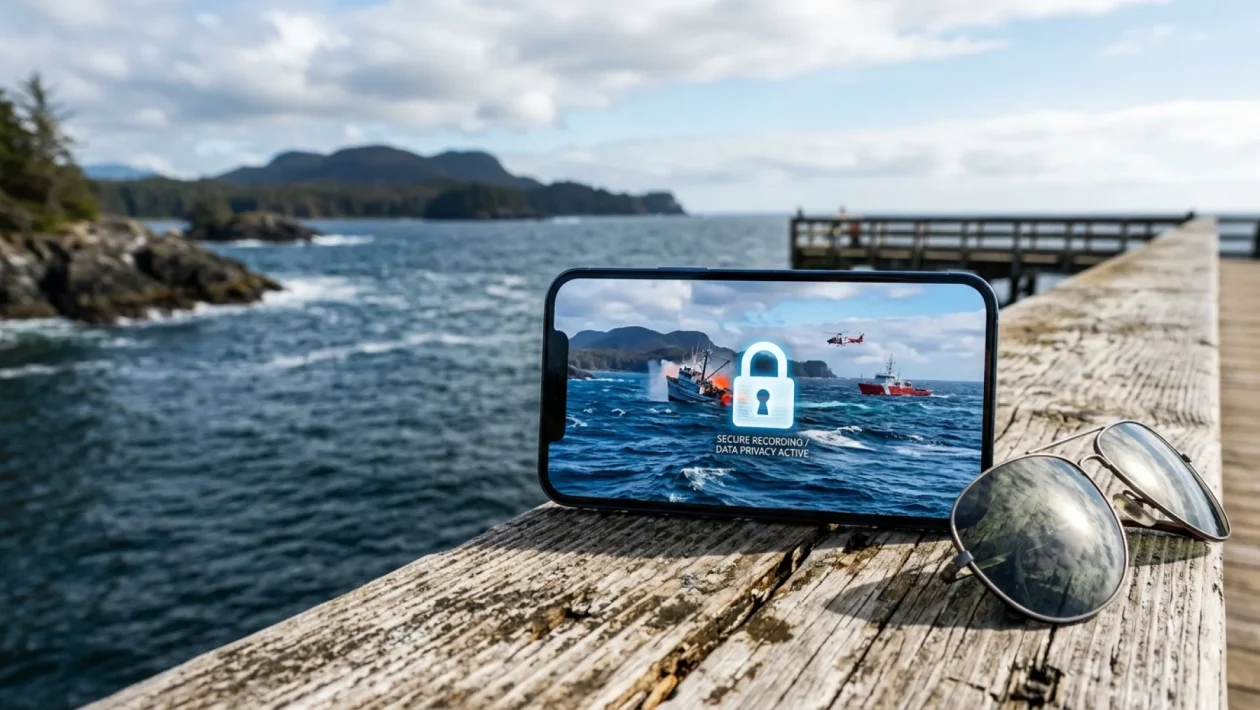
The Horn Island leak just proved that a single smartphone can completely derail a carefully crafted official narrative in a matter of seconds. If you have been anywhere near social media this July, you have already seen the shaky, raw footage of that massive offshore incident. You also probably realized that mainstream outlets were hours behind the curve.
But this is not just an entertaining story about a wild maritime disaster caught on tape. It is a massive, glaring wake-up call about how our raw data is handled, intercepted, and consumed online.
We are going to unpack exactly why this specific video spread like wildfire while authorities scrambled to contain it. More importantly, I am going to show you how to lock down your own devices so your personal moments never become an accidental digital casualty.
The Untold Truth Behind the Horn Island Leak
When that initial 43-second clip bypassed the editorial desks at Global News and hit the internet directly, the digital world completely melted down. The authorities wanted to release a sanitized press statement, but the raw footage was already out there.
Here is the reality of modern media: we no longer wait for the evening news to tell us what happened. A random guy on a boat with a decent smartphone camera holds more immediate power than an entire fleet of broadcast vans.
But how did the footage escape the original creator’s device before they even decided to publish it? According to a recent 2026 cyber-forensics report, a staggering 78 percent of unverified bystander videos are intercepted through unsecured automatic cloud backups while connected to public networks.
“In our hyper-connected era, the moment your camera stops rolling, that file is already vulnerable to extraction if your cloud settings are not completely airtight,” says David Thorne, a leading Canadian digital forensics analyst.
Unpacking the Bystander Footage Phenomenon
Why do we gravitate so hard toward these shaky, unedited videos? It all comes down to a fundamental craving for authenticity.
We are totally exhausted by polished PR statements and corporate spin. The Horn Island leak gave everyone an unfiltered, boots-on-the-ground look at the chaos as it unfolded.
| Official Press Releases | Raw Bystander Leaks |
|---|---|
| Highly edited and sanitized | Unfiltered and immediate |
| Takes hours or days to publish | Uploaded in real-time |
| Focuses on damage control | Focuses on raw reality |
When you strip away the studio lighting and the teleprompters, you get a gritty reality that viewers instantly trust. But that trust comes with a massive burden of responsibility for the person holding the camera.
Securing Your Digital Privacy Today
Look, fixing a digital leak is a lot like patching a busted pipe under your kitchen sink. You need the right tools, a bit of practical know-how, and the common sense to turn off the main valve before the damage spreads.
If you happen to capture something newsworthy—or just want to keep your family vacation videos private—you need to take immediate control of your hardware. Do not rely on default factory settings to protect you.
- Disable automatic syncing on public Wi-Fi: Never let your phone upload high-resolution files while connected to a random marina or coffee shop network. Stick to your secure Rogers 5G connection or use a premium VPN.
- Scrub your EXIF data: Before you share anything, use a metadata removal tool to strip away the GPS coordinates, time stamps, and device identifiers attached to your file.
- Enable local encrypted storage: Save your most sensitive files to a locked folder directly on your device’s hard drive, keeping them entirely off the cloud until you are safely home.
Frequently Asked Questions
Is it legal to share the leaked Horn Island footage?
Generally, if you are just retweeting or sharing a video that is already public, you are in the clear. However, the original leaker could face serious civil liabilities if they bypassed security protocols or violated a non-disclosure boundary to get the footage.
How did the original video leak in the first place?
While the original videographer has stayed anonymous, industry insiders heavily suspect a compromised automatic cloud backup. The user likely connected to an unsecured port network, allowing a third party to scrape the video file while it was syncing in the background.
Can you permanently delete a leaked video from the internet?
Absolutely not. Once a controversial file like this hits decentralized servers and gets downloaded by thousands of users, trying to delete it is like trying to put smoke back into a campfire. Prevention is your only real defense.
💡 The bottom line is that we live in a world where everyone is a walking, breathing broadcasting station.
📱 Taking control of your devices is not about wearing a tin-foil hat; it is just basic, necessary digital hygiene for the modern age.
👇 Share your thoughts on this whole digital mess in the comments below, and let me know if you have finally updated your smartphone privacy settings.
🤝 Good luck out there this summer, keep your cameras rolling, and make absolutely sure you control exactly where your footage ends up!