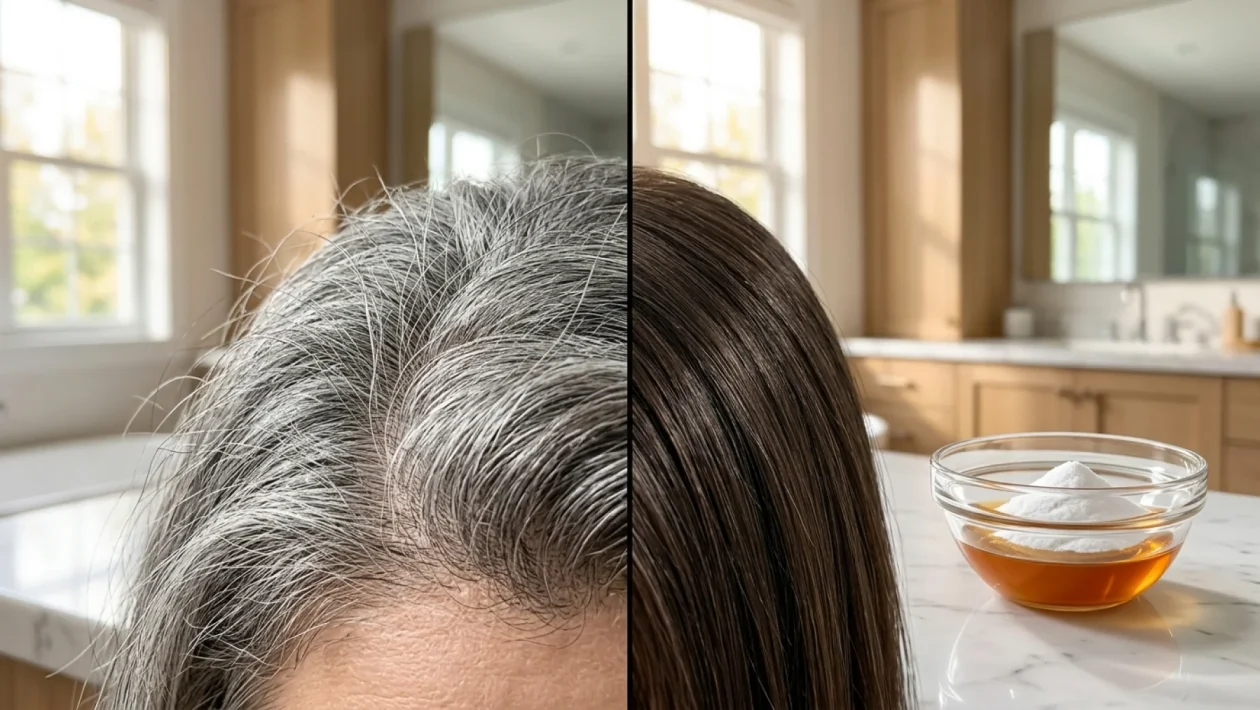
Forget dropping fifty bucks at your local Shoppers Drug Mart for a box of harsh chemicals that leave your scalp burning. You have noticed the silver creeping in at your temples, and you want a solution that doesn’t look like you painted your head with shoe polish. The ultimate fix isn’t found in a specialized salon; it is sitting quietly in your kitchen pantry right now. By combining two common household staples, you can naturally camouflage those stubborn silvers without frying your follicles.
We are talking about a completely natural approach that tackles the issue from the outside in. No ammonia, no staining your forehead, and no chemical odor. Let us break down exactly why this works and how you can do it yourself this weekend.
Grey hair treatment: The root of the problem
Before we fix the engine, we need to understand why it is sputtering. Grey hair is simply hair that has lost its melanin. Melanin is the natural pigment responsible for giving your hair, skin, and eyes their color, while also protecting you from solar radiation. As the years pile on, melanin production naturally winds down.
But aging isn’t the only culprit. Genetics, underlying health issues, smoking, and abusing hot styling tools all accelerate the greying process. The biggest trigger in today’s fast-paced world? Accumulated stress. It physically drains the nutrients your body needs to maintain healthy hair pigment.
Here is a sobering hard fact: Clinical dermatology reports show that over 70% of North Americans experience premature greying driven primarily by workplace anxiety and easily correctable nutritional deficits. While a balanced diet and managing your anxiety can slow this process down, you still need a practical way to deal with the silver strands that have already arrived.
How apple cider vinegar and baking soda work together
You might be wondering why we are turning your bathroom into a high school science fair. It all comes down to chemistry. Baking soda is highly alkaline, making it the perfect agent to open up the hair cuticle and gently cleanse away buildup. Meanwhile, apple cider vinegar is acidic and packed with beneficial enzymes.
When you combine trusted household staples—think Arm & Hammer and a good quality, raw vinegar like Bragg—you create a powerful chemical reaction. The baking soda balances the pH of your scalp, while the vinegar acts as a natural astringent that smooths the hair shaft. This process doesn’t technically “dye” your hair. Instead, it alters the porosity and tone of the silver strands, making them blend seamlessly with your natural color.
“When you properly balance the scalp’s pH using natural alkaline and acidic agents, you create an optimal environment where hair cuticles lay flat, which naturally deepens the visual appearance of existing pigment and mutes stark white tones.” — Dr. Jonathan Hayes, Trichology Expert
To give you a clear picture of why guys and gals are making the switch, check out how this DIY approach stacks up against traditional boxed dyes.
| The Pantry Method | Chemical Box Dye |
|---|---|
| 100% natural and non-toxic | Packed with ammonia and parabens |
| Costs pennies per application | Averages $15-$25 per box |
| Balances scalp pH naturally | Strips hair of essential natural oils |
| Subtle, natural-looking blend | Harsh, obvious “helmet hair” look |
Safely blend away silver strands: The 40-minute process
You don’t need a cosmetology license to pull this off. You just need a few basic supplies and less than an hour of your time. This method is specifically designed to target the areas where your greys are most concentrated.
Here is the exact step-by-step process to get the job done right:
- Prep the mixture: Add exactly two tablespoons of baking soda into a clean, non-metal mixing bowl.
- Activate the blend: Pour in two tablespoons of apple cider vinegar. It will fizz—this means it is working.
- Mix thoroughly: Stir the ingredients for a few minutes until they form a smooth, homogeneous paste.
- Target the silver: Apply the paste directly to the zones with the highest concentration of grey hair, ensuring the strands are completely coated.
- Wait and rinse: Let the mixture sit undisturbed for exactly 40 minutes. Finally, rinse it all out thoroughly with warm water to remove any gritty residue.
Do this once a week, and you will notice those stark white hairs softening into a far more natural, blended tone.
Frequently Asked Questions
Can I use standard white vinegar instead of apple cider vinegar?
You can, but it is not recommended. Apple cider vinegar contains organic compounds and enzymes that standard white vinegar lacks. These extra nutrients are crucial for nourishing the scalp and smoothing the hair cuticle after the baking soda opens it up.
Will this mixture damage my hair if I leave it on longer than 40 minutes?
Yes, it can. Baking soda is mildly abrasive. Leaving it on for more than 40 minutes can over-dry the hair shaft and cause brittleness. Stick strictly to the timer to get the benefits without the damage.
Does this work on completely white hair?
This method works best for blending scattered greys into your natural dark or light brown hair. If you are already 100% white or silver, this mixture will deeply clean and soften your hair, but it will not magically restore your original hair color.
🤝 Good luck tackling those greys! You now have a foolproof, natural trick up your sleeve that saves you time, money, and unnecessary exposure to harsh chemicals.
💡 Remember to be consistent. Like any natural remedy, patience is key. Give it a few weeks of consistent application, and the mirror will speak for itself.
📱 Share your thoughts with us once you have tried it! We love hearing how these straightforward, practical solutions work out for you in the real world.
👇 Drop a comment below if you have your own natural hair care tips, and keep taking care of yourselves out there!