We love to romanticize the past, but let’s get brutally honest about why the adults who grew up in the 1960s and 1970s seem practically unbreakable today. It wasn’t because their parents were reading cutting-edge psychology books or feeding them organic kale. It was because they were left entirely to their own devices. Science now points to a fascinating psychological mechanism that turned childhood solitude into an emotional suit of armor.
Gen X Resilience
The mental toughness we associate with people born between the early sixties and late seventies is highly documented. Psychologists agree that Gen X resilience isn’t a myth, but it’s often misunderstood. People assume this generation had a superior moral fabric or better role models.
The truth is much more practical. The foundation of their grit was built on an unavoidable lack of supervision. With a massive shift in the workforce during those decades, parents were busy, and kids were left to figure life out.
This hands-off reality inadvertently created the perfect environment for self-reliance. When nobody is around to referee a neighborhood dispute, you learn negotiation tactics incredibly fast.
Growing Up Lonely In The 60s And 70s
Let’s look at the actual landscape of a mid-century North American childhood. It involved vast stretches of unstructured, unsupervised time. The term “latchkey kid” wasn’t a rare label; it was the standard operating procedure.
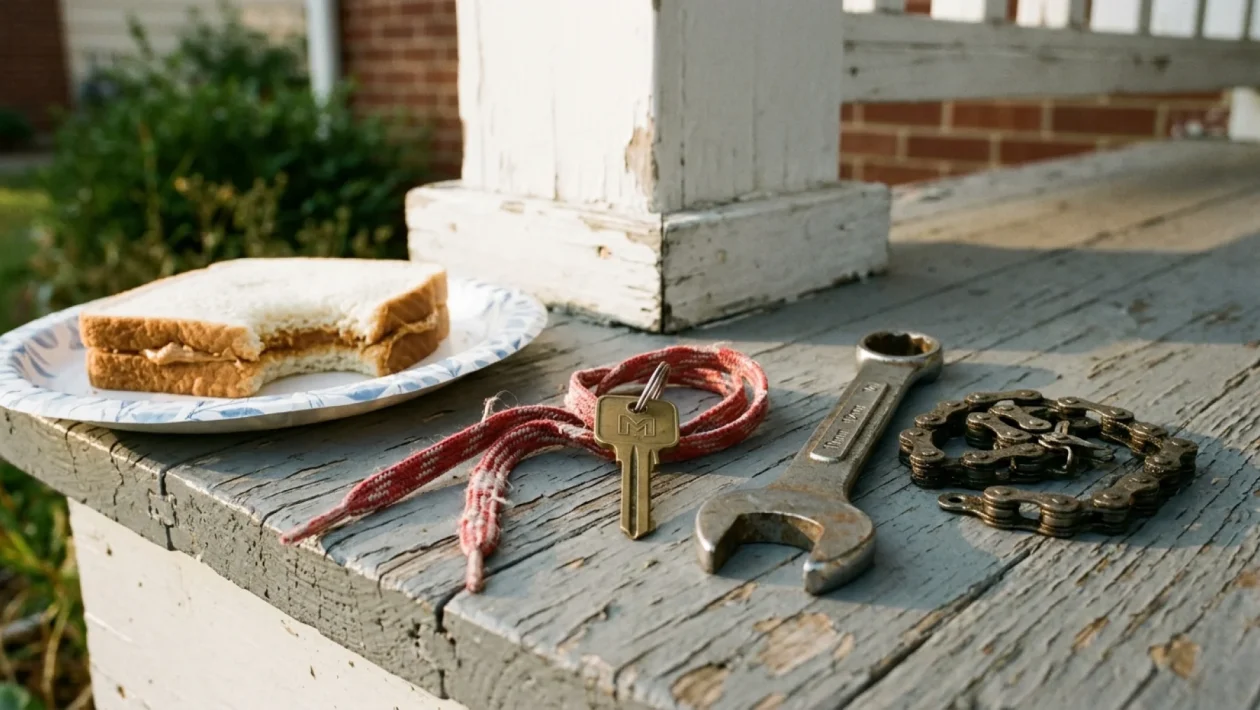
Here is a staggering piece of history to put things in perspective: by the late 1970s, it is estimated that nearly 40% of all North American schoolchildren came home to completely empty houses. They unlocked the door, made their own snacks, and managed their own time.
If your bicycle chain snapped miles from home, you didn’t pull out a smartphone to text Dad for a rescue. You dragged that bike to the nearest Canadian Tire, bought a master link with your paper route money, and fixed it on the curb.
Built Tougher Kids
How exactly does being alone forge a stronger human being? In the world of psychology, this phenomenon is called “stress inoculation.”
“Think of childhood adversity like a vaccine. Small, manageable doses of stress and frustration early in life teach the brain how to regulate emotions, building a powerful immune system against future psychological trauma.”
This psychological “vaccine” works through a very specific, natural progression that these kids repeated daily. Here is how that independence created emotional armor:
- Encountering the Obstacle: A problem arises (a forgotten lunch, a scraped knee, a locked door) with no adult around to immediately fix it.
- Tolerating the Frustration: The child experiences anxiety or anger, but is forced to sit with those uncomfortable feelings instead of being instantly rescued.
- Independent Resolution: The child brain-storms a makeshift solution, building profound self-trust and problem-solving skills in the process.
Modern Helicopter Parenting
Contrast that rugged independence with the dominant parenting style we see today in 2026. The “helicopter parent” hovers endlessly, anticipating obstacles and clearing the path before the child even realizes a challenge exists.
While this comes from a place of deep love and protection, researchers warn it often stunts emotional growth. When parents micromanage every minor conflict, children never build their frustration tolerance.
The resulting adults often struggle with basic emotional regulation. Let’s break down the stark differences between these two generational environments.
| 1970s “Hands-Off” Crianza | Modern “Helicopter” Parenting |
|---|---|
| High autonomy and alone time | Highly scheduled, supervised time |
| Natural consequences for mistakes | Adult intervention to prevent failure |
| Develops high frustration tolerance | Often results in high anxiety |
Frequently Asked Questions
What exactly is stress inoculation?
It is a cognitive-behavioral concept where exposure to mild, manageable stressors helps a person build coping mechanisms. Just like lifting weights tears muscle to build strength, small emotional challenges build mental fortitude.
Are modern parents ruining their kids?
Not necessarily, but over-parenting is a real issue. Kids need a balanced approach. They require love and support, but they also desperately need the freedom to fail, fall down, and figure out how to stand back up without an adult holding their hand.
How can we bring back this resilience today?
You don’t need to neglect your kids to make them tough. Simply step back. Let them mediate their own arguments with siblings, encourage them to order their own food at restaurants, and allow them to experience natural boredom.
The Bottom Line
🤝 Finding the middle ground is the ultimate goal for anyone raising the next generation. We don’t need to send kids back to the entirely unsupervised wilderness of 1975, but we do need to stop treating them like fragile glass.
💡 Stepping back takes courage. It is incredibly hard to watch someone you love struggle with a problem, but rescuing them steals their opportunity to realize how capable they truly are.
📱 I’d love to hear your thoughts. Did you grow up as a latchkey kid, or are you trying to balance modern parenting today? Share your thoughts in the comments and let’s keep this conversation going.
👇 Good luck out there, and remember: sometimes the best thing you can do for a problem is to just let it sit for a minute.