Forget the slow, grinding rallies of the spring clay season. We are exactly two months away from the main event, and the fastest, most chaotic surface in professional tennis is about to separate the pretenders from the actual contenders.
If you want to know who is going to hoist the trophy at the All England Club this July, you need to stop looking at the standard world rankings. The modern baseline basher is going to slip, slide, and ultimately pack their bags by the second round.
Instead, you need to look for the players whose games are custom-built for the lawn. Grass court specialists are a rare breed, but they are the ones holding the winning lottery tickets this summer.
Grass court specialists: A dying breed roaring back to life
Most modern tennis academies teach one style of play: stand ten feet behind the baseline and swing as hard as humanly possible. That works everywhere else, but grass actively punishes that strategy.
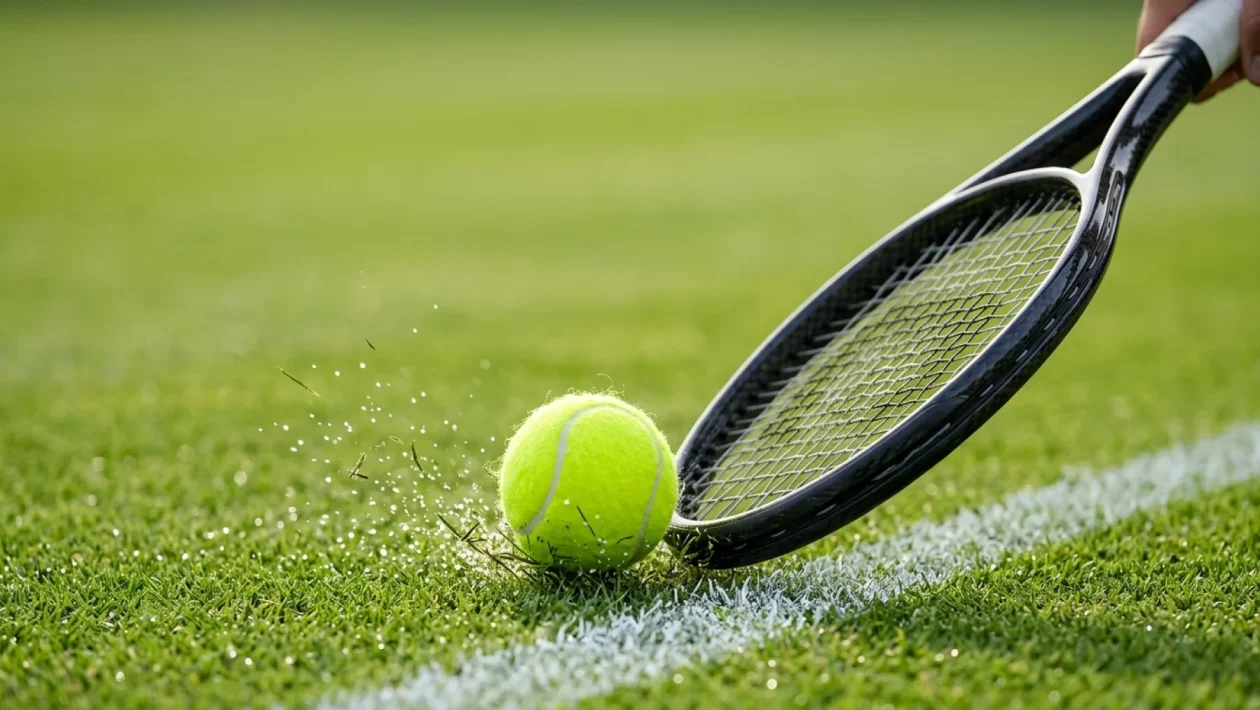
The ball skids. It stays low. It forces players into awkward, rushed positions. In fact, grass is so fast that the average rally length at Wimbledon is a mere 3.8 shots.
You don’t have time to set up a massive forehand. You need lightning-fast reflexes, a lethal slice backhand, and the willingness to sprint forward and close the net.
| Surface Trait | The Grass Court Reality |
|---|---|
| Pace of Play | Lightning fast |
| Ball Bounce | Extremely low and skiddy |
| Footwork Required | Small, choppy steps (no long slides) |
Those who master this bizarre, slippery surface don’t just survive the tournament. They completely dismantle higher-ranked players who stubbornly refuse to adapt their game.
Who will shock the world? Spotting the underground contenders
You won’t find these dark horses dominating the headlines in May. They are quietly stringing their rackets tighter, shortening their swings, and preparing for the European grass swing.
When you are tuning into the early lead-up tournaments on TSN, keep a close eye on players who naturally gravitate toward the net. You are looking for the guys who look comfortable being uncomfortable.
Here is exactly how you can spot a player primed to cause a massive upset:
- Watch their grip: Look for players using a continental grip on their backhand. This allows them to hit a biting, skidding slice that barely bounces off the turf.
- Analyze the footwork: True specialists never take long, lunging steps on grass. They use rapid, choppy footwork to maintain their center of gravity.
- Look at the serve placement: It’s not about raw power. It’s about hitting the wide slider that pulls the opponent completely off the slick court.
If you see a player executing these three things flawlessly, you are looking at a walking nightmare for the top seeds.
At Wimbledon 2026: Why the field is completely wide open
The landscape of professional tennis right now is highly volatile. The legendary veterans who dominated Centre Court for two decades are officially out of the picture.
We have a massive vacuum at the top of the sport. The new generation of young superstars grew up playing exclusively on slow, gritty hard courts. They are wearing high-tech Lululemon apparel and swinging space-age rackets, but they look like deer on ice when they step onto the lawn.
This lack of inherent grass-court experience across the top 20 opens the door for veteran journeymen. Players who have spent a decade quietly perfecting the serve-and-volley are licking their chops.
“Grass is the only surface that actively tries to take the racket out of your hand. You don’t play the lawn; you survive it. If you try to hit through the court like it’s concrete, your tournament is already over.”
This July, experience and shot variety are going to absolutely trump raw, unbridled power.
Frequently Asked Questions
Why are there so few grass court tournaments on the calendar?
Maintaining professional-grade grass is incredibly expensive and highly dependent on weather. The season is restricted to just a few short weeks in June and July because the courts simply cannot survive months of continuous foot traffic without turning into dangerous, slippery dirt patches.
Does a massive serve guarantee success at Wimbledon?
Not anymore. While a big serve helps, the modern grass at Wimbledon is slightly slower and more durable than it was in the 1990s. If a “servebot” doesn’t have a reliable slice or solid volley skills to back up their first serve, they will eventually get exposed by a smart returner.
🤝 It’s time to mark your calendars. We are heading into the most unpredictable Grand Slam of the year, and the betting lines are going to severely underestimate the true lawn masters.
💡 Do your homework now. Start paying attention to the smaller tournaments in Stuttgart and Queen’s Club. The guys lifting those early trophies are your real threats.
📱 Drop your predictions. Who do you think has the gritty, old-school game to cause a massive upset this year? Share your thoughts and let’s see who actually knows their tennis.