You are sweating through another brutal July, staring at a barren backyard, and realizing you desperately need some serious canopy action. But plant the wrong sapling today, and in five years, its aggressive roots will treat your expensive concrete patio like a cheap sledgehammer.
The secret to a cool, relaxing yard is not just about canopy size; it is entirely about what happens underground. You need Garden Trees that deliver deep, refreshing relief while keeping their root systems perfectly well-behaved.
Garden Trees: The Foundation of Your Landscape
Every great yard starts with the right anchor. When you wander through the aisles of Sheridan Nurseries or even your local Home Depot garden center, it is easy to get distracted by flashy foliage.
But buying a tree based solely on looks is a rookie mistake. A tree is a permanent piece of infrastructure, much like your plumbing or electrical system.
Choose wisely, and you get decades of natural air conditioning. Choose poorly, and you are signing up for a nightmare.
5 Summer Shade Providers to Cool Your Yard
Not all canopies are created equal. Here are five elite choices that thrive across various North American climate zones, offering premium coverage without the underground chaos.
1. The European Walnut: Perfect for massive yards. It grows tall, casts a wide, cooling shadow, and smartly keeps most of its roots in the top 90 centimeters of soil.
2. The Magnolia: A total showstopper. Beyond its iconic white aromatic flowers, its dense evergreen leaves provide heavy, year-round blockage from the sun.
3. The Fruitless Olive (Swan Hill): Ideal for the warmer, drought-prone West Coast. It gives you that Mediterranean vibe and a beautiful, sweeping canopy without dropping messy fruit.
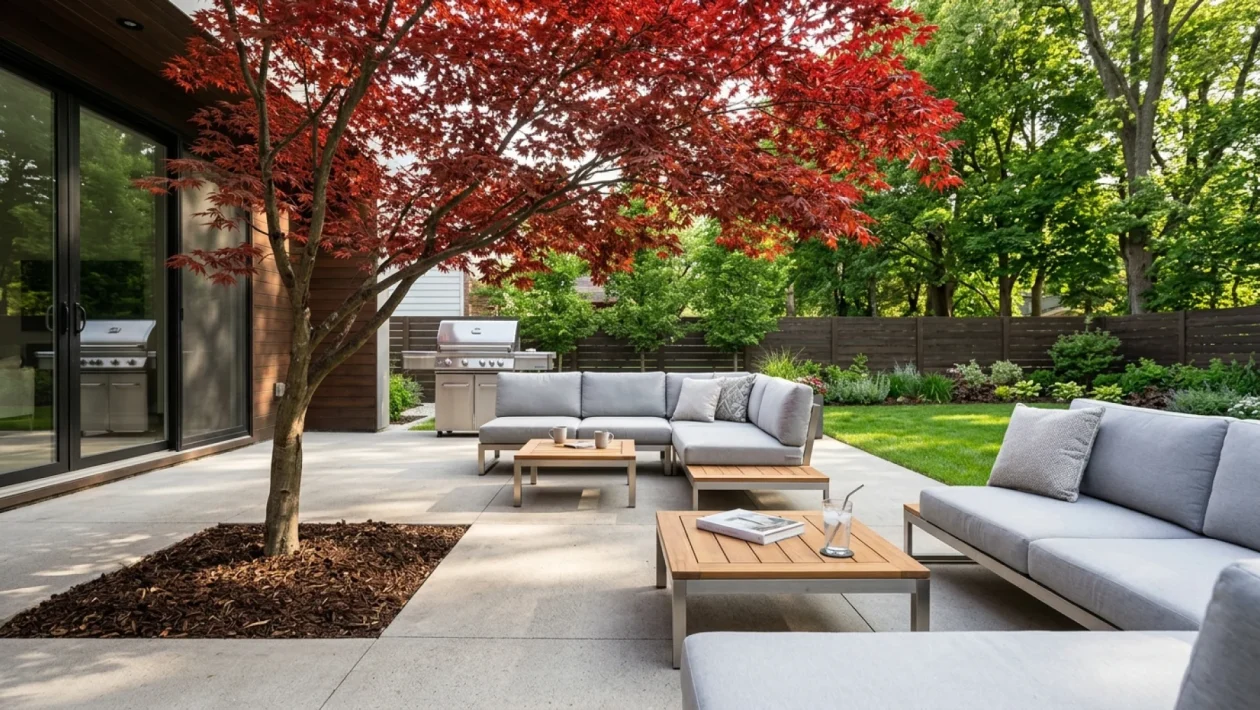
4. The Japanese Maple: The undisputed king of small urban yards. It rarely tops twenty feet, its colors are mind-blowing, and its roots are incredibly polite.
5. The Crape Myrtle: An absolute workhorse for tighter spaces. You get explosive summer flowers and a beautifully open structure that offers gentle, dappled relief.
| Tree Species | Best Yard Type |
|---|---|
| European Walnut | Large, open acreage |
| Japanese Maple | Small, compact urban lots |
| Fruitless Olive | Warm, drought-prone climates |
| Magnolia | Moist, deep-soil gardens |
That Won’t Destroy Your Patio: The Non-Invasive Root Rule
Here is a reality check that will make you rethink your landscaping plans. Repairing foundation slabs or underground plumbing destroyed by aggressive roots costs North American homeowners an average of $5,000 to $10,000.
That is exactly why you need species with fibrous, non-invasive root systems. These trees spread out finely like a sponge, rather than drilling down like massive subterranean crowbars.
“Choosing a tree with a stable, fibrous root system is the ultimate insurance policy. It allows you to seamlessly integrate nature with your hardscaping, protecting your concrete without sacrificing your canopy.”
To ensure your new addition plays nice with your driveway, you need to follow a strict planting protocol. Proper installation trains the roots to stay where they belong.
- Dig a hole twice as wide as the root ball, but no deeper than the container it came in.
- Place the tree in the hole, ensuring the root flare is slightly above the surrounding soil level.
- Backfill with native soil, avoiding heavy amendments that might trap the roots in a small area.
- Apply a three-inch layer of organic mulch to retain moisture, keeping it pulled away from the trunk.
- Water deeply but infrequently to encourage the roots to spread horizontally rather than fighting their way up to the surface.
Frequently Asked Questions
How far from my house should I plant these trees?
Even with non-invasive roots, a good rule of thumb is to plant small trees at least 10 feet away from your foundation. For larger species like the European Walnut, give them 20 to 30 feet of breathing room.
Can Japanese Maples handle full sun?
They prefer partial shade, especially if you live in a region with scorching afternoon temperatures. Too much direct heat can scorch their delicate leaves.
Do I need to aggressively prune these shade trees?
No. Most of these species, especially the Crape Myrtle and Magnolia, require minimal pruning. Just remove dead or crossing branches in late winter to maintain a healthy structure.
💡 Transforming your yard doesn’t have to be a gamble with your property’s foundation. By selecting smart, root-friendly species, you get all the cooling benefits of a lush canopy without the massive repair bills down the road.
📱 I want to hear what you are planting this season! Drop into the comments below and share your thoughts on which of these five trees fits your backyard vision best.
🤝 Whether you are working with a sprawling suburban lawn or a tight city patio, there is a perfect fit for your space. Good luck with your summer landscaping, and stay cool out there!