Most of us are slowly destroying our wardrobes every single week, and we are paying extra on our hydro bills to do it. You probably toss a mixed load into the drum, crank the dial to “Warm” or that standard 40-degree Celsius mark, and walk away out of pure muscle memory. I am here to tell you that this outdated habit is completely wrong for modern fabrics.
Today’s washing technology has entirely flipped the script on how we get things clean. Dropping that temperature dial down is the ultimate, zero-effort fix for preserving your clothes and keeping more cash in your wallet.
Cold Water Laundry Masterclass
For decades, the golden rule of laundry was simple: the hotter the water, the cleaner the clothes. That logic made perfect sense back when washing machines were basically just glorified steel tubs violently agitating our heavy cottons.
But it is July 2026, and the game has fundamentally changed. If you are running a modern high-efficiency Maytag or Whirlpool, those machines are practically supercomputers compared to the washers we grew up with. They rely on extended tumbling action and concentrated chemistry rather than brute heat.
More importantly, liquid detergents have evolved. Products like Tide HE and modern specialized sport washes contain advanced enzymes that actually thrive in cooler temperatures. When you hit them with hot water, you can actually kill off the active ingredients before they do their job.
“Old-school detergents needed hot water to dissolve and activate, but today’s advanced enzyme formulas are engineered to obliterate dirt in tap-cold water. When you use high heat on everyday clothes, you are just cooking your fabrics for absolutely no reason.”
Why Your Go-To Wash Cycle Is Ruining Your Wardrobe
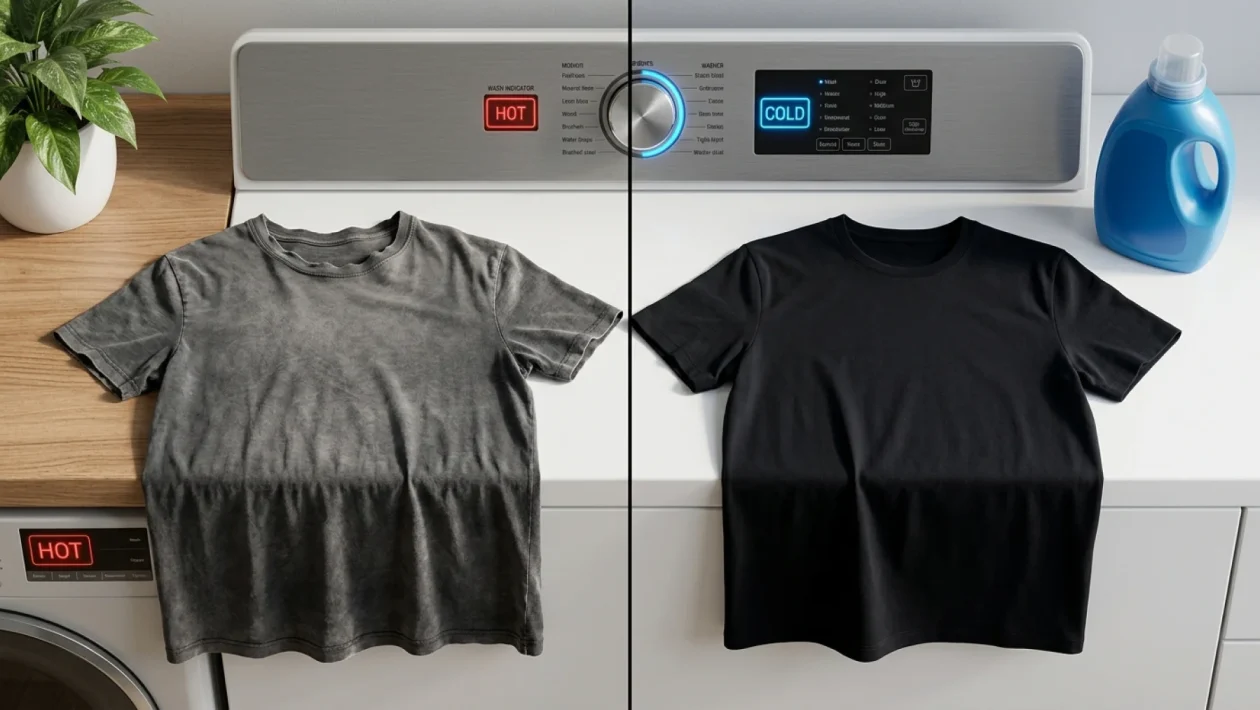
Here is the hard truth about that trusty 40-degree “Warm” cycle you rely on: it is actively aging your favorite gear. Heat is the ultimate enemy of the elastane and synthetic blends found in almost all modern clothing.
Every time you subject your gym shorts, stretch jeans, or breathable t-shirts to unnecessary heat, you break down the elastic fibers. This is exactly why necklines bacon, jeans lose their stretch, and dark shirts look gray after just a few months.
Then there is the financial hit. Here is a surprising fact that most homeowners ignore: heating water accounts for a staggering 90% of the energy your washing machine consumes during a cycle. Cutting the heat instantly slashes that power usage.
Sanitize cycles and 60-to-90-degree settings should be strictly reserved for genuine heavy-duty jobs. Unless you are dealing with a flu outbreak in the house or heavily soiled workwear, blistering heat is overkill.
The 3-Step Laundry Reboot
Ready to modernize your laundry routine? Follow this simple process to stop ruining your gear.
- Audit your sorting habit: Stop sorting purely by color. Group your laundry by soil level and fabric weight, separating delicate synthetics from heavy towels.
- Embrace the cold tap: Default your washer to the 20 to 30-degree Celsius range (Tap Cold or Eco Cold) for all everyday wear and lightly soiled items.
- Target the stains, not the load: If you drop ketchup on a shirt, pre-treat that specific spot with a stain remover instead of punishing the entire load with a boiling wash cycle.
Quick Temperature Cheat Sheet
Keep this straightforward guide in mind the next time you face the washing machine console.
| Temperature Setting | Ideal Application |
|---|---|
| Cold (20-30°C) | Everyday wear, jeans, gym clothes, darks, and lightly soiled items. |
| Warm (40°C) | Moderately soiled cottons, standard towels, and heavy grime. |
| Hot (60°C+) | Bed sheets, sickroom linens, cloth diapers, and deep sanitation. |
Frequently Asked Questions
Doesn’t hot water kill more bacteria?
While boiling water kills bacteria, the 40-degree setting you use is not nearly hot enough to sanitize anything. It essentially just gives bacteria a warm bath. True sanitization requires water temperatures of 60°C or higher, combined with a quality detergent.
Will cold water get my sweaty gym clothes smelling fresh?
Absolutely. In fact, cold water is significantly better for gym gear. High heat locks in protein-based stains like sweat and melts the synthetic fibers that give athletic wear its stretch. Stick to cold water and use a sport-specific detergent.
Does powder detergent work in cold water?
It can, but liquid detergents are generally superior for cold water washes. If you insist on using powder, dissolve it in a small cup of warm water before dumping it into the machine to prevent chalky residue on your dark clothes.
Wrapping It Up
🤝 Good luck breaking those old habits, because I know how deeply ingrained that “Warm” setting is for most of us. Trust the modern chemistry, trust your machine, and give your fabrics a much-needed break from the heat.
💡 Start this weekend by tossing your next load of everyday clothes in on the coldest setting available. You will immediately notice that your clothes come out just as clean, but feel noticeably softer and hold their shape better.
📱 Share your thoughts and let me know how much your hydro bill drops this season. Drop a comment below if you have any stubborn laundry disasters you need help fixing!
👇 Take control of your home maintenance today. Stop letting outdated advice cost you money and ruin your favorite gear.