You head out for a cold beer and live music, expecting a great summer night. You never expect it to be your last.
The recent Bangkok pub fire has shaken the international community, serving as a brutal reminder of what happens when safety takes a backseat to a good time. With the death toll now hitting 32, this isn’t just a distant tragedy across the globe—it’s a stark warning about the venues we trust every weekend.
As a guy who has spent years analyzing structural safety and electrical systems, I can tell you exactly what went wrong. More importantly, I’m going to show you how to spot a venue’s deadly red flags before you even order your first drink.
The Bangkok Pub Fire Disaster: How a Night Out Turned Deadly
It was supposed to be a standard Friday gig this July. Instead, the popular live music venue transformed into a suffocating trap within three minutes.
When you pack hundreds of people into a soundproofed room with limited exits, you are essentially building an oven. Add subpar wiring to the mix, and you have a ticking time bomb.
We see this over and over in poorly regulated nightlife districts. A venue expands, brings in heavier sound equipment, but never upgrades the main breaker panel to handle the massive new power draw.
Death Toll Rises to 32: The Devastating Cost of Cut Corners
The numbers are heartbreaking. Authorities have confirmed the death toll has climbed to 32, with dozens more currently fighting for their lives in regional burn units.
Why did so many perish? The answers are infuriatingly simple. Blocked fire exits, highly flammable acoustic foam, and a total lack of emergency lighting left patrons stumbling in pitch-black, toxic smoke.
Here in North America, we rely on organizations like the CSA Group to rigorously test and certify commercial electronics, but those standards aren’t universal. When a venue cuts corners on safety gear—like skipping commercial-grade Kidde fire suppression systems—patrons pay the ultimate price.
Bandmates Recount Horrific Chaos on Stage
The accounts from the surviving band members are absolutely chilling. They didn’t see a cinematic, dramatic explosion; they heard a distinct, loud pop from the ceiling above the drum kit.
Within seconds, sparks rained down on the highly combustible soundproofing foam. The lead singer described the sheer panic of trying to unplug their amplifiers as the main stage lights flickered and completely died.
In the ensuing stampede, the musicians were forced to abandon their gear and smash a rear ventilation window just to escape. Their firsthand accounts highlight exactly how fast an environment can shift from a party to absolute terror.
Electrical Failure: The Silent Killer Lurking in the Walls
Let’s talk shop for a second. The root cause of this nightmare was a catastrophic electrical failure.
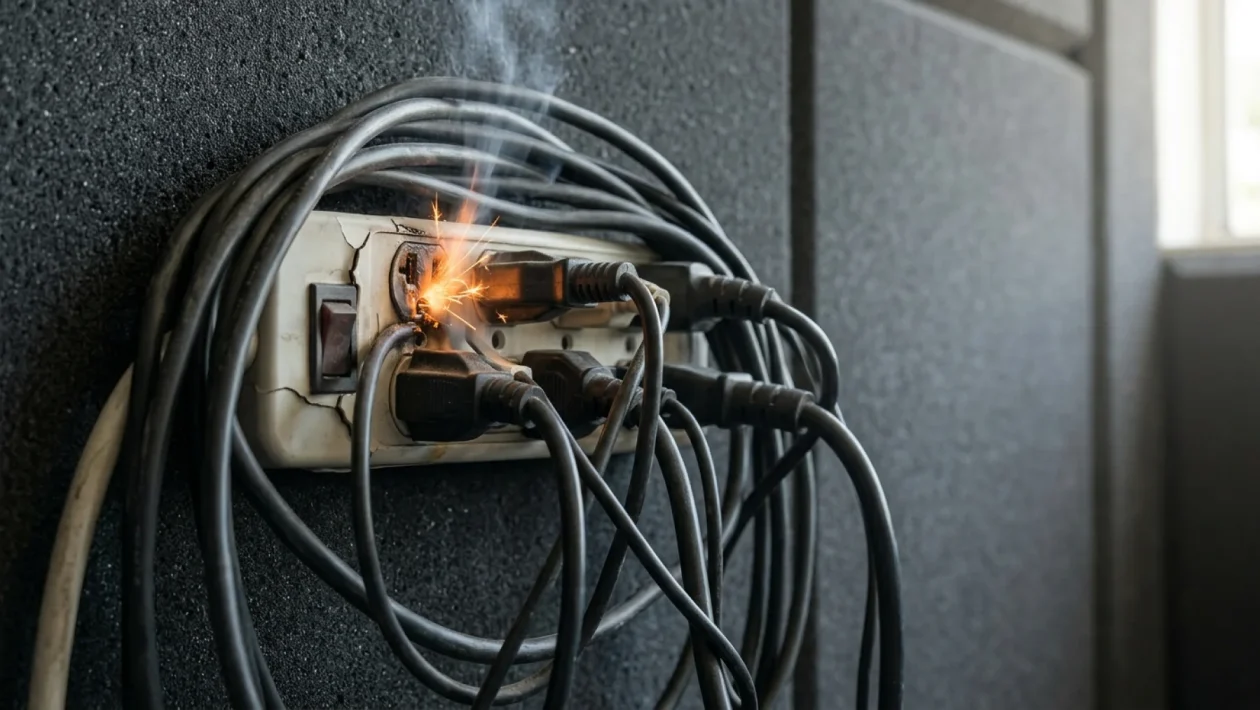
When you overload a dilapidated circuit with heavy-duty amps, subwoofers, and theatrical lighting, the wires physically heat up. If the breakers are faulty or deliberately bypassed, that heat melts the plastic insulation, exposing raw, live copper.
“An overloaded circuit doesn’t just trip; in older, poorly maintained buildings, it arcs. That electrical arc is hotter than the surface of the sun, instantly igniting nearby dust and foam.” – Chief Dave Robertson, Commercial Fire Safety Inspector.
Did you know that electrical failures account for roughly 22% of all non-residential structure fires? It’s a surprising, hard statistic that proves this isn’t just a freak accident—it’s a preventable mechanical failure.
Your Action Plan: Escaping a Crowded Venue
I want you to be able to enjoy a night out without being paranoid, but a little situational awareness goes a long way. Here is your immediate checklist when walking into any new club or pub:
- Locate the exits immediately: Don’t just rely on the front door you walked through. Find the glowing red secondary exit sign the moment you sit down.
- Check the ceiling: Do you see exposed wiring draped casually over acoustic foam or lighting rigs? That’s a massive red flag.
- Watch the lights: If the house lights dim significantly every time the bass hits, the electrical panel is crying out for help.
- Map your retreat: Mentally walk through how you would navigate around the tables and chairs if the lights went completely black right now.
Quick-Scan: Reading the Room
Keep this guide in mind next time you hit the town for a couple of pints:
| Venue Warning Sign | What It Means For You |
|---|---|
| Chained or blocked rear doors | A deadly bottleneck during an evacuation. Leave the venue immediately. |
| Frequent tripped breakers mid-song | The wiring cannot handle the load. A serious fire risk is imminent. |
| Faint burning plastic smell | Wire insulation is actively melting behind the walls. Alert the bar staff. |
Frequently Asked Questions
Can an electrical fire be put out with water?
Absolutely not. Throwing water on an active electrical fire can cause a lethal electric shock. Only use a Class C fire extinguisher, which is specifically designed to smother electrical flames without conducting current.
Why is acoustic foam so dangerous in clubs?
Cheap, non-treated acoustic polyurethane foam is essentially solid gasoline. Once it catches fire, it burns incredibly fast and releases thick, highly toxic black smoke that incapacitates people before the flames ever reach them.
How fast does a pub fire spread?
In closed environments with flammable soundproofing, a venue can become completely engulfed in less than three minutes. You have almost no time to hesitate once you smell smoke.
Final Thoughts
🤝 Safety isn’t about being scared; it’s about being smart and knowing your surroundings. We can’t control how a venue wires its stage, but we can completely control our own awareness.
💡 The next time you’re out enjoying a live band this summer, take thirty seconds to find that second exit. It might just save your life when things go south.
📱 Share your thoughts on venue safety in the comments below, or send this article to a friend who loves hitting the local nightlife scene.
👇 Stay safe, keep your eyes open, and good luck out there!